
Nissan Built A Mid-Engined Supercar Before The R35 GT-R
Few automakers have teased enthusiasts quite as effectively as Nissan did in the 1980s. While the world was still processing the shock of affordable, reliable Japanese sports cars, Nissan quietly began sketching something far more ambitious — a mid-engined supercar that could stand toe-to-toe with Europe’s finest. The project never reached a showroom, but its influence rippled through decades of Nissan performance history in ways that are still felt today.
The Nissan Mid4 Concept Explored The Idea Of A Japanese Supercar

By the ’80s, Nissan knew it could sell sports cars. The (Datsun) 240Z was a hit, with its Ferrari 250-like styling, and it had the added bonus of being easy to live with day to day, fairly cheap, and built to last. But was the world ready for a true supercar from Nissan to take on the establishment? Few had dared outside of places like Maranello and Sant’Agata Bolognese, with a few mavericks like Lotus chipping in with a mid-engined model from time to time. There was only one way for Nissan to find out.
Nissan Decided To Bring Its Mid-Engined Concept To The Public
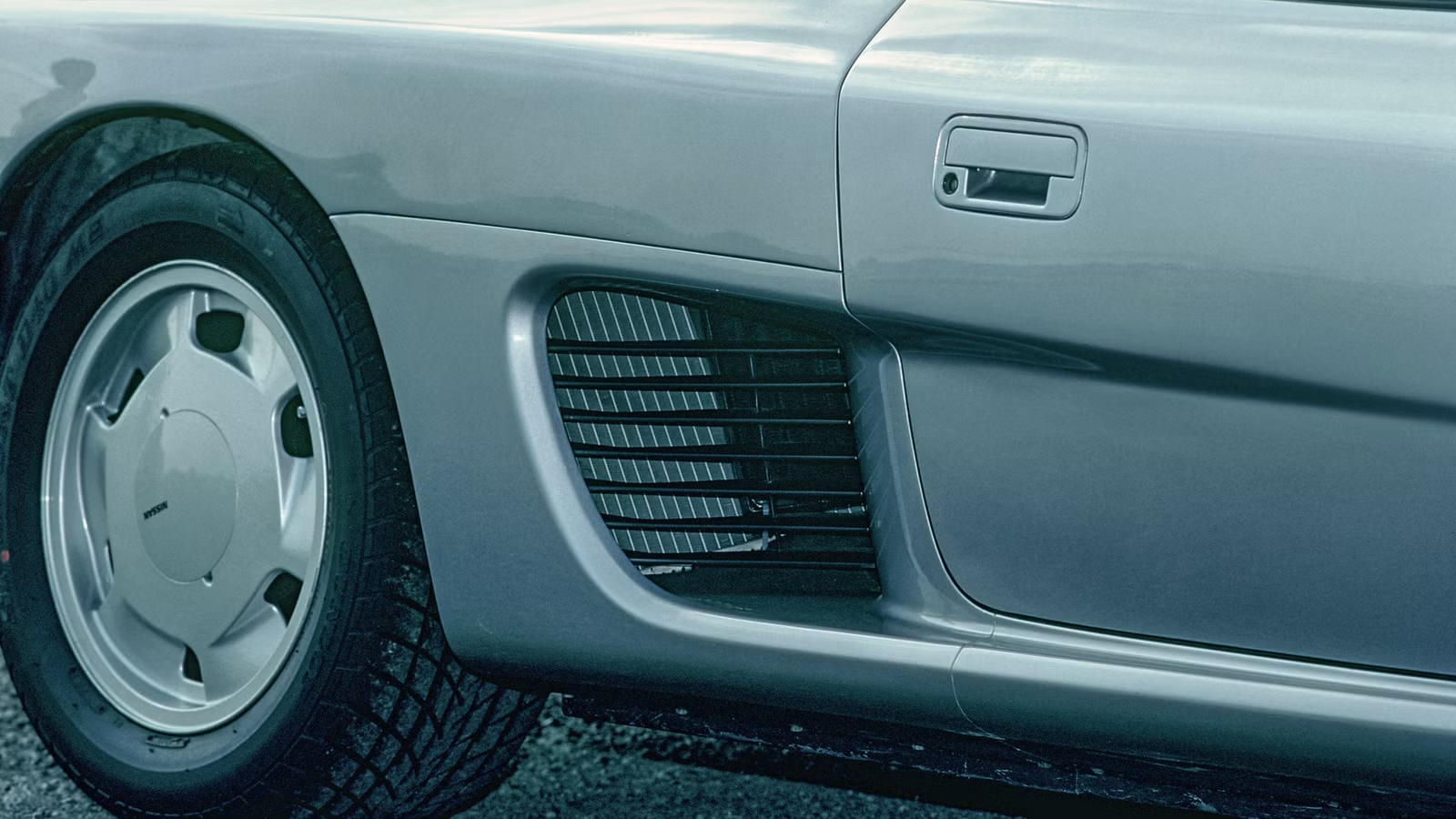
The company tentatively rolled out its entry into the world of supercars at the 1985 Frankfurt Motor Show. The MID4 (or MID 4) Type I sounded like a computer and looked a bit like it had been designed by one too. The concept prioritized subtle, functional lines over flamboyant styling, with a hint of Ferrari Testarossa and BMW M1 about it, and a 512BB-style spoiler jutting from the rear of the roofline. Even now, the looks divide opinion — many find it too conservatively styled, yet it has also aged remarkably well. The pared-down lines have proved fairly timeless; this could easily pass for a car produced in the mid-to-late ’90s. For any kid of the ’80s, you would have sworn the MID4 was a JDM production car, with plastic model kits and radio-controlled versions gracing the shelves of toy shops everywhere.
The MID4 Looked Ready For Production


What was clear from the MID4 concept was that Nissan was serious about the possibility of bringing it to market. Unlike other concepts, the MID4 looked ready for production, with giveaways such as turn signals, an interior, wing mirrors, and tailpipes — all things that many concepts don’t bother with if they’re simply chasing a headline. It was also fully functional, with a 242-horsepower naturally aspirated V6 (VG30DE) engine bolted in behind the driver. The car packed an impressive amount of technology, making it well ahead of its time. Before the likes of the Audi R8 normalized all-wheel drive in an everyday, usable supercar, the idea may have seemed like a buzzkill for anyone who wanted to do a burnout outside the casino, but this kind of setup soon caught on.
The MID4 Was Way Ahead Of Its Time
A mechanical all-wheel-drive system channeled two-thirds of the engine’s power to the rear axle, giving it a sports car-like feel with added security — a setup that would later be developed for the R32 Skyline GT-R. An evolution of this system appeared in the R32 labeled ATTESA, or Advanced Total Traction Engineering System for All-Terrain. There was also HICAS (High Capacity Actively Controlled Steering), Nissan’s all-wheel-steering system. The top speed of the MID4 was quoted at 155 mph, with a zero-to-60 mph time of approximately 5.5 seconds. The public seemed to like the MID4, but then it disappeared.
The MID4 Returned… But As A Different Car

Rather than send the MID4 to showrooms, Nissan went back to the drawing board. In 1987, the company unveiled the Nissan MID4 Type II concept. This car looked — well, it looked a bit like a Honda/Acura NSX, even though that car wouldn’t be launched until 1990. The second MID4 had a slightly less restrained look, though it was also a touch more angular than the first car. Neither, it would be fair to say, was unattractive, and the second car also appeared ready for the production line. The twin-turbocharged 3.0-liter V6 in the MID4 Type II was also destined for production — the VG30DETT unit would go on to power the 300ZX sports car.
The Mid4 Project Was Never To Be

Despite a positive reception at the 1987 Tokyo Motor Show, where the new concept made its debut, it too would never see the inside of a showroom. In the end, Nissan decided its production sports car resources should be channeled into the GT-R, a giant-slaying Godzilla that went on to conquer the Nürburgring and become a cult favorite. The 300ZX of the ’90s also proved that twin-turbo six-cylinder power could be deployed in a front-engined, relatively affordable sports car, rather than being reserved for a low-volume supercar. That said, as Honda proved, the usable NSX was not only popular but changed the way we viewed supercars entirely. It seemed Nissan almost got there first with the MID4. But none of this meant that Nissan gave up completely on the idea of a mid-engined supercar.
The Mid-Engined Supercar That Nissan Did Build

In the mid-’90s, the GT1 racing series was enormously popular, attracting race versions of wild showroom models in the form of the McLaren F1 GTR and, in Nissan’s case, the Skyline GT-R LM. However, manufacturers began to realize they could develop dedicated race cars and then homologate them for road use, leading to the arrival of the mad Mercedes-Benz CLK GTR and the Porsche 911 GT1 — cars that looked like they were never intended to tackle a supermarket car park.
The R390 GT1 Was A Race Car For The Road – And The Rarest Nissan Of All Time
From this remarkable era came the Nissan R390, powered by a 3.5-liter DOHC V8 engine that shared DNA with Nissan’s R89C race car from the Group C racing era. The rules stated that at least one road car had to be built, which Nissan took literally and created exactly one street-legal version called the R390 GT1. One race R390 was also converted for road use later on by French F1 and GT driver Erik Comas. As for the Nissan GT-R road model, there have long been rumors that one day it will evolve into a mid-engined road car — only time will tell if that vision ever comes true.
Source: Nissan.

Related posts




Latest Post


No Comments