
A 2028 Mazda RX-7 Design Returns As A Mustang-Killing Rotary Monster
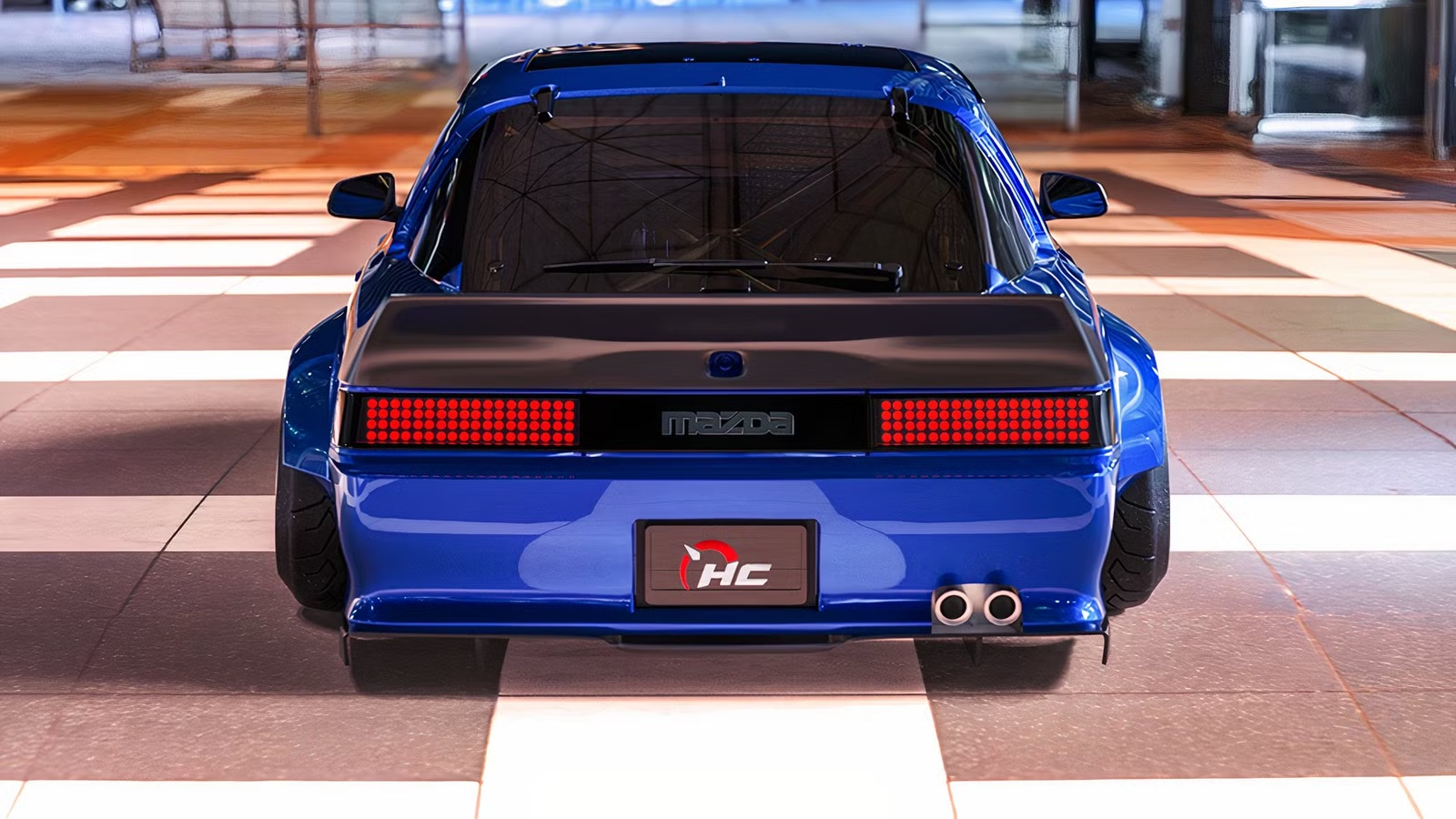
The original Mazda RX-7 arrived in America with roughly 100 horsepower and enough character to worry bigger sports cars. Nearly half a century later, this rendered 2028 Mazda RX-7 restomod takes that lightweight formula somewhere far less innocent. Its huge rear wing and race-ready stance suggest serious intent. But that’s never the full story now, is it?
The 2028 Mazda RX-7 Restomod Turns An Affordable Classic Into A Track Weapon
For Americans who remember the first-generation Mazda RX-7, this 2028 restomod gets quite the redemption arc. Based on the 1979-1985 RX-7, known as the SA22C and later FB, the digital concept preserves the wedge-shaped profile, long hood, and sloping rear glass. Then it adds wide fenders, deep side skirts, an enormous rear wing, and a stance that appears to have declared speed bumps a wholly unnecessary endeavor.
The modifications tell a more serious story. The pop-up headlight housings now carry narrow LED strips, while hood vents and an exposed front-mounted intercooler suggest a turbocharged rotary engine. The five-spoke wheels sit beneath swollen arches, and a visible roll cage makes the cabin look ready for track days rather than grocery runs. The rear wing might require its own ZIP code, but the package is surprisingly coherent.
Mazda’s first RX-7 already had the right ingredients. The original U.S.-market car used a compact 12A twin-rotor engine making around 100 horsepower, and its front-mid-engine layout helped deliver near-balanced weight distribution. By 1984, the RX-7 GSL-SE brought a fuel-injected 13B rotary with 135 horsepower, showing how much potential Mazda could extract without abandoning the car’s nimble, rear-wheel-drive character.

That’s also where the Mustang-killing ambition begins to make sense. The 2026 Ford Mustang GT packs a 480-horsepower 5.0-liter V8, so a hypothetical 400-horsepower RX-7 would concede plenty on paper. But with significantly less weight to manage, the Mazda could make life difficult for the Mustang through tight corners and under braking. Winning would depend on the build and track, not wing size.
A Turbocharged 13B Rotary Could Give This Mazda RX-7 400 Horsepower

Given this entire design study is purely hypothetical, what powers this RX-7 is, too. Still, a professionally rebuilt turbocharged 13B rotary makes far more sense than dropping a large V8 under the hood, no? With modern engine management, upgraded fuel delivery, an efficient intercooler, and the right turbo setup, a 350- to 400-horsepower target is plausible. It would also preserve the distinctive sound and high-revving personality that made the Mazda RX-7 famous.
Early American RX-7s produced around a quarter of that output. If this 2028 Mazda RX-7 widebody build weighed approximately 2,600 pounds, 400 horsepower would yield just 6.5 pounds per horsepower. That’s a compelling power-to-weight ratio for challenging heavier V8 muscle cars, including the Mustang GT, especially on a technical circuit.
The Whole Deal

A well-sorted version might reach 60 mph in the low-four-second range, depending on traction, gearing, and tires. More importantly, a close-ratio manual transmission and LSD could make the acceleration pretty entertaining. Modern performance cars deliver staggering numbers with minimal effort from the driver. A powerful, lightweight rotary coupe should demand a little involvement, preferably without requiring a tow truck afterward.
The first-generation RX-7’s suspension also needs attention before chasing lap records. Its front struts and live rear axle with a Watts linkage were clever for a late-1970s sports car, but substantial power demands stronger components, revised geometry, adjustable dampers, and serious brakes. Add properly engineered aero and tire clearance, and this Mazda RX-7 restomod could become a capable track car rather than a collection of expensive bolt-on parts.
The Biggest Challenge Is Making a 2028 RX-7 Restomod Actually Usable

Of course, building a 400-horsepower rotary-powered Mazda RX-7’s only half the job. Making it start on a cold morning, survive summer traffic, and complete a track session without overheating is the other half. Rotary engines reward attentive maintenance, but heat control, oil consumption, and apex-seal health deserve particular care. A heavily boosted 13B needs meticulous assembly, conservative tuning, and cooling designed for track use.
Buying the donor car is another calculation. First-gen Mazda RX-7 values are relatively approachable compared with desirable third-generation FD examples, yet rust, neglected maintenance, and tired interiors can turn a cheap purchase into a restoration marathon. A one-year snapshot covering 37 first-gen RX-7s shows an average of $15,850. Finding a solid RX-7 FB matters far more than chasing the lowest advertised price.
One To Remember

Then comes the restomod bill. Custom widebody panels, fabricated aerodynamic pieces, a rebuilt turbo rotary, upgraded drivetrain, suspension work, proper brakes, and professional tuning can quickly cost more than the donor itself. And while the nearly ground-scraping ride height looks terrific in these images, American driveways and parking ramps may disagree. Scratch that, they definitely disagree. A street-friendly build would need usable clearance, decent ride quality, air conditioning, and enough reliability to get home under its own power.
Even with those compromises, this rendered 2028 Mazda RX-7 makes quite a case for revisiting Mazda’s original rotary sports car. Its styling captures the spirit of the first-gen model while suggesting enough performance to challenge much newer machinery. Give it a dependable 13B, a manual gearbox, and a chassis that can handle the power, and it could be the sort of Japanese restomod people remember.

Related posts



Latest Post


No Comments