
The 5 Kei Sports Cars Every JDM Fan Should Know About
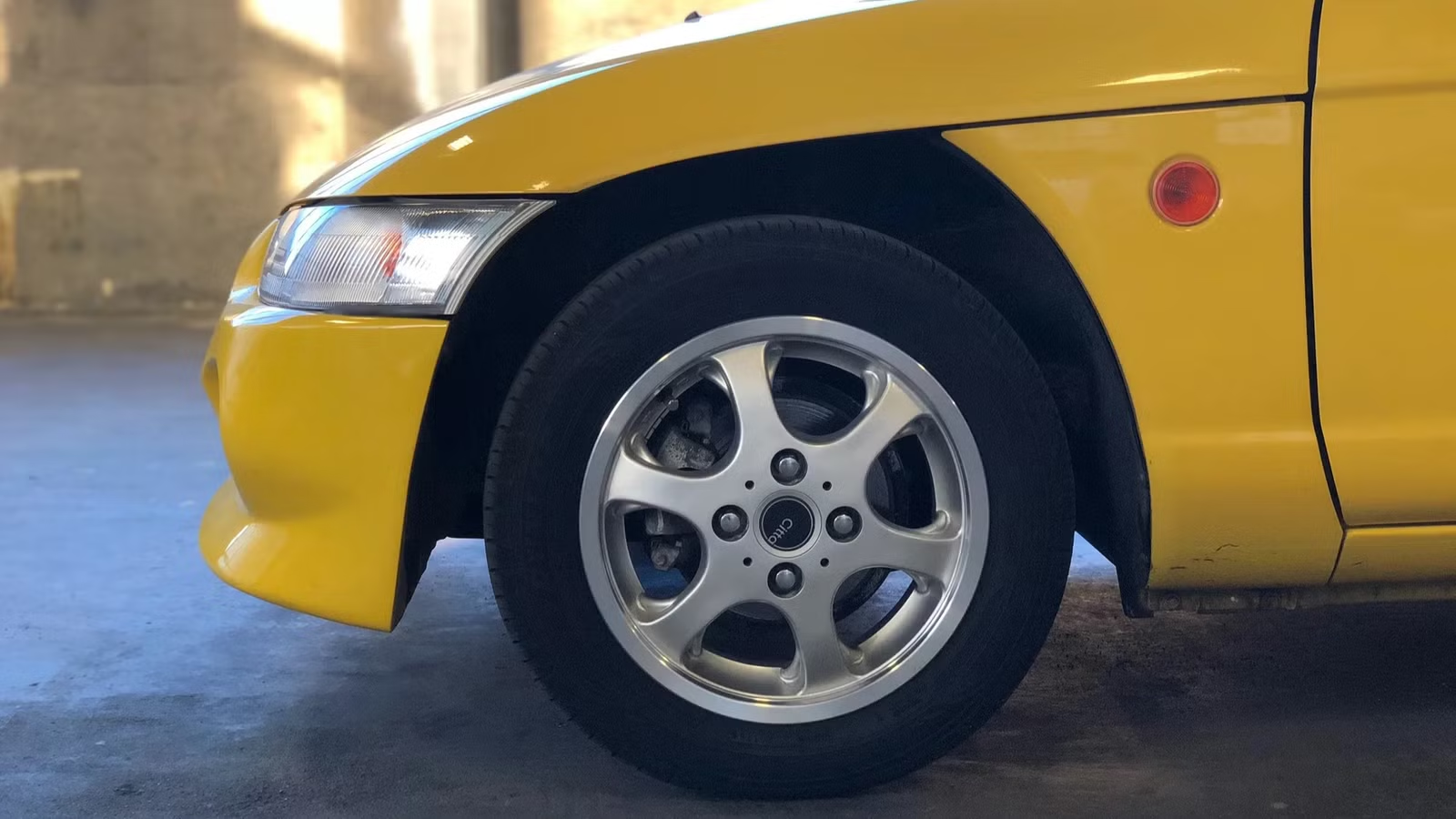
Though only available in Japan, kei cars have gained more popularity following a comment made by United States President Donald Trump in 2025 about the possibility of importing them to the U.S. With strict regulations governing engine size, power output, and dimensions, kei cars’ compact silhouette and straightforward powertrain make them quirky and fun to drive, but also likely difficult to actually import due to safety regulations. In an industry where cars are becoming bigger by the generation, the fascination surrounding Japan’s tiny cars is undeniable. As a JDM fan, these are the five punchy kei car roadsters you’ll want to know everything about.
5
Honda Beat (1991-1996)

Honda launched the Beat in May 1991 and produced its kei roadster for a 5-year period, ending production in 1996 with a total of approximately 33,600 units. While Honda’s first-generation NSX often steals the spotlight, don’t dismiss the Beat. The kei roadster is one of those tiny cars that managed to make big waves in Japan’s automotive landscape. The Beat was designed as a rear-mid-engine car with rear-wheel drive and featured Honda’s E07A engine, a small, 656cc naturally aspirated inline-three producing 63 hp at 8,100 rpm and 44 lb-ft of torque at 7,000 rpm. Prioritizing the sports car experience, Honda gave the Beat a five-speed manual transmission, with no automatic transmission option, but what made the Beat such a serious kei car was its Multi Throttle Responsive Engine Control (MTREC) system. Infused with Honda’s F1-derived technology, this system gives each cylinder its own dedicated throttle valve, allowing the small Beat to deliver a sharp response without relying on a turbocharger, unlike other kei roadsters at the time.
The Beat’s design originated from Pininfarina, the Italian design house that gave us the F40. It’s also widely regarded as the last car approved by company founder Soichiro Honda before his death in August 1991.
4
Suzuki Cappuccino (1991-1998)


Introduced a few months after the Beat, Suzuki launched the Cappuccino in November 1991. The tiny two-seater roadster features a front-engine and rear-wheel-drive layout. The Cappuccino initially came with the F6A from 1991 until 1995, a 657cc turbocharged inline-three producing 63 hp and 63 lb-ft of torque. Suzuki then introduced the K6A engine to the Cappuccino from 1995 until 1998, which was a lighter, all-aluminum 658cc engine that would rev up to 9,300 rpm. Both engines were paired with a five-speed manual transmission, but a three-speed automatic became available with the later engine. The Cappuccino notably features four-wheel independent double wishbone suspension, which is quite an unusual setup to find in a kei car. Another standout feature of the Cappuccino is its three-piece removable roof, configurable in four ways: conventional hardtop, T-top, targa-style, or fully open roadster.
Suzuki officially ended production in 1998, with a total of 28,010 units. 1,110 examples were exported to the UK between 1993 and 1995, 33 to New Zealand, and a few more units to Hong Kong and other European countries. Rumor has it that a new Cappuccino is on the way.
3
Autozam AZ-1 (1992-1994)

Sold through its Autozam brand, Mazda manufactured the Autozam AZ-1 for a short period of time ranging from 1992 until 1994. Suzuki supplied its F6A engine, the same 657cc turbocharged inline-three shared with the Cappuccino. Power output is unchanged from the Cappuccino, and the AZ-1 also comes with a five-speed manual transmission and a rear-wheel-drive layout, but the AZ-1 gets a mid-engine configuration. What truly sets the AZ-1 apart from its kei peers is its supercar-like styling with its unique, signature gullwing doors. The AZ-1 body is made from fiber-reinforced plastic (FRP) and mounted on a lightweight steel chassis. With a total production of 4,392 units, the AZ-1 is by far the rarest kei sports car on this list.
2
Honda S660 (2015-2022)

After a hiatus that lasted for close to two decades, Honda returned to the kei sports-car segment in 2015 with the S660. Often seen as the Beat’s spiritual successor, the S660 featured a more aggressive styling, but also swapped the naturally aspirated for a turbocharged one. The S660 gets a mid-engine configuration and its turbocharged inline-three producing 63 hp and 77 lb-ft of torque sends its power to the rear wheels via a six-speed manual transmission or a CVT. The tiny roadster gets a targa top and the lineup includes the Beta (β) trim and the Alpha (α) trim for a more sophisticated interior. The S660 also got a more performance-oriented Modulo X and a special-edition Modulo X Version Z, introduced toward the end of production in March 2022.
1
Daihatsu Copen (2002-2012; 2014-2026)

Toyota-owned Daihatsu first launched the Copen in June 2002 with the philosophy of bringing drivers a fun-to-drive, everyday-friendly convertible, or “CompactOpen,” hence the name “Copen.” The first-generation Copen is the first kei car to use an electronically assisted active top with a hydraulic mechanism, though a detachable top version was also made available. The first-generation Copen got a 659cc turbocharged inline-four at the front, sending 63 hp and 81 lb-ft of torque to the front wheels, and paired with either a five-speed manual or four-speed automatic transmission. The first generation was exported to the UK with its original 659cc kei car engine, but Daihatsu later introduced a larger 1.3-liter engine for the UK market from 2007 until 2010. The first generation remained in production until 2012.
A second-generation Copen arrived in 2014, this time exclusively for the Japanese market. This new Copen received a new 658cc turbocharged inline-three, producing 63 hp and 67 lb-ft of torque. The Copen offers a five-speed manual transmission and a seven-speed Super Active Shift CVT. The second-generation Copen offers a series of trims, including a GR Sport trim for a more aggressive look.
With the K-Open concept car revealed at the 2025 Japan Mobility Show and the discontinuation of the current generation earlier in August, we could be seeing some new things happening with Daihatsu and its popular kei sports car.
Sources: Honda, Suzuki, GQ, CarBuzz, Daihatsu

Related posts
Latest Post


No Comments