
This 7-Seat Family Hauler Makes ’60s Muscle Cars Look Slow
The muscle car Golden Era has an alchemic title for good reason. The genre, which was launched by the 1964 Pontiac GTO, was both simple and incredibly effective. Just like the mythical science of turning base metals into gold, the US carmakers of the ’60s realized they could take standard coupes, sedans, and piles of parts, and turn them into some of the most exciting Muscle Cars the world had ever seen, with staggering sales to match.

These cars, which generally had huge big block V8s stuffed into straightforward shells, have long stood up to a lot more modern cars, with performance that means they are pretty much timeless. But in the last five years, a full-size American SUV has arrived that will smoke the best of what the ’60s had to offer.
The Fastest Muscle Car Of The Golden Era Was Futureproofed
Let’s face it, if you were after an affordable yet frighteningly powerful muscle car in the ’60s, you were spoiled for choice. Pretty much every manufacturer imaginable was scrambling to shoehorn the biggest engine they had into an unsuspecting two-door. The result was cars that could run a quarter mile in the low 13s, something that would get a nod of approval today.

This muscle car revolution happened so quickly, it took a while before certain people caught on. People like insurance sales representatives and emissions regulatory committees, who, by the end of the ’70s, swooped in to stop the party. The reality was that selling cheap muscle that was nothing more than a race car with license plates, using an oil field’s worth of gas to run errands, wasn’t really viable in some eyes. By the early ’70s, with an oil crisis also underway, muscle cars of the ’60s Golden Age were effectively frozen in carbonite, with Malaise Era performance cars going backward with rapidly downsized engines, and American muscle all but dying out by the end of the ’90s.
The Escalade V Is A Family SUV That Makes ’60s Muscle Seem Slow

Then came the second muscle car revolution in the 2000s, kicked off by the likes of the retro-flavored S197 Ford Mustang and sixth-gen Dodge Charger. These cars gave the original ’60s models a run for their money, but even a 2006 Mustang GT was only just cracking 14 seconds in the quarter mile. The ’60s muscle cars were still a force to be reckoned with, then, even half a century later. Well, kind of, but then things went crazy. Cadillac, a carmaker better known for creating cars for crooners and celebrities, had started its V-Series Performance lineup, with an eye on taking on the German super sedans at their own game.
The new letter was so successful that in 2022, Caddy decided to apply it to an Escalade, the full-sized SUV that started in the late ’90s and was used by rappers and soccer players to drive down the shops. But the Escalade would no longer be a cruise machine; it could take down the fastest Golden Age muscle car that ever roamed the streets. GM said the Escalade V will hit 60 mph in under 4.4 seconds and run a quarter-mile in 12.74 seconds at 110 mph. The fastest muscle car of the ’60s, a 1969 Plymouth Road Runner, managed 13.32 seconds — that’s half a second slower than the 6,290-pound Caddy SUV.
This Caddy SUV Has Pure Handbuilt Muscle Under The Hood

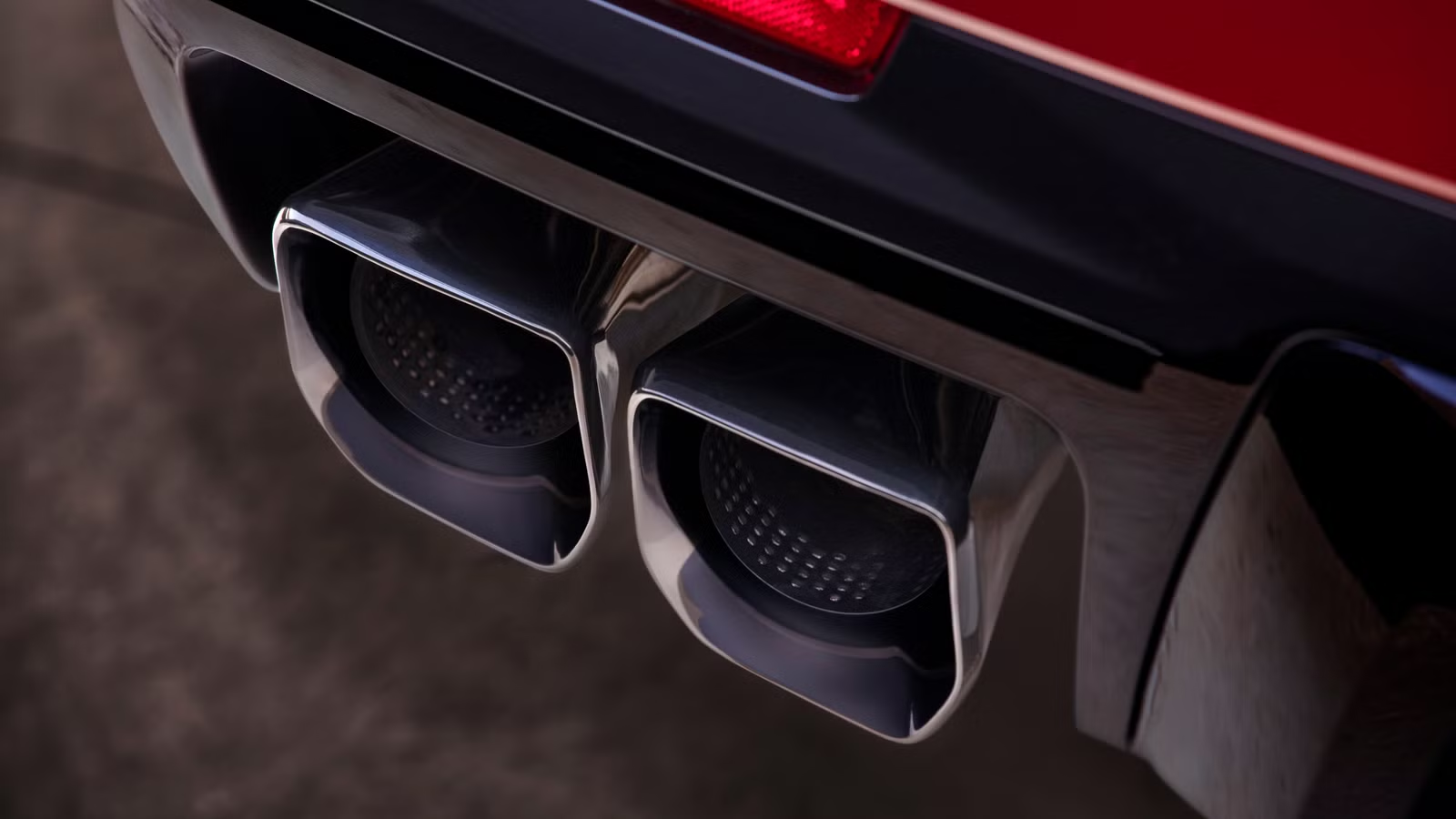
Announced in 2022, the Escalade-V may have seemed the size of a house, but it went like a sports car. Under the hood is a supercharged 6.2-liter V8 engine rated at 682 hp and 653 lb-ft of torque — that’s Ferrari Enzo spec (or rather it makes the Enzo look a bit underpowered). The unit is similar to the CT5-V Blackwing’s supercharged V8, but features a larger, 2.65L R2650 TVS supercharger. The Escalade’s monster V8 is hooked up to a 10-speed automatic transmission, with a full-time active all-wheel-drive system.
Stopping power is helped by six-piston Brembo front brakes, which you’ll find behind unique 22-inch aluminum wheels. There is standard Magnetic Ride Control 4.0 and Air Ride Adaptive Suspension, featuring uniquely tuned rear air springs and damper hardware, plus V-Series specific software calibrations. All this, and lashings of luxury and space for up to seven people.
The Escalade-V Is Itself The Last Of A Dying Breed

Less than a decade ago, there would have been plenty of eye-rolling over the fact that fast, heavy, and ludicrously powered V8 SUVs have taken over from muscle cars and sports cars. But the truth is that nowadays, a supercharged 6.2-liter V8 SUV is itself a rapidly dying breed. HotCars reported a few months back that there are just a handful of American V8-powered three-row SUVs currently available in the US. With the march of hybrid and EV powerplants, it’s hard not to think that the days of the V8 in this segment are numbered. In performance vehicles such as sports and supercars, the V8 is having a renaissance, but for luxury vehicles an electric powertrain makes more sense. Ironically, vehicles such as the Escalade-V have found themselves in the same place as those muscle cars of the late ’60s.
The Escalade V Isn’t Giving Up Yet — And It’s Almost Ferrari Priced

But if you want a three-row Caddy SUV that can trouble a ten-year-old Porsche 911, then you are in luck. Caddy just launched the 2027 Escalade-V 125th Anniversary Collector Series, a special-edition version with prices starting at approximately $239,000. That’s just $20,000 or so shy of the asking price of a new Ferrari Amalfi. The anniversary Escalade-V gets a special interior, unique illuminated sill plates, unique forged 24-inch wheels, carbon-fiber grille surround, lower rear fascia, mirror caps and engine cover, and even an exclusive blue key fob. If the V8 three-row is disappearing, at least it’s going out with a bang.
Sources: Cadillac

Related posts

Latest Post


No Comments