
GMC 426 Inline-Six: The Forgotten Engine That Made Diesel-Like Torque
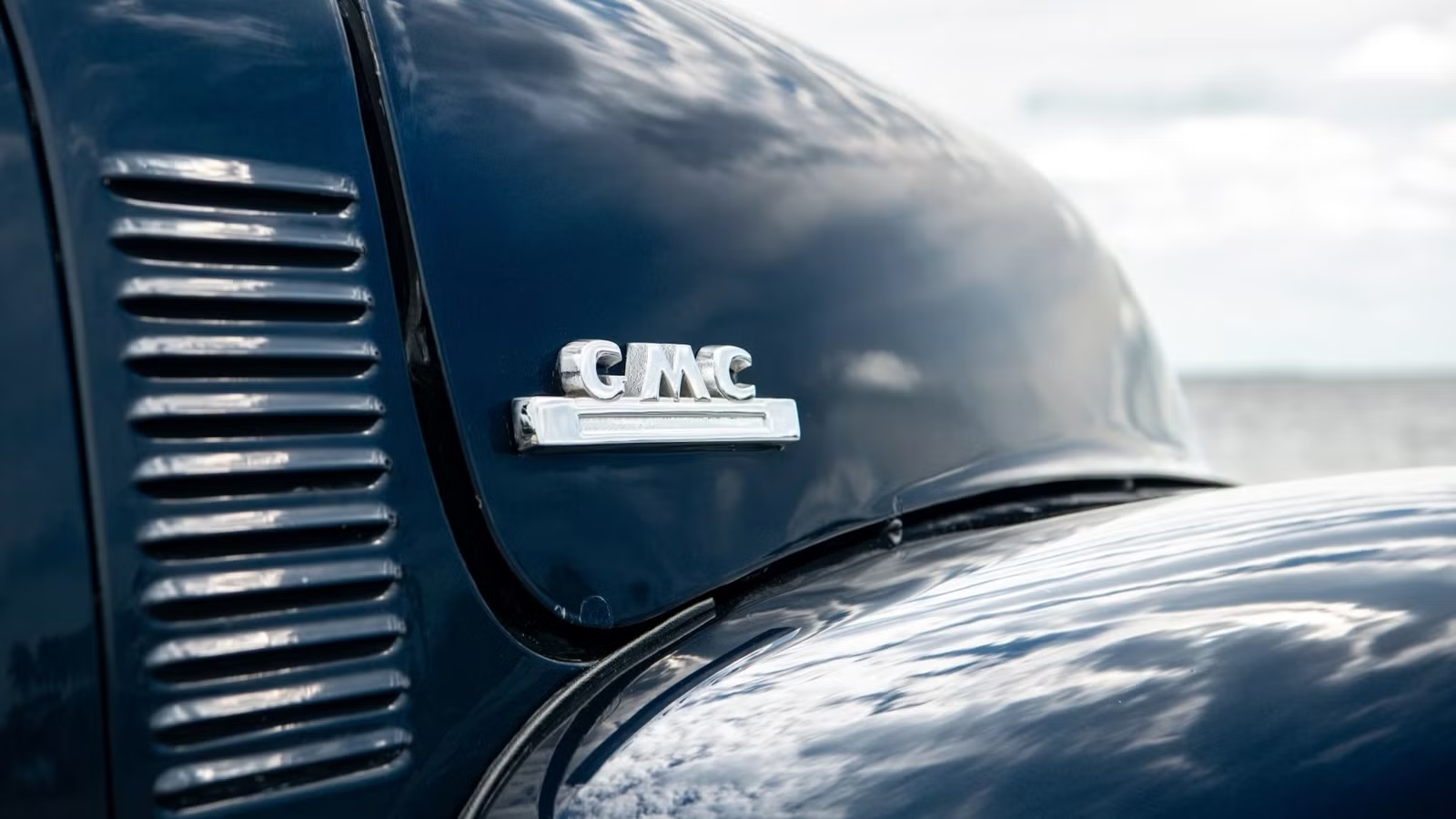
Are you ready to rumble? One particular gasoline-powered GMC engine is. Only it rumbles with torque-like diesel! This historic gasoline inline-six engine achieved diesel-like hauling power thanks to innovations that set it years ahead of its time. However, it’s unfairly being forgotten as it gets overshadowed by other popular engines.

That’s not exactly fair because the powerhouse is responsible for solving crucial issues to make heavy-duty and commercial trucks more efficient. As a result, it quickly gained popularity in the post-war era. You can even claim that it paved the way for the diesel revolution, as it reached the pinnacle of big-block gasoline power.
Before diesel engines were widely available, you could rely on this stout powerhouse to get the job done. The legacy of GMC inline-six engines continues today with potent amounts of torque, but they have made the shift to diesel. These trucks with stout towing power can thank a gasoline engine from decades ago for their current success.
The Dirty Secret Killing Truck Engines Before GMC Found a Fix

Back in the late 1930s, heavy-duty trucks and commercial vehicles were still relying on road draft tubes. A road draft tube is an open-ended crankcase ventilation system widely used to vent harmful blow-by gases and moisture. Wind that passed under the vehicles generated a simple vacuum effect. Clean air passed through a mesh filter in the oil filter cap to enter the engine. However, they had a lot of problems. They rely on vehicle movement, so in stop-and-go traffic, the system often fails.
Unburned fuel and water vapor condensed inside the crankcase, mixing with oil to form a thick, black sludge. It would drip beneath the truck chassis, creating messes everywhere. Then that slimy gunk starved engines of oil, leading to premature failure. Additionally, they would expel untreated, unburned hydrocarbons and oil mist while allowing oil vapors to enter truck cabs. This was harmful to the environment. Furthermore, the tube was open to the atmosphere, so at lower speeds, dust, dirt, and road debris could be drawn back into the crankcase.
GMC believed there had to be a better way, so it opted to implement an engine with a Positive Crankcase Ventilation (PCV) system. This is a superior method that pulls blow-by gases out of the engine with a manifold vacuum that works at lower speeds. It prevents sludge buildup while extending oil life, protecting vital seals, and eliminating raw emissions. On top of that, it also prevents dirt ingestion. It benefits all stakeholders, including the environment.
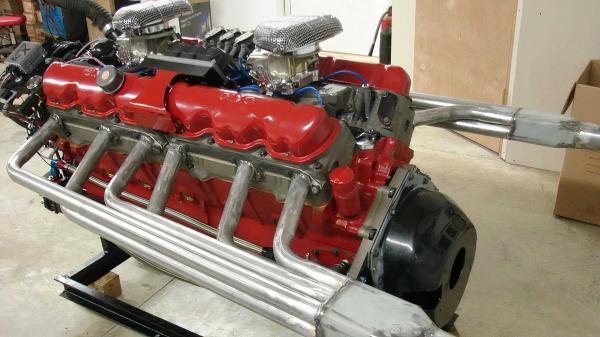
GMC Once Made The World’s Largest V12
Also known as the Twin Six, this massive GMC engine from the 1960s redefines the phrase “big block.”
GMC Built An Inline-Six That Became A Legendary Workhorse

In 1939, the GMC 426inline-sixwas introduced to provide heavy-duty and commercial vehicles with ample hauling power while eliminating sludge buildup and improving reliability. The 7.1-liter engine delivers a whopping 145 hp, which was boosted to 175 hp in 1954 and 340 lb-ft of torque at 800 RPM.
This formidable cab-over engine, also known as the legendary “Jimmy” workhorse, is primarily found in the GMC 600, 620, and 720-series heavy trucks and transit buses. The long-stroke overhead valve configuration is paired with a massive, rigid cast block to deliver endurance and to withstand continuous commercial duty use. Similar to other engines of the era, the cylinder head has a Siamese port design.
They were often paired with multi-speed transmissions, custom headers, or aftermarket twin-carburetor intake manifolds by operators who needed to maximize their pulling power. Mechanics fondly refer to this pushrod engine as Big Jimmy, as it is quite massive. If you’re wondering where the Jimmy part comes from, it’s a nickname based on how it sounds to say the G-M-C letters out loud. But raw specs don’t tell the whole story. The real test was whether fleets and operators would actually trust it — and what happened when they did.
Betting On The PCV System Paid Off
As you can imagine, people flocked to the GMC 426 inline-six as it solved crucial performance problems with superior engineering and efficiency. It was celebrated for its exceptional pulling power and stood out despite not being designed for passenger cars. This torquey beast could pull loads without stalling. It proved to be a reliable workhorse for fleet owners and owner-operators. With its lower RPM range, the internals faced reduced operational stress compared to high-revving engines. It prioritized low-end torque over high power and top speed. Thanks to its industrial-grade cast-iron block and seven main bearings, the engine could easily last between 100,000 and over 200,000 miles. Its true lifespan is measured in decades instead of miles.

Best of all, the engine is easy to work on thanks to its simple overhead-valve pushrod design and vertical orientation. It has plenty of side-to-side and top-down clearance for basic, regular maintenance needs. Additionally, inline engines are more serviceable in the engine bay than V-block configurations because no components hang over the frame rails.
Unfortunately, all great things must come to an end. Even the gasoline-powered Chevrolet Camaro was eventually discontinued. The GMC 426 inline-six was ultimately phased out as demand shifted toward more fuel-efficient options. Additionally, given the engine’s considerable size, smaller options followed in its wake.

The Inline-Six Comeback Nobody Expected That’s Beating V8s
After writing off the inline-six for twenty years, now every major brand is rushing back to it.
But The Potent Torque Machine Is Overshadowed By Other Engines
Despite making crucial advancements and reliability improvements, the GMC 426 inline-six is being forgotten. It lives in the shadow of the GMC 478 V6, which was also designed for heavy-duty use. This later engine became highly popular because of its gigantic 7.8-liter displacement. It delivers 135 hp and 442 lb-ft of torque, while the Magnum variant serves up 254 hp. It has a 5.125-inch bore for stump-pulling low-end torque to meet the needs of school buses, haulers, and dump trucks in the 1960s.
This engine also had an advantage with its design that features a much shorter engine block. As a result, this engine was able to fit in engine bays while still incorporating large, heavy-duty components. Also, it’s celebrated as the head of the highly coveted engine family that includes the 305 and 401. Its crankshaft and bore were later used to create the massive General Motors 637 V8.

Another more popular engine includes the 702 Twin-Six V12. It’s an 11.5-liter option that was marketed as the unstoppable gasoline alternative to diesel engines. This potent beast provides 275 hp and 630 lb-ft of torque at 1,600 RPM. It was often mistaken for two V6 engines welded together. The V12 was designed for serious heavy-duty applications, such as fire trucks, military missile transporters, and the GMC 9500.
It is renowned for its bulletproof reliability, featuring a simple design with a single-piece block and forged crankshaft. GMC promoted it for having the ability to last up to 200,000 miles with only minor maintenance. Additionally, it shared over 60 interchangeable parts with the extensive GMC V6 engine family, resulting in low ownership costs.
Source: CarBuzz, Curbside Classic

Related posts






Latest Post



No Comments