
The Most Underrated Harley-Davidsons Ever Built
Harley-Davidson built its reputation on thunderous V-twins, laid-back cruisers, and motorcycles that turn heads before they even start. But not every great Harley became a showroom hit – some arrived too early, others challenged the brand’s traditional image, and a few deserved more attention than they received. Interestingly, some of Milwaukee’s most overlooked machines offered better handling, stronger performance, or more versatility than their famous siblings.
Harley-Davidson XLCR 1000
Production years: 1977–1979

Harley-Davidson’s first factory cafe racer was a motorcycle that few customers understood when it arrived in 1977. Willie G. Davidson helped create the XLCR 1000, giving it an all-black finish, a small front fairing, and a distinctive single-seat tail. Underneath sat a 997cc Ironhead Sportster V-twin paired with a four-speed transmission. Unlike traditional Harleys, the XLCR featured sportier ergonomics, triple disc brakes, and a chassis designed for more enthusiastic cornering. Unfortunately, it couldn’t challenge the best Japanese sportbikes, while its unconventional styling confused loyal Harley buyers. Today, its commercial failure looks like a missed opportunity – the XLCR showed Harley could think beyond cruisers, and its bold styling has aged remarkably well.
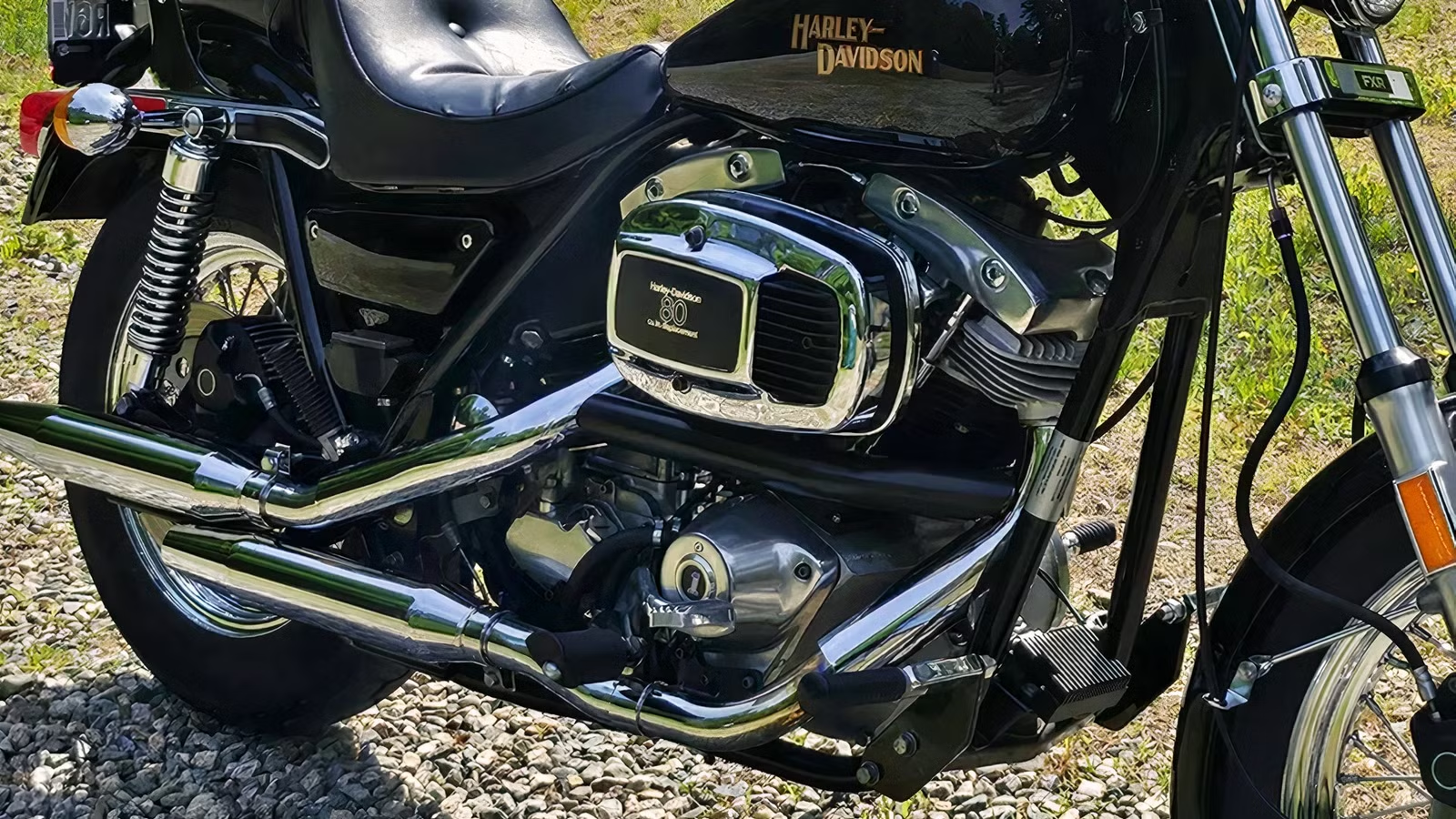
Harley-Davidson FXR Super Glide II
Production years: 1982

The FXR Super Glide II arrived when Harley-Davidson needed to prove its motorcycles could do more than look good outside a diner. Introduced in 1982, it featured a rigid new frame, a rubber-mounted 80-cubic-inch Shovelhead V-twin, and a five-speed transmission. Its chassis benefited from engineering work involving a young Erik Buell, who later became famous for building performance motorcycles. The rubber mounts reduced vibration, while the relatively compact chassis delivered surprisingly confident handling. Later Evolution-powered FXRs became especially desirable, but the original Super Glide II established the formula. It was a heavyweight with remarkably good footwork.

Harley-Davidson XR1000
Production years: 1983–1984

What happens when Harley-Davidson takes inspiration from its legendary XR750 flat-track racer and builds a street motorcycle around it? The XR1000 provides the answer, complete with a few burned legs. Introduced in 1983, it combined Sportster-based engine cases with racing-inspired aluminum cylinder heads. Twin Dell’Orto carburetors fed the 998cc V-twin, while high-mounted exhaust pipes gave it a competition look. Harley claimed roughly 70 horsepower, significantly more than a conventional Ironhead Sportster. However, the XR1000 cost nearly $7,000, and its hot exhaust and heavy throttle demanded commitment. It never became a sales sensation, but its combination of racing hardware and street legality made it a fascinating performance experiment.
Harley-Davidson XL1200S Sportster Sport
Production years: 1996–2003
The Sportster has always been Harley-Davidson’s smaller, more energetic troublemaker, but the XL1200S Sportster Sport took that personality further. At first glance, it looked like another conventional Sportster 1200. However, adjustable suspension, dual front disc brakes, and a sport-focused setup made it considerably more interesting. From 1998 onward, its 1,202cc Evolution V-twin featured dual-plug cylinder heads, hotter cams, and a higher 10.0:1 compression ratio. These upgrades delivered stronger acceleration and sharper throttle response than the standard 1200. Although it couldn’t match contemporary Japanese sportbikes, the XL1200S offered classic Sportster character with meaningful performance improvements. The Sport badge actually meant something.
Harley-Davidson FXDX Dyna Super Glide Sport
Production years: 1999–2005
Long before performance-oriented Dynas became fashionable, the FXDX Super Glide Sport showed what a properly sorted Big Twin could accomplish. Introduced in 1999, it combined the muscular Twin Cam 88 V-twin with adjustable suspension and dual front disc brakes. Compared with the regular Super Glide, the FXDX delivered better control during hard braking and spirited cornering. Its blacked-out engine, taller stance, and restrained styling also appealed to riders who preferred performance over chrome. Interestingly, the FXDX anticipated the modern club-style Dyna movement by years. It wasn’t lightweight, but it proved a big cruiser could enjoy winding roads without treating every corner like an emergency.
Harley-Davidson VRSCR Street Rod
Production years: 2006–2007

The VRSCR Street Rod ranks among Harley-Davidson’s biggest missed opportunities. While the original V-Rod emphasized straight-line muscle, the Street Rod added genuine cornering ability. Its liquid-cooled, 1,131cc Revolution V-twin produced a claimed 120 horsepower, while a 43mm inverted Showa fork, Brembo brakes, and mid-mounted foot controls improved handling. These upgrades increased its maximum lean angle to a claimed 40 degrees, compared with 32 degrees for the standard V-Rod. Unfortunately, its taller seat and sportier ergonomics didn’t appeal to traditional cruiser buyers. Harley discontinued it after just two model years, leaving behind one of its most capable and unusual performance motorcycles.
Harley-Davidson XR1200
Production years: 2008–2013

Few motorcycles capture Harley-Davidson’s racing heritage as convincingly as the XR1200. Inspired by the legendary XR750 flat-track racer, it arrived in Europe in 2008 before reaching American dealerships as a 2009 model. Its air-cooled, 1,202cc Evolution V-twin featured performance-oriented tuning, while an inverted fork, dual front disc brakes, and wide handlebars encouraged aggressive riding. Unlike many Sportsters, the XR1200 actually wanted riders to attack corners. The later XR1200X added upgraded suspension, further improving its handling. Harley even supported an XR1200-based racing series in the United States. Despite these credentials, it remained a niche product that deserved considerably more attention.
Harley-Davidson XL1200CX Roadster
Production years: 2016–2020

The XL1200CX Roadster arrived when Harley-Davidson’s Sportster lineup leaned heavily toward low-slung cruisers and retro styling. Instead of chasing the lowest seat height, it prioritized handling. Harley fitted a 43mm inverted cartridge fork, improved rear shocks, and dual front disc brakes. Its distinctive 19-inch front and 18-inch rear wheels complemented the low handlebars and chopped rear fender. Power came from the familiar 1,202cc Evolution V-twin, producing a claimed 76 lb-ft of torque. Extra suspension travel also improved control on imperfect roads. Although its small fuel tank limited touring potential, the Roadster offered something many Sportsters lacked: a genuine appetite for corners.
Harley-Davidson Street Rod 750
Production years: 2017–2020

Harley-Davidson’s smaller Street family rarely receives much love, but the Street Rod 750 deserves a closer look. Its liquid-cooled Revolution X V-twin featured higher compression, improved airflow, and a 9,000-rpm redline, resulting in a claimed 18 percent horsepower increase over the regular Street 750. Engineers also added a 43mm inverted fork, longer-travel rear suspension, 17-inch wheels, and dual front disc brakes. The result was a lively urban motorcycle with sharper handling and an aggressive personality. Unfortunately, its awkward riding position could leave taller riders feeling cramped. Still, the Street Rod proved a smaller, more affordable Harley could deliver excitement without a massive engine.
Harley-Davidson Sport Glide FLSB
Production years: 2018–2021 (U.S. Market)

The Sport Glide FLSB never attracted the attention of Harley-Davidson’s more aggressive cruisers, but versatility was its greatest strength. Introduced for 2018, it combined a Milwaukee-Eight 107 V-twin with the redesigned Softail frame and improved suspension. Its cleverest feature was a pair of detachable hard saddlebags and a removable mini fairing. With both installed, it worked as a comfortable light-touring motorcycle. Remove them, and it became a muscular cruiser suitable for weekend rides. The saddlebags offered nearly 54 liters of combined storage, while the fairing provided useful wind protection. U.S. availability ended after 2021, but few Harleys balanced everyday practicality and classic cruiser appeal so effectively.
Source: Harley-Davidson

Related posts
Latest Post


No Comments