
A New Harley Cruiser’s Price Once Bought A 500-HP Chevy V8 Motorcycle
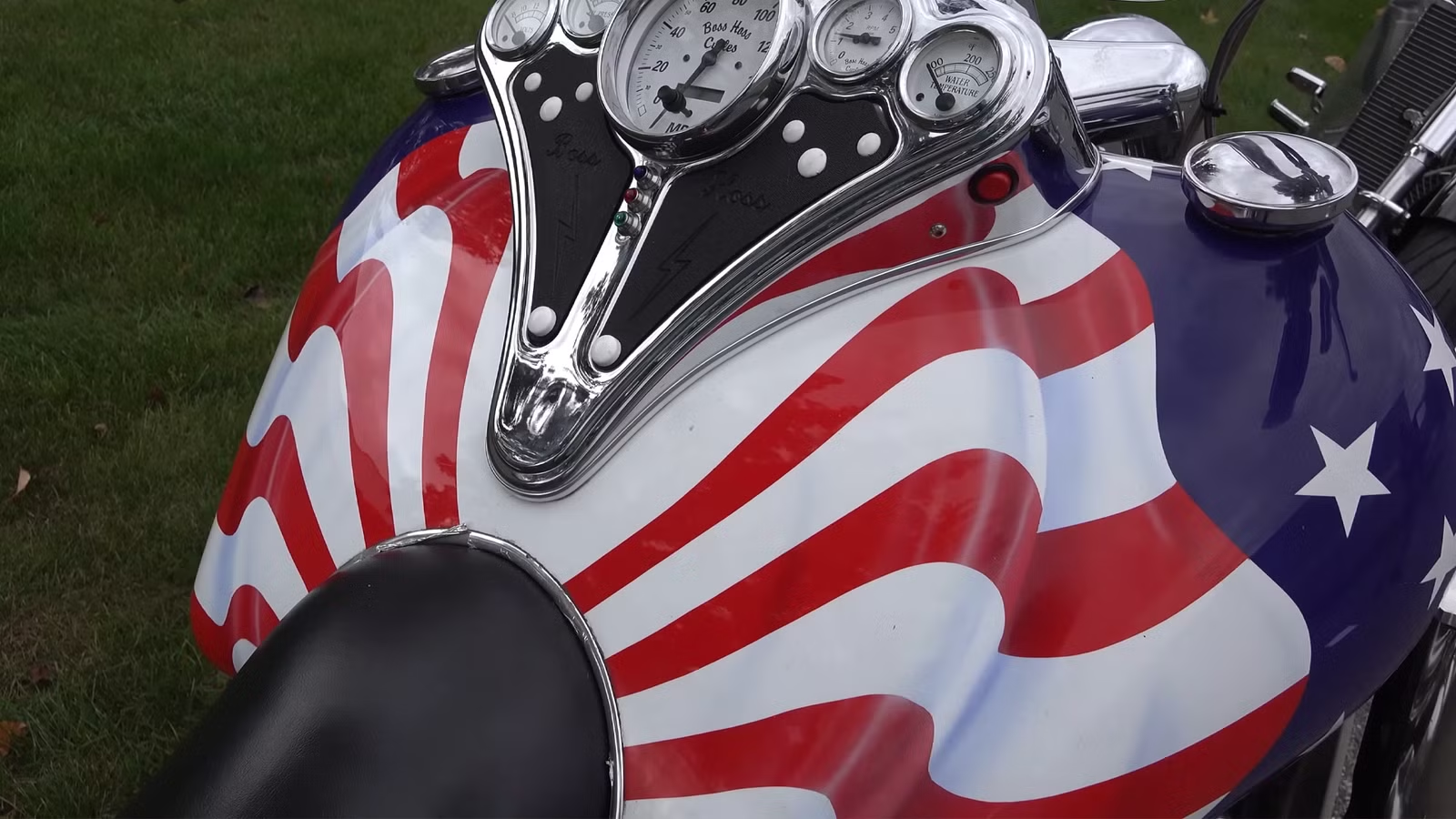
Harley-Davidson builds some imposing cruisers, but this is a different proposition altogether. In 2016, one used American V8 motorcycle carried an asking price that put it within the budget of someone considering a premium new Harley. I remember watching videos of motorcycles with V8 engines when I first heard of them as a kid. Blip the throttle on a big V8 motorcycle and the first movement can be sideways. That level of power and torque captivated my mind. I didn’t necessarily want one but was thrilled that something so wild could exist.
New Harley Money Could Buy Something Far More Extreme

Harley’s 2016 CVO Pro Street Breakout cost $25,699, combining a Screamin’ Eagle Twin Cam 110B engine with custom paint and distinctive finishes. Its equipment included cruise control, ABS, and an inverted fork. The engine delivered a claimed 112 lb-ft of torque. Buyers were paying for the complete CVO treatment, with its appearance and equipment developed around a recognizable Harley cruiser.
The Heritage Softail Classic offered a different version of that appeal, starting at $17,349 in Vivid Black. Saddlebags, a windshield, and traditional styling gave it a more relaxed touring brief. A budget in the low $20,000s therefore bought considerable choice within Harley’s range. It also opened the door to a used motorcycle with six more cylinders.
The $22,900 Figure Was An Asking Price, Not A Confirmed Sale

via Mothman Harley-Davidson
The listing appeared in a July 2016 Car Throttle report with a $22,900 asking price. The motorcycle was a 2001 model advertised with 64,000 miles. That made it about 15 years old when the comparison with new Harleys was made. The headline’s price relationship belongs to that moment, rather than the motorcycle’s original showroom price.

At $22,900, it was $2,799 below the CVO Pro Street Breakout’s MSRP. It was also $5,551 above a base Heritage Softail Classic. The seller’s figure placed it between those two new cruisers, rather than matching the Heritage dollar for dollar. No confirmed sale price accompanied the report.
The 2001 Boss Hoss BHC9 Carried A 502ci Chevrolet Big-Block V8

The motorcycle was advertised as a Boss Hoss BHC9 with a 502ci Chevrolet big-block beneath its tank. At approximately 8.2 liters, the engine belonged to the world of American hot rods and crate-engine catalogs. Its eight cylinders sat in a V, with the crankshaft running lengthwise through the motorcycle. A radiator up front handled cooling.
Boss Hoss had been building V8 motorcycles since 1990, eventually offering factory-built machines after starting with kits. The company’s formula involved purpose-built frames and drivetrains around automotive engines. Period dealer specifications listed both 350ci small-block and 502ci big-block versions. The larger engine turned an already unusual motorcycle into something more extreme.
Approximately 500 Horsepower Went Through An Automatic Transmission

Mountain Boss Hoss listed the big-block version at 502 horsepower, supporting the roughly 500-hp figure attached to these motorcycles. That is a published engine rating, rather than a rear-wheel measurement for this particular bike. The listing photographs also showed a nitrous bottle. Its presence establishes neither a functioning system nor an additional horsepower figure.
A period road test of the 502 described a torque converter, two forward ratios, and reverse. Boss Hoss’s later factory manual explains that its two-speed transmission was called automatic because it lacked a manual clutch. The rider still selected the gears with a foot lever. Reverse supplied a practical answer to backing such a large motorcycle out of a parking space.
Big-Block Power Came With Big-Block Compromises

The dealer’s specifications put the big-block motorcycle at 1,300 pounds dry, with an 82-inch wheelbase. That weight figure excludes the fuel and other operating fluids. Its listed 27-inch seat height sounds reassuring until the engine’s width and the motorcycle’s bulk enter the picture. Reaching the ground and supporting the motorcycle are separate considerations.
Fuel consumption added another automotive dimension. MOTORRAD’s contemporary 502 road test reported approximately 9–16 U.S. mpg, depending on use. The same test criticized the front braking performance and described suspension that struggled on rough surfaces. Those observations came from that test motorcycle, but they complicate any suggestion that the horsepower arrived without compromises.
Revving The V8 Could Make The Motorcycle Lean

The engine’s reaction to the throttle was particularly revealing. MOTORRAD reported a pronounced sideways lean as revs increased, attributing it to the rotating mass of the longitudinal crankshaft. Accelerating that mass produces an opposing reaction through the engine mounts and chassis. The rider can therefore feel the motorcycle move sideways even while standing still.
That demands attention before the rider has asked the rear tire to transmit much power. The same tester found the motorcycle easier to handle once moving, despite the effort required to balance it at a stop. A low center of gravity did not eliminate the effects of its mass or engine layout. The handling changed substantially with the situation.
The Same Budget Bought Two Very Different American Cruisers

The Boss Hoss offered a kind of excess that Harley’s option list could not reproduce. Its Chevrolet V8 supplied the sound, appearance, and engine output of a hot rod in a motorcycle chassis. A new Harley, even the largest available, offered a more conventional package. Comparing their prices exposes how differently money could be spent.
The advertised 64,000 miles suggest the Boss Hoss had seen considerably more use than an occasional trip around a showground. They do not establish its condition or erase the demands of operating it. The attraction was the V8 itself, including the size and behavior that came with it. Anyone drawn to that engine was buying an experience the new Harley beside it simply could not offer.
Source: Harley-Davidson, Boss Hoss, Mountain Boss Hoss, Autotrader, Car Throttle, MOTORRAD

Related posts



Latest Post


No Comments