
Mercedes-Benz CEO Vows To Protect U.S. Business As Senate Tariff Bill Looms — What It Means For Buyers
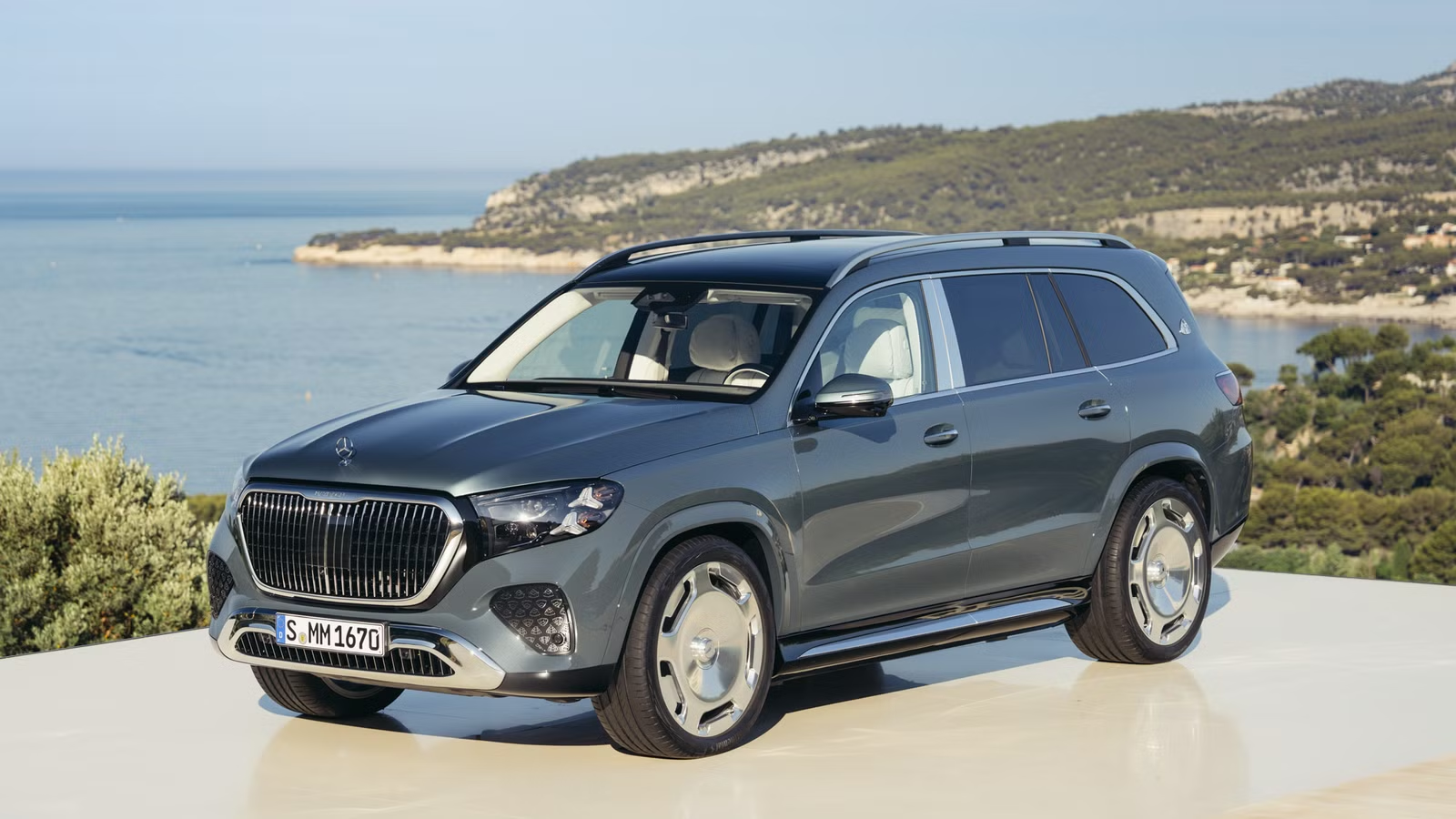
Mercedes-Benz CEO Ola Källenius made a direct commitment on July 29, 2026: whatever adjustments the brand needs to make to comply with pending U.S. Senate legislation, it will make them. “If we need to make adjustments to comply with anything, we will make sure that we protect our presence and our business in the U.S.,” Källenius said. For American Mercedes shoppers, that statement carries real weight — because the legislation in question could, in its current form, effectively bar the automaker from selling cars in this country.

The Senate panel bill targets vehicles with significant Chinese ownership ties, and Mercedes-Benz has Chinese investment exposure that could put it on the wrong side of the threshold. The company has already been pushing Congress to raise that ownership threshold to a level it can clear. What Källenius’s statement signals is that Mercedes is preparing a fallback plan — one that could reshape where its cars are built, how they’re priced, and which models actually reach U.S. showrooms.
What the Senate Bill Actually Requires — and Why Mercedes Is Exposed
A Senate panel advanced legislation in late July 2026 that would restrict or ban the sale of vehicles from automakers with Chinese ownership above a specified threshold. Mercedes-Benz, which has Chinese investors among its major shareholders, falls close enough to that line that the bill — as written — could effectively shut the brand out of the U.S. market. Car and Driver noted that an outright ban remains unlikely in practice, but the legislation as currently drafted creates genuine legal exposure.

Mercedes has responded on two fronts. Publicly, Källenius is signaling operational flexibility. Behind the scenes, the company has been lobbying Congress to raise the Chinese ownership threshold to a level Mercedes can satisfy without restructuring. CBT News reported that Mercedes is actively pushing for that amendment. If the threshold adjustment doesn’t happen, compliance shifts from a lobbying problem to an operational one — and that’s where American buyers start feeling it.
Production Shifts and Which Models Face the Most Tariff Risk

Mercedes already builds its GLE, GLS, and EQS SUV at its Vance, Alabama plant — the brand’s only U.S. manufacturing facility. Those models carry relatively low tariff exposure because they’re assembled domestically. The vehicles most at risk are the ones shipped from Germany and other European plants: the C-Class, E-Class, S-Class sedan, GLC, and the new CLA, which recently entered electric production in Hungary.
If compliance requires a production shift, expanding the Vance facility is the most credible path. The Alabama plant has been running Mercedes SUV production for decades and has the infrastructure to scale. Moving sedan or compact production to the U.S. is a longer, more capital-intensive play — the kind of adjustment that takes years, not months. In the near term, buyers shopping for a C-Class or GLC should watch for pricing moves before any physical production changes take effect.
What Buyers Should Expect on Price and Availability

If tariffs are enacted without a threshold amendment that clears Mercedes, the most direct consumer impact is price. Imported vehicles hit by tariffs typically see those costs passed along, at least partially, to the sticker price. For a brand whose entry point sits around $45,000 and whose core models run well into six figures, even a moderate tariff percentage translates to thousands of dollars per vehicle.
Availability is the secondary concern. A tariff regime that makes certain imported models economically unviable could lead Mercedes to quietly trim its U.S. lineup — prioritizing the Alabama-built SUVs and potentially delaying or skipping some European-produced variants. The new electric CLA, built in Hungary, would be particularly vulnerable under that scenario given it has no U.S. production footprint. Källenius’s statement suggests Mercedes wants to avoid that outcome, but the timeline for any operational adjustment is realistically measured in years, not the next model year.
The Bottom Line for Mercedes Shoppers Right Now

The Senate bill has advanced through committee but has not been signed into law. That means buyers are not facing immediate price changes or model cuts today. What’s shifted is the risk picture: Mercedes is now openly acknowledging it may need to restructure U.S. operations, which is a meaningful escalation from earlier, more dismissive responses to tariff talk.
If you’re shopping for an imported Mercedes — a GLC, C-Class, E-Class, or the new CLA — the practical advice is to watch how the Senate bill progresses over the next few months. A threshold amendment that exempts Mercedes would resolve most of the near-term pressure. If the bill passes without that change, expect pricing conversations at the dealership to get more complicated before the end of the year.

Related posts




Latest Post


No Comments