
The Last Naturally Aspirated V6 Rear-Drive Japanese Sports Coupe With A Manual
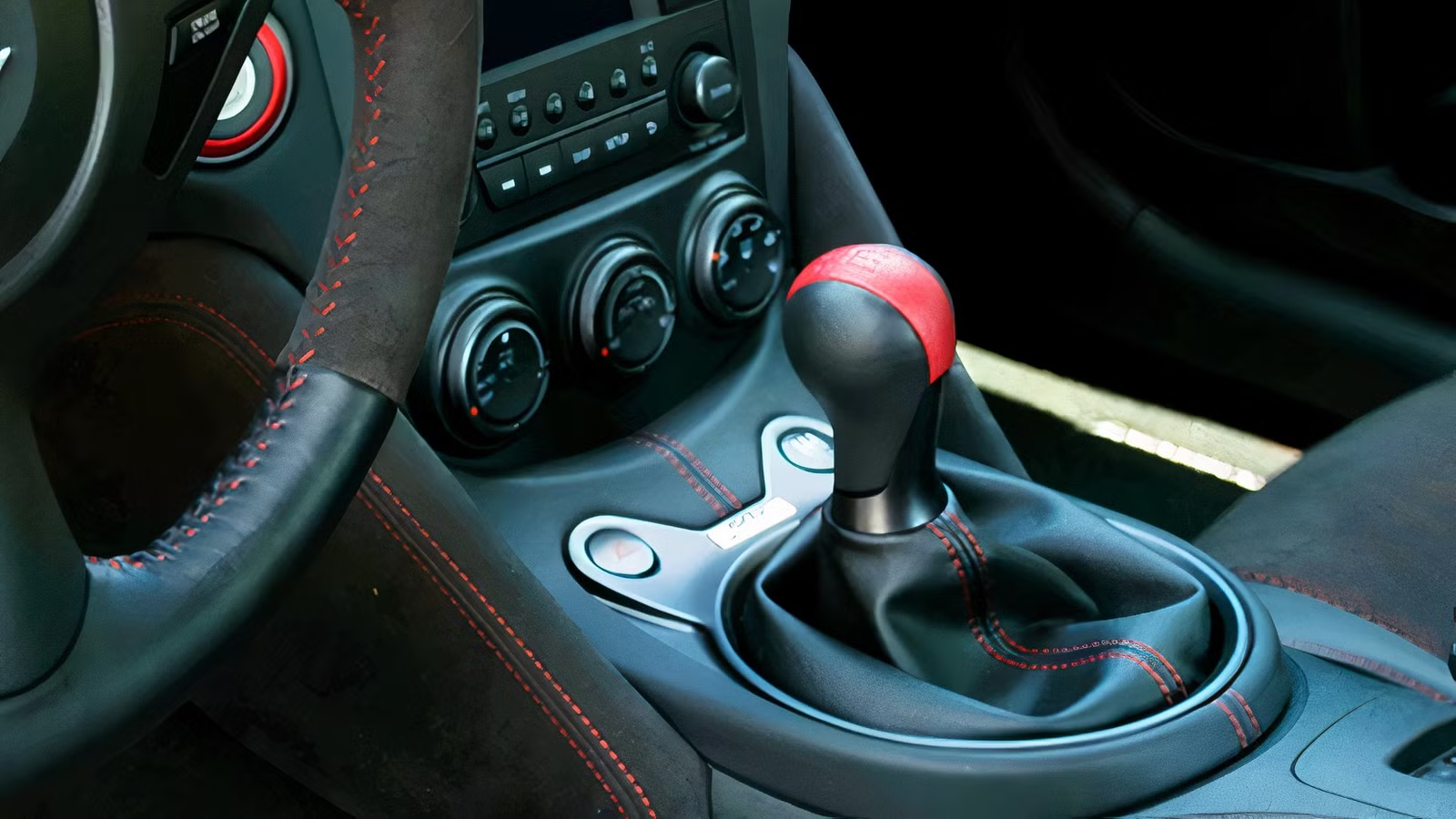
In 2020, a $37,605 anniversary coupe seemed to mark an ending. One review called its lineage the “alpha of affordable Japanese sports cars” and wondered if it might also become the “omega.” Its naturally aspirated V6, rear-wheel drive, and six-speed manual made that question sting.

Plenty of sports cars still offer three pedals, including affordable manuals. Yet the replacement adds 68 horsepower and twin turbos without changing the wheelbase. Was the old car’s character in the chassis Nissan kept, or the engine it retired?
A Naturally Aspirated V6 Made This A Different Breed
The Toyota GR86 and Subaru BRZ still offer naturally aspirated, rear-drive Japanese coupes with manual gearboxes. Nissan’s ending is narrower: its two-seat V6 coupe lost the unboosted engine when its successor arrived. The four-cylinder twins keep their 2+2 cabins; Nissan had already drawn a hard line at two seats. Their smaller engines and lighter bodies offer a different case for driver involvement, one that does not require matching the V6’s output.

Press the clutch, select a gear, and watch the tachometer climb. The V6’s power peak waited high in its rev range, so a downshift could bring the engine closer to its strongest output. No turbocharger forced in extra air as the engine climbed. The rear wheels took the power, while the fixed roof and two-seat cabin left little doubt about the coupe’s priorities.
The replacement keeps the seating and rear-drive layout but puts two turbochargers on its V6. Stronger torque arrives earlier in the rev range, reducing the need to chase revs. But the engine was only part of what made the Sport different.
Beyond Horsepower, The Hardware Made The Difference

Sport trim did not add a single horsepower to the V6. It gave the rear axle a limited-slip differential, plus larger brakes and forged RAYS wheels. Those upgrades mattered more to traction and braking than the unchanged horsepower figure. Comparing base prices across generations is misleading when the newer car keeps its differential for a pricier trim.
As one rear tire loses grip, the differential limits the speed gap between the driven wheels, helping the car accelerate out of a corner. It cannot create traction once both tires slide. Larger rotors add brake hardware for repeated slowing, but size alone cannot guarantee shorter stops or fade resistance. Tires, pads, cooling, and conditions still count. Forged construction can reduce wheel weight, but no comparison here proves sharper handling.
Then came the manual’s trick: select a lower gear and the engine blips toward the speed it needs when the clutch reconnects. The driver still chooses the gear and uses the clutch. Press a button beside the shifter and that electronic help steps aside, leaving the throttle blip to the driver.
The Nissan 370Z Sport Was An Unexpected Last Stand

Meet the Nissan 370Z Sport, represented by a 2020 50th Anniversary test car with a $37,605 period sticker, not a present-day asking price. Its 3.7-liter VQ37VHR V6 made 332 hp at 7,000 rpm and 270 lb-ft at 5,200, with a 7,500-rpm maximum engine speed. The six-speed manual let the driver chase the peak. Nissan reworked the 350Z’s FM platform with a shorter wheelbase, lighter components, and a stiffer body.

The Sport backed up those numbers with SynchroRev Match, a viscous limited-slip differential, 14-inch front and 13.8-inch rear brake rotors, and 19-inch forged RAYS wheels. Nissan billed SynchroRev Match as the world’s first synchronized downshift rev-matching manual. Anniversary paint and trim sat atop that hardware. The 2016–2020 Sport is a sensible starting point if condition and price agree. Nissan’s steering-lock no-start campaign concerned certain 2009–2010 cars; the manual’s concentric slave cylinder still merits inspection because repair requires gearbox removal.
A 2020 road test described five-second 0–60 mph capability. Separately, carsales reported a mid-five-second range across manual and automatic versions. Those are distinct published accounts, not factory guarantees. For a naturally aspirated V6, those acceleration figures gave the newer Z something to beat.
Beyond The 370Z, Can The New Z Keep Its Character?

The modern Z Sport and Performance make 400 hp and 350 lb-ft from a twin-turbo V6, gaining 68 hp and 80 lb-ft. Torque arrives at 1,600 rpm; Nissan’s 2027 sheet extends the plateau to 5,600, versus 5,200 at launch. Two seats, rear drive, and a six-speed manual remain.
Both cars share a 100.4-inch wheelbase and FM architecture dating to 2001, though Nissan stiffened the body, retuned suspension and dampers, and adopted electric steering. Base-manual weight rose from 3,333 to 3,486 pounds; these are base specifications, not anniversary versus performance test cars. The 4.3-second 0–60 mph run came from a preproduction Performance automatic; a manual Z took 4.9 seconds. It is not a manual-to-manual comparison.
For 2027, manual Zs cost $44,480 (Sport), $54,480 (Performance), or $67,260 (NISMO), plus $1,325 destination.
A Factory Restomod Keeps Some Traits And Changes Others

Early reviews split: one praised electric steering and the manual; another criticized dull responses and weight. The 2027 Performance’s revised dampers could temper those launch impressions. A living fossil, the new Z pairs old FM architecture with a turbocharged V6. The new Z hands you torque early. The old V6 asks you to chase 7,000 rpm.
Sources: Nissan, carsales, Toyota, Subaru, Eaton, Z1 Motorsports, NHTSA.

Related posts

Latest Post


No Comments