
This Is The Rarest Honda Superbike You Could Actually Ride On The Street
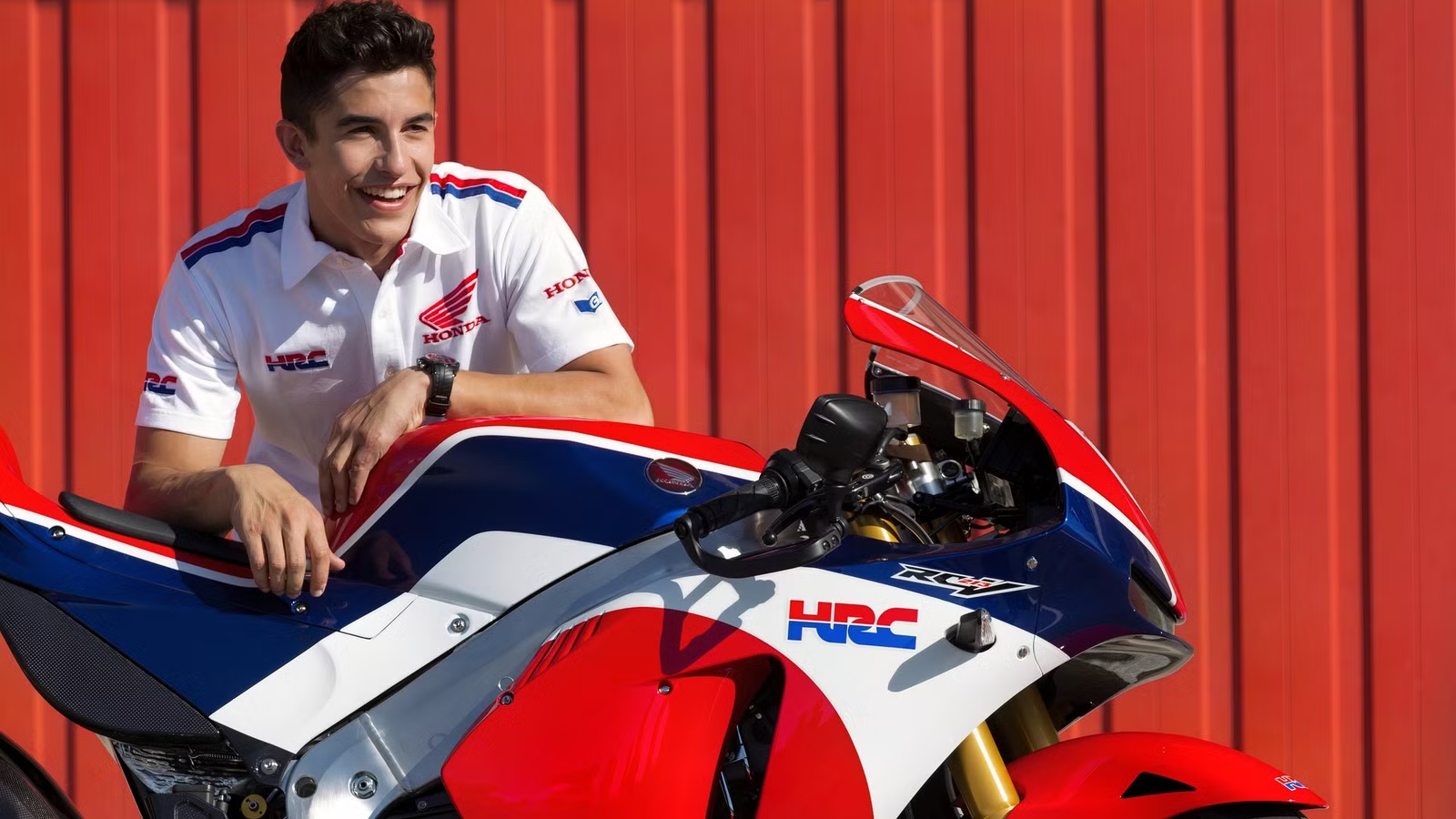
Superbikes have always been about pushing the limits of what’s possible on two wheels. But as manufacturers chased more and more power, they soon found themselves away from the road and at the racetrack. It’s led to some of the most exciting motorcycles to ever grace the roads, but has also stopped tantalizingly close to taking something from the MotoGP paddock and putting it on the road — at least, it did, until Honda took the superbike to its logical extreme.
When Superbikes Became Too Extreme For The Road

Superbikes were once the closest everyday riders could get to race machines, offering thrilling performance with some street practicality. But as expectations grew, the gap between road and race bikes narrowed. World Superbike’s homologation rules in 1988 helped push manufacturers toward more exotic materials, aggressive designs, and race-inspired technology.
MotoGP, however, has no homologation requirements, allowing manufacturers to build pure racing machines without road-going compromises. That raises one exciting question. What would a street-legal MotoGP bike actually look like?
Honda’s Obsession With Bringing Racing Technology To The Street


For decades, racing has been central to Honda’s identity. It treats motorsport not as a separate department, but as a way to consistently push the boundaries of what its engineers can achieve, and a way to refine technologies before they hit the road. It fueled some of Honda’s most sought-after homologation specials, like the legendary Honda RC30, RC45, and VTR1000 SP-1. These were bikes that, in racing fare, all won the WSBK championship. But while these captured the World Superbike series, it was Honda’s MotoGP bike — the RC213V — that had the greater reputation.
Used to devastating effect by Marc Marquez, the RC213V won the Teams’ and Manufacturers’ titles on launch in 2012, and gave Marquez his first title in his debut season. Honda already knew it could create road-going versions of bikes designed with homologation in mind, but the RC213V was a prototype. A road version had to be adapted for the street while retaining what made it a success on the circuit.
The Honda RC213V-S Was A MotoGP-Inspired Superbike You Could Actually Ride On The Road

When Honda unveiled the RC213V-S in 2015, it wasn’t just another expensive superbike. It was an attempt to bring championship-winning MotoGP technology to the street. Inspired by the machines ridden by Marc Marquez and Dani Pedrosa, it featured a 999cc V4 engine, an aluminum twin-tube frame, and race-derived electronics.
Of course, Honda had to tame things for the road. While the MotoGP bike produced over 235 horsepower, the street version made around 159 horsepower. An optional $12,000 Sports Kit bumped output to roughly 215 horsepower, although it also made the bike track-only. Still, this was about as close as ordinary riders could get to owning a genuine MotoGP machine.

Weight is the natural enemy of competition machines, and it was extensively shaved off both bikes. The MotoGP and road versions both used lightweight materials to keep weight down, with the V-S’ frame being made from hand-fabricated aluminum before the boring road-mandated parts like lights, mirrors, and a plate were added. Still, for a consumer bike, there wasn’t much heft to speak of. The FIM-required minimum weight of the RC213V was 346 lbs, but the RC213V-S came in at just 370 lbs dry. The Sports Kit dropped that to 350 lbs dry. It wasn’t the lightest of its time (the 2015 Ducati 1299 Panigale R was 367 lbs dry), but that’s still remarkably close. In all, Honda claimed that the V-S shared 80% of its parts with the MotoGP version.
What It Takes To Own A Road-Legal Machine With MotoGP

With all that power and racing pedigree, you might think the hardest thing about the RC213V-S is riding one. You’re not entirely wrong, as the aggressive riding position dictated by MotoGP races isn’t for everyone but, in reality, there are two hard parts. And the first is finding one.
Exotic bikes like this aren’t simply churned off a production line; they’re painstakingly hand-crafted and built in extremely limited numbers. The RC213V-S was no different, as it had an initial planned run of just 250 bikes. The true number is unclear, but estimates put it around 125 to 200 units completed before production was impacted by the 2016 earthquakes. But, assuming you are able to find a bike for sale, you’re going to run into another issue. And that’s affording one.
Considerable rarity comes with considerable cost, and the bike certainly had it when new. Anyone wanting a factory-fresh RC213V-S would have had to pay around $184,000 for the privilege, which seems cheap by modern comparison; a 44-mile example sold for $230,050 in 2023, while another sold for almost $250,000 in early 2026. It appears that, yes, you can put a price on the opportunity to own a road-legal MotoGP bike.
The Honda RC213V-S And The Legacy Of The Street-Legal Race Bike

The Honda RC213V-S remains one of the most ambitious attempts to bring top-flight racing metals to the roads. It didn’t chase sales figures, or practicality, or comfort, but instead showcased what was possible when racing pedigree overtook common sense. Sure, modern bikes might now have more power, and be more comfortable, and cost many multiples less, but that wasn’t the point. Honda wanted to take the pinnacle of its engineering prowess, and put it on the road. It did that, and the motorcycle world is all the better for it.
Sources: Honda, Bennetts, Classic Bike Hub, Iconic Motorbike Auctions

Related posts



Latest Post


No Comments