
Jeep Compass e-Hybrid review – first UK drive 2026
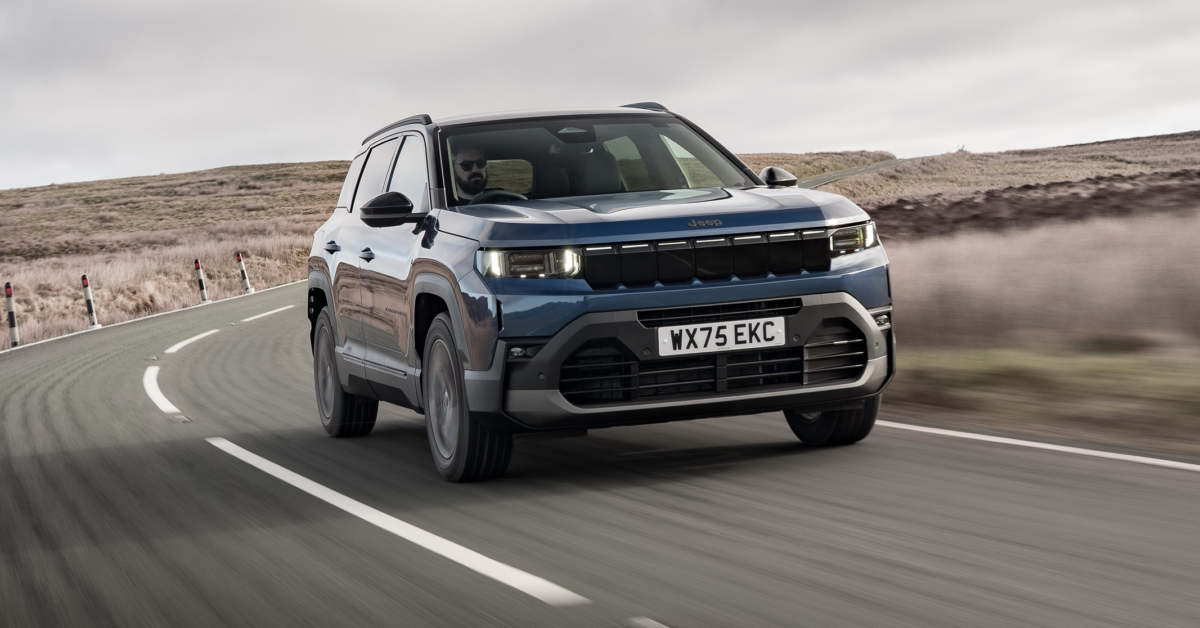
Make and model: Jeep Compass e-Hybrid
Description: Medium-sized mild hybrid or plug-in hybrid SUV
Price range: from £34,635, plus optional extras
Summary: The new Jeep Compass is a comfortable, practical family SUV with genuine off-road ability, but it doesn’t stand out against some very accomplished rivals.

Additional reporting by Matt MacConnell.
Introduction
The Jeep Compass has entered its third generation, with an all-new model that’s bigger, more modern and available with a choice of petrol hybrid, plug-in hybrid and electric power.
For this review, we’re concentrating on the two ‘e-Hybrid’ versions. Confusingly, one is a mild hybrid (basically a petrol engine with a little electrical assistance) and the other is a plug-in hybrid capable of travelling a useful distance on electricity alone.

The Compass is a mid-sized family SUV and is closely related to other models from the Stellantis family, like the Vauxhall Grandland, Peugeot 3008 and Citroën C5 Aircross. It also competes against some of the UK’s most popular cars, including the Kia Sportage, Jaecoo 7, Nissan Qashqai and Volkswagen Tiguan. It’s a tough market, with plenty of alternatives that are very good and/or great value for money.
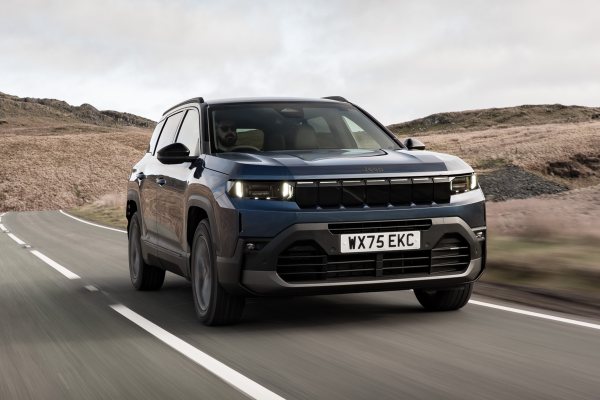
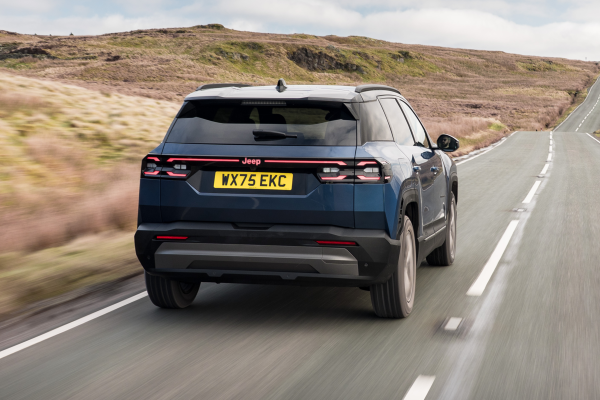
We drove the Compass alongside the smaller Jeep Avenger, and the difference between them was interesting. The Compass is the more accomplished, more comfortable and more refined car, but somehow it’s not quite as likeable. There’s nothing particularly wrong with it – it looks smart, drives reasonably well, has plenty of space and retains some genuine off-road ability. But against such strong and varied competition, being perfectly decent isn’t quite enough to stand out.
Price and equipment
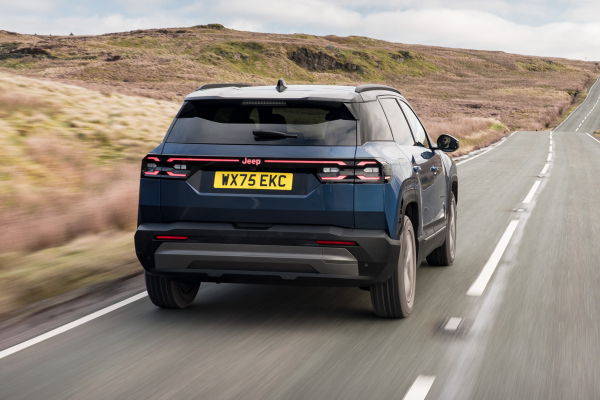
The Compass range starts at £34.6K for the mild hybrid, while the plug-in hybrid starts at £37.3K. Fully electric versions are also available, but we’ll cover those separately at a later date.
The entry-level Altitude gets a respectable amount of equipment, including front and rear parking sensors, a large 16-inch touchscreen, adaptive cruise control and a comprehensive package of driver assistance systems.
First Edition models add equipment such as matrix LED headlights, heated seats and wireless phone charging, while the range-topping Summit brings larger alloy wheels, electrically adjustable seats and additional comfort and styling features.
It’s a decent specification, although rivals offer some equipment as standard that Jeep charges extra for. The lack of a standard reversing camera on some versions is a particularly odd omission for a family SUV of this size and price.
The plug-in hybrid is definitely worth considering if you can charge at home. Its ability to cover everyday journeys on electricity could substantially reduce petrol consumption, although the economics rely on you being able to charge it at home every day that you drive it.
The mild hybrid is the simpler choice for anyone without convenient charging. It’s basically just a petrol engine with a bit of electrical boost, so it doesn’t require any change in driving habits and it’s almost £3K cheaper. However, performance is significantly less because the electrical assistance is modest.
Inside the car
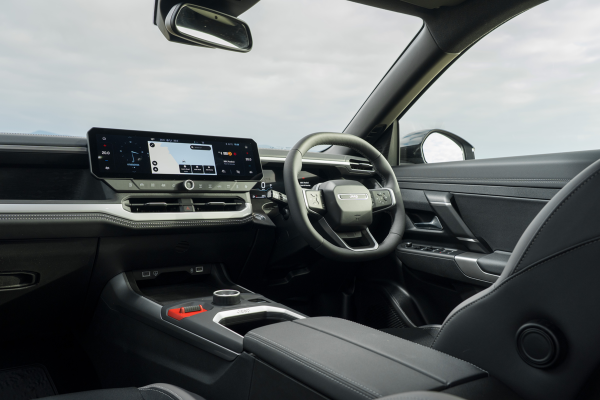
The Compass has a recognisably Jeep interior, with a fairly chunky, utilitarian look and plenty of practical touches.
There’s no shortage of grey and black trim, while rubberised surfaces and hard plastics reinforce the impression that this is a car designed to cope with family life rather than impress passengers with luxury materials.
That said, everything feels reasonably well put together. The seats are comfortable, the driving position is good and you sit high enough to enjoy a commanding view of the road.
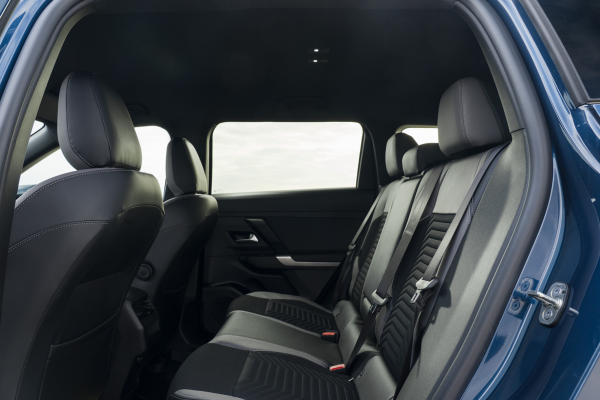
Passenger space is generous, with enough room for taller adults in both rows. The Compass is now quite a substantial family SUV, and that extra size is useful when you’re carrying passengers and luggage.
There are also plenty of places to put things. Jeep claims 34 litres of storage around the front of the cabin, and the various trays, cubbies and compartments should prove handy for phones, keys, drinks and all the other bits and pieces that accumulate in a family car.
The central touchscreen is enormous at 16 inches and handles most of the infotainment functions. The graphics are reasonably clear, although the system can be slow to respond and isn’t always as intuitive as it should be.
Thankfully, Jeep hasn’t abandoned physical controls altogether. There are proper switches for some frequently used functions, which makes everyday operation easier than in cars where everything has been buried in touchscreen menus.
Boot capacity is a useful 550 litres, with a wide opening and a split-level floor that allows you to choose between maximum luggage space and a flatter load area. It’s a practical arrangement, particularly when loading larger items.
Overall, the Compass does a decent job of accommodating a family, even if the cabin doesn’t have the same polished feel as some of its best rivals.
Plug-in hybrid driving range and charging
The regular Compass e-Hybrid is a mild hybrid, so it doesn’t need plugging in. Its small electrical system assists the petrol engine and can provide limited electric propulsion under suitable conditions, but it’s primarily a petrol-powered car.
The plug-in hybrid is a different proposition. With a much larger battery and a more powerful electric motor, it can travel for a useful distance without running the petrol engine. Jeep’s current UK specification quotes an official electric driving range of around 50 miles, although other published figures are higher.
That’s enough to cover many people’s daily driving without using petrol, provided they can recharge regularly. The Compass plug-in hybrid also defaults to electric driving when you start it, assuming there’s sufficient charge in the battery. Once that electricity is used up, the petrol engine takes over, so longer journeys don’t require the same charging stops as a fully electric car.
As with any plug-in hybrid, the real benefit depends on how it’s used. Regular charging and plenty of shorter journeys can make it very economical, but drivers who rarely plug in may find themselves carrying a heavy battery around for little benefit.
On (and off) the road
The Compass is perfectly pleasant to drive, even if there’s nothing especially memorable about the experience.
The mild hybrid combines a 1.2-litre petrol engine with a bit of electrical assistance, producing a total of 145hp. It’s connected to a six-speed automatic gearbox, which works smoothly enough in normal driving. There’s no meaningful electric-only driving, so the petrol engine will be running any time you press the accelerator pedal.
Performance is average for a family SUV. There’s enough power for everyday use and overtaking slower traffic, although you sometimes need to plan ahead rather than expect an immediate burst of acceleration.
The plug-in hybrid has substantially more power, at 225hp. This comes from a more powerful petrol engine plus a more powerful electric motor. The electric motor can drive the car on its own even under quite substantial acceleration, with the petrol engine eventually kicking in if you put your foot flat to the floor. It feels notably more responsive when accelerating, while the ability to drive purely on electricity also makes it particularly pleasant around town.
Both versions are reasonably quiet and refined at normal speeds, with comfortable seats and a relaxed character that suits longer journeys.
The suspension is less convincing when you start pressing on. Although the ride is generally comfortable, the Compass can become unsettled over bumps, particularly if you encounter an uneven surface partway through a corner. It’s not a car that encourages you to drive enthusiastically, and the steering and handling don’t offer much excitement. But most family SUV buyers won’t be expecting sports-car responses, and the Compass is perfectly capable of getting on with everyday journeys without fuss.
During our launch drive, the mild hybrid returned about 45mpg in mixed driving, against an official figure of just under 50mpg. That’s a respectable result, although it’s worth remembering that a launch event isn’t the same as a full week of driving in normal UK conditions.
Where the Compass really distinguishes itself from most family SUVs is its strong off-road capability. We drove various versions of the new Compass at launch events in Germany and Wales, including some fairly demanding off-road sections, and came away impressed by just how capable it is.
Even front-wheel-drive versions cope very well with challenging terrain that would have caused problems for many conventional family SUVs. The electric four-wheel-drive 4xe (not reviewed here) goes a step further, with even more ability when conditions become difficult.
That’s a genuine strength rather than simply trading on Jeep’s off-road reputation. The catch is that most Compass buyers will probably never need anything approaching that level of capability, so its advantage over more road-focused rivals may not count for much in everyday use.
Ownership
The Compass has earned a four-star Euro NCAP safety rating. That’s a respectable result, although five-star ratings are now common among family SUVs, so it falls a little short of the strongest performers.
Safety equipment is fairly comprehensive, with automatic emergency braking, adaptive cruise control and lane-keeping assistance. Some useful parking features are restricted to higher specifications or optional packages, so it’s worth checking exactly what’s included in the version you’re considering.
Jeep provides a three-year/60,000-mile new car warranty, which is fairly typical of legacy manufacturers but looks increasingly uncompetitive against the five-, seven- and eight-year cover offered by several newer rivals.
The mild hybrid’s fuel economy is respectable rather than outstanding, while the plug-in hybrid offers the potential for much lower petrol consumption if you can charge it regularly at home. Neither version has been on sale long enough for us to draw meaningful conclusions about long-term reliability.
We’ll build a broader ownership picture through our unique Expert Rating Index as independent reliability and running-cost data become available.
Verdict
The new Jeep Compass is a decent family SUV, but it’s difficult to find a compelling reason to choose it over the best alternatives.
It’s comfortable, reasonably refined and practical, with plenty of passenger space and a useful boot. The mild hybrid offers acceptable performance and fuel economy, while the plug-in hybrid brings the option of covering shorter journeys on electricity alone.
The Compass also has genuine off-road ability, which is something most rivals can’t match. We were impressed by how easily it handled a demanding course that would have troubled many other family SUVs, but most buyers simply don’t need that capability.
On ordinary roads, the Compass doesn’t do anything especially badly, but neither does it excel. The suspension can become unsettled, performance is fairly average and the infotainment system isn’t as slick as we’d like.
The Compass is also competing in a particularly strong part of the market. Cars like the Kia Sportage, Hyundai Tucson and Volkswagen Tiguan have set high standards for quality, comfort, technology and value, and the Jeep doesn’t really improve on any of them.
It’s a more accomplished car than the smaller Avenger, although somehow less appealing. The Avenger has a character that makes it easy to like, while the Compass feels more like another reasonably competent family SUV.
If you like the way the Compass looks, appreciate its practical interior and can get a good deal, there’s no particular reason not to buy one. But if you’re simply looking for the best medium-sized family SUV for your money, there are stronger choices elsewhere.
We like:
- Genuine off-road ability
- Comfortable seats and good driving position
- Spacious cabin and practical boot
- Respectable mild-hybrid fuel economy
- Useful electric range from plug-in hybrid
We don’t like:
- Ordinary performance from mild hybrid
- Suspension can become unsettled
- Infotainment occasionally slow to respond
- Some useful equipment costs extra
- Stronger all-round alternatives available
Similar cars
BYD Seal U | Chery Tiggo 8 | Citroën C5 Aircross | Dacia Bigster | Ford Kuga | Honda ZR-V | Hyundai Tucson | Jaecoo 7 | KGM Korando | Kia Sportage | Lepas L8 | Mazda CX-5 | MG HS | Mini Countryman | Mitsubishi Outlander | Nissan Qashqai | Omoda 7 | Peugeot 3008 | Renault Austral | SEAT Ateca | Skoda Karoq | Subaru Forester | Suzuki S-Cross | Vauxhall Grandland | Volkswagen Tiguan

Related posts


Latest Post


No Comments