How Mazda Turned the CX-90 Into a Poor Man’s BMW X5
8 minutes reading
Wednesday, 7 Oct 2026 21:45 0 9 autotech
Badge snobs will scoff, but the numbers don’t lie. Mazda’s flagship three-row now runs a 3.3-liter turbocharged inline-six, sends power through a rear-biased chassis, and wraps its cabin in Nappa leather, the same formula BMW has used to sell X5s for two decades. The CX-90 Turbo S starts in the mid-$50,000s. A comparably equipped X5 xDrive40i clears $75,000 without trying hard. That gap is real money, and it’s forcing a question luxury SUV shoppers haven’t had to seriously ask before. How much of the German experience is actually German, and how much of it is just architecture and materials that Mazda has quietly learned to replicate?
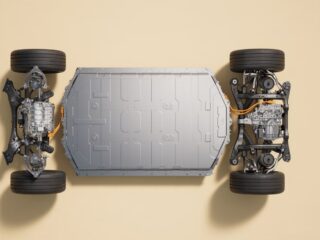
When Mazda scrapped its transverse, front-wheel-drive-based platform for the CX-90, it wasn’t chasing a marketing bullet point. It was rebuilding its entire large-vehicle strategy around the same layout BMW, Mercedes, and Genesis used to justify premium pricing with a longitudinally mounted engine, rear-wheel-drive-biased architecture, and a chassis tuned for the weight transfer that comes with sending power rearward first.
That’s a fundamentally different engineering problem than the transverse setups Mazda, Honda, and Toyota have leaned on for their three-row SUVs. Longitudinal platforms are heavier, more expensive to package, and harder to justify on a mainstream price sheet. Mazda built one anyway, and did it without borrowing a single bolt from BMW’s parts bin. The CX-90’s platform is entirely Mazda’s own, right down to the eight-speed transmission and the plug-in hybrid variant that shares the same bones.
Shot of 2025 Mazda CX-90 3.3 Turbo S Premium Plus interior showing front cabinMazda
The bet here isn’t subtle. Mazda looked at what makes a BMW feel like a BMW from behind the wheel—rear-biased weight distribution, a straight-six under the hood, a chassis that rewards a bit of throttle on the way out of a corner—and decided that formula didn’t need a German passport. It’s a gamble on engineering credibility over brand equity, and three-row buyers have started to notice.
The CX-90 Turbo S Brings BMW-Style Hardware To A Lower Price
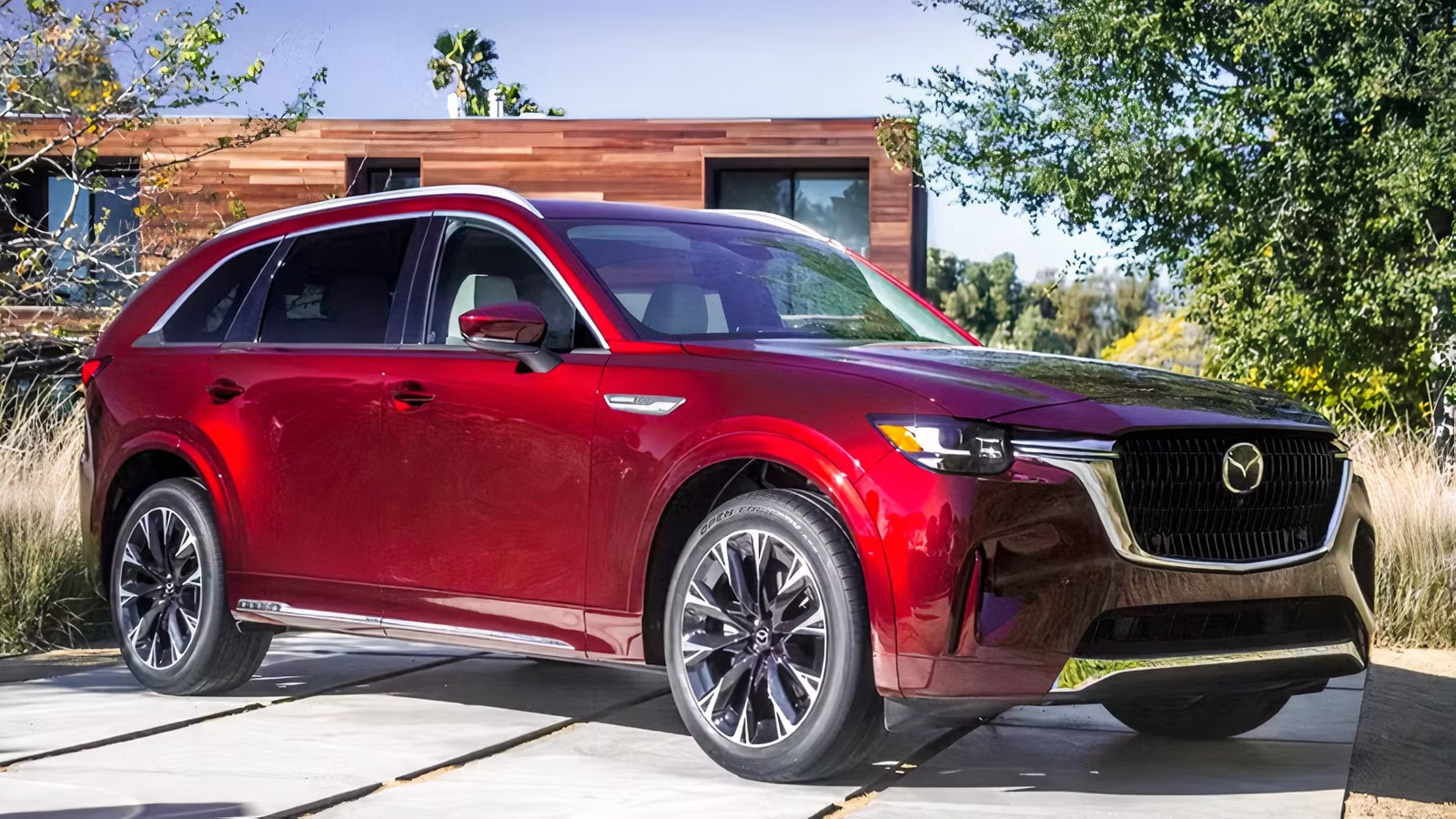
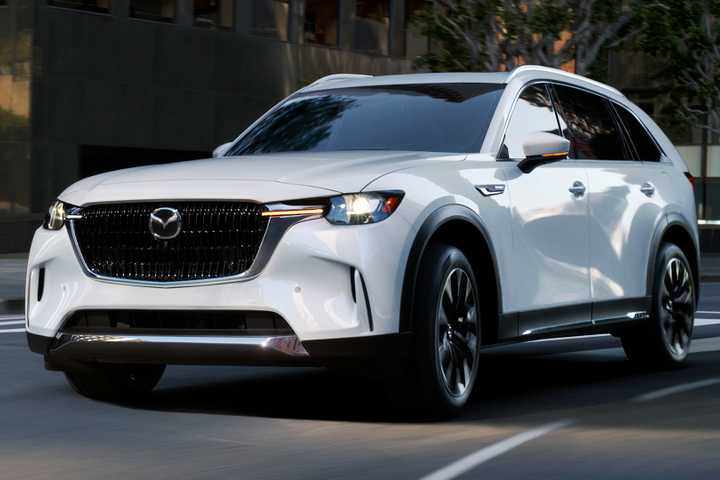
2026 Mazda CX-90 Driving Passenger Side Front 3/4Mazda
The centerpiece is the 3.3-liter turbocharged inline-six, and in Turbo S trim it is tuned harder than the base engine, producing up to 340 horsepower and 369 pound-feet of torque on premium fuel, running through Mazda’s own eight-speed automatic with standard all-wheel drive. That output lands the CX-90 Turbo S within shouting distance of BMW’s own turbocharged 3.0-liter six in the X5 xDrive40i, a mild-hybrid unit that’s been the brand’s volume seller for years.
Pricing is where the story gets interesting. A 2026 CX-90 Turbo S Premium Sport starts in the mid-$50,000 range, and even a well-loaded Turbo S Premium Plus, complete with the top interior package, tops out under $60,000. The X5 xDrive40i, by comparison, starts at roughly $70,600 before a single option box is checked, and real-world configured examples routinely land between $78,000 and $86,000 once buyers add the packages that give the Mazda’s standard equipment list a run for its money.
Rear 3/4 shot of 2026 Mazda CX-90 Towing A MotorcycleMazda
That’s not a rounding error. Depending on trim and options, the spread between a well-equipped CX-90 Turbo S and a comparably specced X5 runs from roughly $18,000 to over $20,000. For three-row shoppers, that’s not pocket change; it’s a meaningful chunk of a second car, a few years of fuel, or a serious head start on a down payment elsewhere.
Nappa Leather And Six-Cylinder Power Give Mazda A Genuine Premium Feel
Shot of 2025 Mazda CX-90 front cabin showing dashboardChris Chin | TopSpeed
Step inside a CX-90 Turbo S and the case for Mazda’s premium ambitions gets stronger, not weaker. The seats are wrapped in Nappa leather, offered in white or black depending on configuration—the same material designation BMW uses in its own upper trims. It’s not vinyl dressed up with a fancy name; it’s the genuine article, and it shows in the grain, the stitching, and the way it ages.
Higher trims add a 12-speaker premium audio system, real switchgear for climate and infotainment rather than a touchscreen doing everything, and a 12.3-inch central display that runs Mazda Connect with wireless Alexa built in. The second row gets its own set of physical controls, a detail rear passengers will appreciate more than any spec sheet number.
2025 Mazda CX-90 front seatsChris Chin | TopSpeed
Then there’s the drive. The inline-six doesn’t just make good numbers; it makes the right kind of power delivery too—smooth, linear, and paired with a chassis that lets the rear axle do more of the work than Mazda’s front-wheel-drive-based SUVs ever could. Steering feels tauter, body control stays composed through corners that would unsettle a transverse-platform three-row, and the whole package moves with a confidence that genuinely echoes what BMW has sold for years under a much higher price tag. This isn’t a mainstream SUV wearing a costume. It’s an SUV built on premium logic from the ground up, and it feels like it.
Where The CX-90 Still Falls Short Of The X5
Front 3/4 shot of 2025 Mazda CX-90 parkedChris Chin | TopSpeed
None of this means the Mazda CX-90 has closed the gap entirely, and pretending otherwise would do you a disservice. Highway refinement is the first crack in the armor. Wind and road noise creep into the cabin at sustained speed in a way that’s noticeably more present than in the X5, where decades of NVH engineering and a longer development runway show up in the details Mazda hasn’t fully sorted yet. It’s not a loud cabin by mainstream standards, but next to a BMW, the difference is audible.
The transmission is the second issue, and it’s the one worth watching closest. Mazda’s eight-speed uses a wet multi-plate clutch setup rather than a traditional torque converter, and early CX-90s earned a reputation for jerky, hesitant behavior at low speeds—particularly rolling away from a stop or creeping through a parking lot. Mazda has issued software updates to smooth the calibration, and by most accounts the 2025 and 2026 model years behave noticeably better than the 2024 launch cars. But it hasn’t fully disappeared. Some owners still report occasional low-speed roughness even on updated units, and that’s the kind of quirk a BMW buyer simply never has to think about.
2025 Mazda CX-90 side action shotChris Chin | TopSpeed
Resale value is the harder question to answer, because there isn’t enough history to answer it yet. The X5 has decades of depreciation data, a well-established used market, and a badge that luxury buyers trust to hold value. The CX-90 is still a young nameplate in a segment where reputation compounds slowly.
Its 2024 launch year carried a heavier-than-usual recall load, largely centered on electrical software and a steering system campaign, both since addressed, but the kind of thing that lingers in a buyer’s memory even after it’s fixed. Mazda’s engineering has clearly matured fast. Whether the market rewards that maturity with strong resale numbers is still an open question, and it’s one only a few more years of ownership data will settle.
The $20,000 Question: How Much Luxury Do You Really Need?
Strip away the badge and the CX-90 Turbo S is doing almost everything the X5 xDrive40i does. It offers longitudinal six-cylinder power, rear-biased dynamics, Nappa leather, and a cabin that doesn’t feel like a compromise. The savings aren’t marginal, either. They’re the kind of number that changes what else you can afford, whether that’s a family vacation, a home renovation, or simply a lower monthly payment for the next six years you’ll actually own the thing.
What you’re trading for that savings is narrower than it used to be, but it’s not nothing. A slightly noisier highway cabin, a transmission that’s improved but not fully polished, and a resale picture that’s still being written are real costs, just not deal-breaking ones for buyers who value substance over signaling.
2025 Mazda CX-90 engineChris Chin | TopSpeed
For three-row shoppers who’ve always assumed German badges were the only way into this kind of driving experience, the CX-90 Turbo S is worth a serious look before locking into a used X5 depreciation curve you didn’t ask for. The engineering gap has narrowed further than most buyers realize. The only question left is whether the remaining differences are worth $20,000 to you, or whether that money is better spent somewhere else entirely.













No Comments