
Bosch Is Asking Why EV Battery Packs Still Aren’t Repairable, And It’s a Fair Question For Every Owner
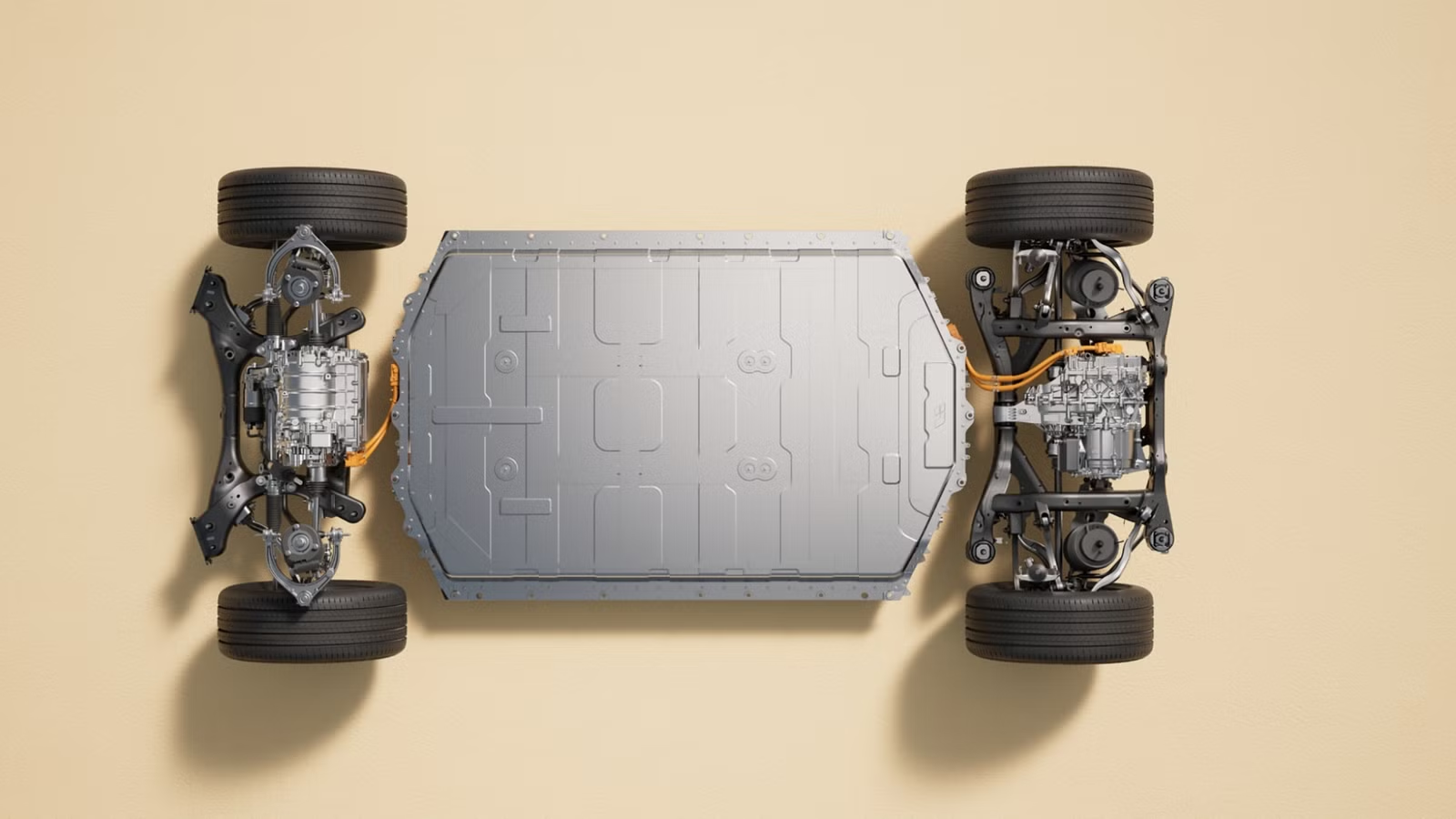
Bosch’s aftermarket chief just said the quiet part out loud: EV batteries are the most expensive part of the car, and yet most of them can’t be fixed piece by piece. Rupert Hoellbacher, who leads Bosch Mobility Aftermarket, told the German outlet Automobilwoche this week that unless battery repair gets cheaper and easier, electric cars will simply have shorter lifespans than the gas vehicles they’re replacing. Not because the motors wear out or the batteries physically die, but because the economics stop making sense.

Here’s the problem in plain terms. A single failed cell or module inside a battery pack doesn’t always mean the whole pack is dead. But in most EVs today, that’s exactly how it gets treated, because independent shops don’t have the diagnostic access or the parts pipeline to isolate and swap just the bad piece. The result is a full pack replacement, often priced high enough to rival what the car is worth. For an owner sitting in a six- or seven-year-old EV, that’s not a repair bill. That’s a decision about whether the car is worth keeping at all.
Why A Single Bad Cell Can Total An Otherwise Healthy EV
Battery packs are built from many individual modules, each containing dozens or hundreds of cells. When one module goes bad, the pack usually gets pulled and replaced whole rather than repaired at the cell or module level. Bosch’s argument is that this doesn’t need to be the default. Hoellbacher pointed out directly that many battery problems can be addressed by repairing individual modules instead of swapping the entire pack, but that only works if the diagnostic tools and replacement parts actually exist outside the automaker’s own service network.

Right now, they mostly don’t. Automakers control the diagnostic software needed to identify which module or cell has failed, and they control whether replacement modules are even sold as standalone parts. That leaves independent repair shops locked out, and leaves owners with one option: a dealer quote for a full pack, frequently landing in the $10,000 to $20,000 range once labor and parts are factored in.
The Warranty Cliff Is Arriving For The First Wave Of EV Owners

Most EV battery warranties run eight years or 100,000 miles. The wave of EVs sold in the late 2010s and early 2020s is starting to age out of that coverage now, which means the exact scenario Bosch is describing is no longer hypothetical. An owner with a car worth $15,000 on the used market who gets a $15,000 quote for a battery replacement isn’t really being offered a repair. They’re being asked to buy the same car twice.
Hoellbacher framed the stakes bluntly: if the industry doesn’t make battery repair or replacement more financially attractive, vehicle lifespans will decline, full stop. He called that outcome a step backward for sustainable business practices, since many of the components inside these batteries are engineered to last far longer than the pack as a whole is currently allowed to.
What Modular Repairability Would Actually Change For Owners

Bosch’s pitch is straightforward: let independent workshops diagnose and swap individual modules at prices that make sense next to the car’s value, and EVs stop turning into scrap the moment their warranty clock runs out. That requires automakers to open up diagnostic access and start selling modules as serviceable parts, rather than treating the pack as a sealed unit that only their own network can touch.
That shift hasn’t happened yet, and there’s no indication from Bosch’s comments that automakers are rushing toward it. But the pressure is coming from the right place. Bosch isn’t an EV skeptic making a political argument, it’s one of the largest suppliers in the industry pointing out that the current setup makes electrification less sustainable, not more. For anyone driving an EV that’s closing in on year six or seven, that’s the number worth watching just as closely as range and charging speed.

Related posts





Latest Post


No Comments