
The Harley That Delivers The Best Ownership Experience
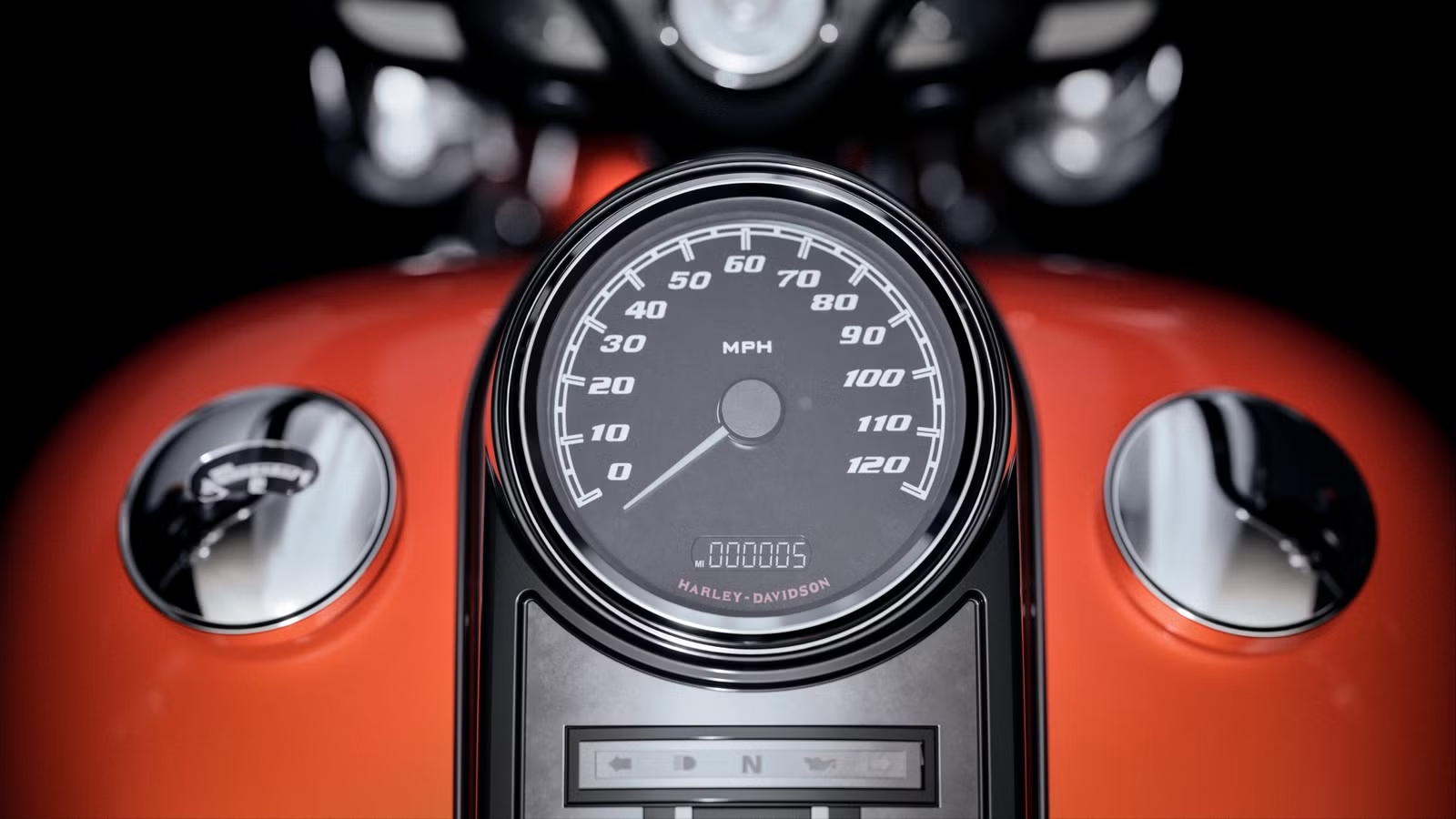
Some Harley-Davidsons are easy to fall in love with. The harder question is which one is actually the easiest to own. A great engine and beautiful styling only go so far when maintenance, comfort, storage, versatility, and everyday usefulness enter the equation.

The best ownership experience isn’t necessarily found on the least expensive Harley or the one with the most equipment. It’s the motorcycle that delivers what matters most without leaving its owner with a long list of compromises to solve later. Several Harleys make a strong case, but one brings those pieces together exceptionally well.
What Makes A Harley Good To Own?
The Hidden Costs That Determine Whether You Keep Riding
Buying a Harley-Davidson is the easy part. The real test starts after the first ride, when the motorcycle becomes part of your routine. Oil changes, tires, brakes, batteries, scheduled service, repairs, and the occasional unexpected problem all become part of the deal, along with whether the bike remains comfortable and useful after the excitement of bringing it home has worn off.


Maintenance is a good place to start because every motorcycle needs it. The important question isn’t whether a Harley requires service, but how often it needs attention, how involved that work is, and what it costs to keep everything working properly. Routine maintenance that is predictable and straightforward is a very different proposition from a motorcycle that develops recurring problems or requires expensive work simply to stay on the road.
The Aftermarket Advantage That Separates Harleys From Other Big Cruisers

Reliability matters just as much. A durable motorcycle doesn’t have to be maintenance-free; it needs to give its owner confidence that routine service and normal wear-item replacement will keep it healthy. Parts availability, dealer support, independent shops, and the large Harley-Davidson aftermarket matter here, too. When something eventually does wear out, getting the right part or finding someone who knows how to fix it can make the difference between a minor inconvenience and a motorcycle sitting in the garage for weeks.

Then comes everything that happens when the engine is running. Can it handle a two-hour ride without leaving the rider worn out? Is there somewhere to put a jacket and rain gear? Can a passenger ride comfortably? Does it work just as well for a quick trip across town as it does for a weekend away? Those details may not make a motorcycle exciting on a showroom floor, but they determine how often the owner actually wants to ride it.
Why The Best Ownership Experience Has Nothing To Do With Power Or Price

Put all of that together, and the best Harley to live with isn’t necessarily the cheapest, most powerful, or most technologically advanced. It’s the one that keeps maintenance and compromises manageable while remaining useful, enjoyable, and capable enough that the owner doesn’t start looking for something else a few years down the road.
The Harleys That Almost Get It Right
Two Strong Contenders, Two Different Compromises

Two motorcycles make strong cases when the question is how much Harley-Davidson you can get without creating unnecessary complications: the Heritage Classic and the Street Bob. They approach the problem from opposite directions. One emphasizes versatility, while the other keeps things deliberately simple.
The Heritage Classic Covers A Lot Of Ground

The Heritage Classic is the easier motorcycle to make a case for because it doesn’t have an obvious weakness. Saddlebags, a windshield, passenger accommodations, and a relaxed riding position give it legitimate long-distance ability without turning it into a full touring motorcycle. The Milwaukee-Eight 117 Classic, producing 98 horsepower and 120 pound-feet of torque, provides plenty of performance without requiring the rider to work for it.

That versatility makes the Heritage easy to live with. It can handle a trip across town, a full day of back roads, or a weekend away without asking its owner to change motorcycles. Its compromise is that it sits between categories: more touring-capable than a stripped-down Softail, but without the fuel capacity, storage, and touring equipment of a dedicated Touring model.
The Street Bob Keeps Things Simple

The Street Bob takes the opposite approach. It strips the formula down to the essentials, making it easier to maneuver and leaving fewer accessories to maintain. The Milwaukee-Eight 117 Classic produces the same 98 horsepower and 120 pound-feet of torque, giving the Street Bob serious performance without changing its stripped-down character.

The tradeoff is versatility. There is no built-in touring luggage or substantial wind protection. Making it into a serious travel bike means adding equipment that works against its original simplicity. Both models come close, but for different reasons. One asks the rider to accept some touring compromises, while the other asks the owner to add equipment when those compromises become inconvenient. That leaves room for a Harley that starts with more of the right pieces already in place.
Best Ownership Experience Goes To The Road King Special

The Road King Special is the Harley that brings the pieces together. It doesn’t win this argument by being the newest, most powerful, or most electronically loaded motorcycle Harley-Davidson sells. It makes the case by giving an owner a motorcycle that is already equipped to do the jobs most riders eventually ask of a big Harley.

Look at what comes standard. Hard saddlebags provide useful storage without hanging aftermarket bags from the back of the motorcycle. A six-gallon tank means fewer fuel stops when the ride stretches out. Cruise control takes some of the work out of highway miles, while the passenger accommodations make two-up riding practical rather than an afterthought. Those aren’t showroom decorations. They’re features that can change how often and how far the motorcycle gets used.
The Engine Fits The Mission

The Milwaukee-Eight 114 fits that personality, too. Its 95 horsepower matters less here than its 122 pound-feet of torque, which arrives when a heavy motorcycle needs it. The broad torque curve gives the Road King Special strong pull across the rev range without requiring high RPM or constant shifting to make progress. That matters more in everyday riding than a big horsepower number. The engine has the grunt to move a loaded motorcycle down the highway, climb a grade, or pass traffic without turning every ride into a performance exercise.

There are compromises. The Road King Special is a big motorcycle, and its weight becomes very apparent when backing it into a parking space or maneuvering it around a garage. Its detachable windshield also can’t provide the same level of weather protection as the fixed fairing on a Street Glide or Road Glide. Those are real drawbacks, but neither one is a surprise to someone who understands what this motorcycle is built to do.

That’s the distinction that puts the Road King Special ahead. It doesn’t try to eliminate every compromise. It gives the owner enough capability, comfort, storage, and long-distance ability from the start that there is less temptation to spend money turning the motorcycle into something it wasn’t.
Where The Road King Special Stands Today
Why It Still Makes Sense In 2026

The Road King Special occupies an interesting place in the current Harley-Davidson customer-facing lineup. It is a 2025 model-year motorcycle, but Harley-Davidson continues to present it to buyers alongside the newer 2026 models. That matters because its appeal doesn’t depend on having the newest technology or the latest styling. Its appeal is the underlying formula, and that formula still works.

The $24,999 MSRP puts the Road King Special firmly into premium Harley territory. That’s real money, particularly when the Heritage Classic and Street Bob offer less expensive ways into the lineup. But the price also needs to be considered alongside what comes with the motorcycle. The saddlebags, six-gallon tank, cruise control, passenger accommodations, and Touring chassis aren’t items an owner has to add later to make the bike useful for serious travel.
What You Get For The Money

That becomes even more important when maintenance enters the picture. A big Harley isn’t cheap to keep on the road. Tires, brakes, fluids, batteries, and scheduled services all cost money, and none of that disappears because the motorcycle is well built. What matters is whether those expenses are supporting a machine that gets used. The Road King Special can serve as a daily ride, a weekend motorcycle, a two-up machine, or a long-distance traveler without requiring a different setup for each job.

That’s where it separates itself from the two motorcycles we considered earlier. The Street Bob is simpler and less expensive, while the Heritage Classic delivers remarkable versatility in a smaller package. The Road King Special gives up some maneuverability and asks more money up front, but in return, it arrives ready for the kind of riding that tends to make owners keep a big Harley for years.

And that’s ultimately the point. A great motorcycle can be exciting when it’s new, but a great one to own has to keep earning its space in the garage. The Road King Special has enough range, storage, comfort, mechanical character, and everyday usefulness to keep earning that space, which is why it remains such a strong answer to this argument.
Source: Harley-Davidson

Related posts
Latest Post


No Comments