
The Mazda Turbo Sleeper Sedan Everyone Ignored Chasing Rotaries
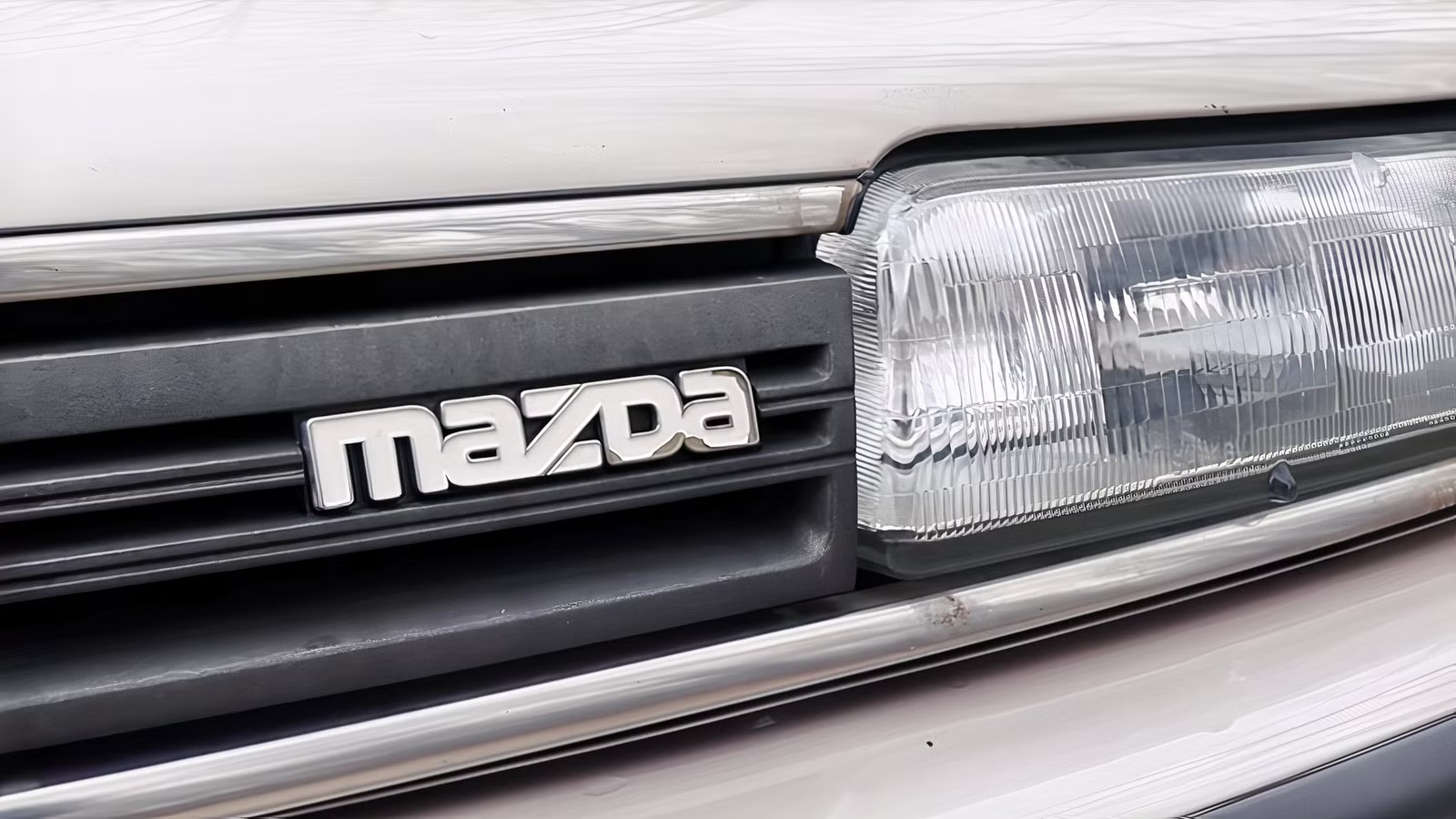
By the late 1980s, Mazda had a problem that most automakers would envy. Its engineers had built something genuinely quick, technically interesting, and surprisingly tuneable. The trouble was that nobody was paying attention to it, because every enthusiast who cared about Mazda performance was fixated on a spinning triangle in a sports car from Hiroshima. The rotary cult had a grip on the brand’s identity so complete that a turbocharged four-cylinder doing serious work in the rest of the lineup barely registered. That car existed. It ran a Car and Driver-tested 7.4-second 0-60 mph in 1988. It had available four-wheel steering. And almost nobody noticed.
When the RX-7 Made Everyone Forget Mazda Built Anything Else

The second-generation RX-7 arrived in 1986 and reset expectations of what a Japanese sports car could be. It was light, it handled beautifully, and its rotary engine had a personality that no piston motor could quite replicate. For a generation of enthusiasts discovering Japanese performance, it defined what Mazda stood for. The brand leaned into it. Magazine coverage leaned into it. The culture around Mazda performance calcified around the rotary, and everything else the company built during that era got filed under “reliable family transport” by default.
That framing had consequences. When Mazda introduced a turbocharged variant of its mainstream family hatchback for the 1988 model year, the enthusiast press noted it, tested it, and largely moved on. It was not an exotic. It did not rev to the moon. It looked like something a dentist would park outside a supermarket, which was arguably the point. While RX-7 buyers argued boost curves and apex seals, Mazda had quietly slipped a proper turbocharged performance platform into a body so anonymous it barely existed in the cultural conversation at all.

The Affordable Exotic With Ferrari Looks And Honda Running Costs
This mid-engine sports car delivers Ferrari-style looks and exotic performance without the supercar price tag or maintenance drama.
A Turbocharged Four-Cylinder That Had No Business Being This Capable

The engine at the center of this story was not designed for anonymity, even if the car around it was. It was a 2.2-liter single-overhead-cam turbocharged four-cylinder, intercooled, fed by an IHI turbocharger, and built with a compression ratio low enough that boost increases barely troubled the bottom end. The factory rating was conservative in the way that factory ratings often were in that era, and the real-world performance of the platform surprised people who bothered to find out about it. Owners running the car on a stopwatch regularly reported figures better than the brochure suggested.
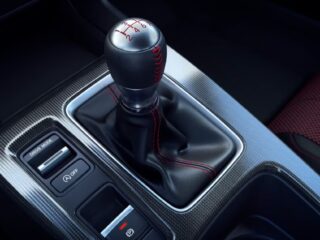
The platform the engine sat in had genuine engineering ambition behind it. Four-wheel steering was available, making it one of the first cars in the American market to offer the technology alongside the Honda Prelude. The suspension was fully independent at all four corners. The five-speed manual gearbox gave the driver something to do. All of this arrived inside a body that a casual observer would struggle to identify at thirty yards. That combination of substance and invisibility was not an accident. It was precisely what made the car interesting, and precisely what caused the enthusiast market to sleep through it entirely.
The Mazda 626 GT Turbo: The Five-Door Liftback the Rotary Crowd Walked Past

|
Model |
Engine |
Power |
Torque |
0-60 mph |
Top Speed |
|---|---|---|---|---|---|
|
1988-1991 Mazda 626 GT Turbo |
2.2-liter SOHC F2T turbo |
145 hp |
190 lb-ft |
7.4 sec |
130 mph |
|
1991-1992 Mitsubishi Galant VR-4 |
2.0-liter DOHC 4G63T turbo AWD |
195 hp |
203 lb-ft |
7.3 sec |
130 mph |
|
1990-1992 Eagle Talon TSi AWD |
2.0-liter DOHC 4G63T turbo AWD |
195 hp |
203 lb-ft |
6.5 sec |
130 mph |
The car was the Mazda 626 GT Turbo, offered in the United States as a five-door liftback on the GD platform from the 1988 model year. Its engine was the F2T: a 2.2-liter SOHC turbocharged and intercooled four-cylinder producing 145 hp and 190 lb-ft of torque in US-market trim, fed through a five-speed manual gearbox to the front wheels. It could accelerate to 60 mph in 7.8 seconds, through the quarter mile in 15.8 seconds, and on to a 130 mph top speed. For a car that the person in the next lane assumed was a Camry, those were significant numbers.
The same F2T went into the Mazda MX-6 GT and the Ford Probe GT, where it received considerably more attention. In the 626 GT Turbo liftback, it received almost none. The body did its job too well. Mazda offered 4WS as an option on the 626 GT Turbo from 1988, making the US-market car one of the earliest production vehicles on American roads to combine turbo power with rear-wheel steering. The JDM Capella, the Japanese domestic market twin built on the same GD platform, went further, offering AWD variants that the US-market 626 never received. Those AWD and additional Capella trim configurations were Japan-only. The US car was front-wheel drive throughout its run.
The F2T Engine Mazda Hid Inside a Family Liftback

The F2T’s defining characteristic, and the reason the platform has a dedicated following three decades later, is its compression ratio: 7.8:1. That is low enough that the bottom end tolerates boost levels the factory never intended without asking for anything heroic in return. The stock IHI turbocharger will accept up to 14 psi on the factory ECU without complaint. With upgraded pistons and rods, the F2T bottom end has supported 350 to 400 wheel horsepower on builds documented in the enthusiast community, anchored to the F2T specifically rather than the coupe variants that share the architecture. The sedan equivalent of that tuning headroom sat inside a car that, in stock form, looked like it belonged in a school pickup lane.
The performance table tells an honest story about where the 626 GT Turbo sat in its competitive set. The Galant VR-4 and Eagle Talon TSi AWD were faster in a straight line and had the traction advantage of all-wheel drive. The 626 closed neither of those gaps. What it offered instead was a car that drew absolutely no attention, cost less to buy, and carried an engine whose bottom end outlasts the chassis around it when looked after. The Galant VR-4 was only imported to the US in 1991 and 1992, with a combined total of 3,000 units. The Talon TSi AWD was a recognizable performance car from the day it launched. The 626 GT Turbo was none of those things, which for a certain kind of buyer was the entire point.
The Japanese Sports Car The Collector Market Forgot To Inflate
Thought you’d missed the boat when it comes to JDM classics? Think again.
What the F2T Can Do With More Boost and What Breaks Before You Get There

The tuning case for the F2T centers on that 7.8:1 compression ratio and what it means in practice. Most turbocharged engines of the era ran compression ratios in the 8.0 to 9.0:1 range, which limits safe boost before detonation becomes a problem. The F2T’s lower compression ratio was a factory engineering choice to manage cylinder pressures under boost, and it left headroom that the aftermarket has spent three decades exploiting.
The factory IHI turbocharger handles 14 psi on the stock ECU without mapping changes, which alone moves the power output meaningfully beyond the factory 145 hp rating. Upgraded pistons and rods unlock the next tier, with documented F2T builds reaching 350 to 400 wheel horsepower on a bottom end that started life in a family liftback. Those figures are specific to the F2T architecture and apply equally to the 626 GT Turbo as to the MX-6 GT that shares the engine.
Mazda 626 GT Turbo Weak Points Every Buyer Must Research

Three failure areas define pre-purchase inspection on any GD-chassis F2T car and need to be priced into any acquisition. The first is fifth gear failure in the manual gearbox. The transmission’s fifth gear is a known wear point, particularly on cars that have seen high mileage or high boost, and replacement requires a gearbox rebuild or a donor unit. The second is distributor heat failure. The distributor on the F2T is positioned where it receives sustained heat soak, and degraded units produce misfires and starting problems that worsen progressively. A replacement distributor is not expensive, but the diagnosis is often missed on cars that have not been properly maintained. The third is aging rubber throughout the engine bay and cooling system. These cars are now pushing four decades old, and hoses, seals, and gaskets that were marginal a decade ago are genuinely due for replacement across the board. A car that has not had a full rubber refresh is a car that will leave the owner managing a slow succession of minor leaks until they address it comprehensively.
None of these weak points are catastrophic or unusual for a car of this age and architecture. They are predictable, they are well documented in the owner community, and a car with evidence of correct maintenance and addressed failure points is a platform that has demonstrated decades of durability. The F2T earned a reputation for near-unbreakable bottom-end strength when the ancillaries around it are kept in order. The buyers who have run these engines to high mileage on modest power levels report fuel economy in the mid-to-high twenties alongside performance that still surprises people who underestimate what the body is hiding.
The Performance Car With Honda Reliability And Porsche Performance
This Nissan is the ultimate combination of speed and dependability. With it, you could thrash tracks and runaround town without missing a beat.
The Sleeper Window Is Still Open, But It Will Not Stay That Way

The 626 GT Turbo occupies a specific category of car that the collector market has not yet processed: too old to be a used car, too obscure to have a collector premium, and too capable to stay that way indefinitely. It has no auction trail on the major platforms. Clean examples change hands privately, in enthusiast forums, and on classified sites, at prices that reflect the car’s reputation in the room rather than any established market. That is both an opportunity and a complication. Finding one requires work. Verifying condition requires knowledge. But the barrier to entry in dollar terms remains genuinely low for a turbocharged platform with the tuning ceiling the F2T offers.
The comparison that matters is not to the RX-7 that everyone was watching. It is to the turbo cars of the same era that have already been discovered. The Galant VR-4, imported in tiny numbers and now actively sought, commands prices that reflect its rarity and its WRC pedigree. Cars this capable, with engine families this tuneable, and with ownership communities this knowledgeable, do not stay below the radar permanently. They stay below it until someone writes the piece that explains why they should not.
Sources: Bring a Trailer, Mazda, FastestLaps

Related posts

Latest Post


No Comments