
The Motorcycle With Superbike Pace And Everyday-Rider Usability
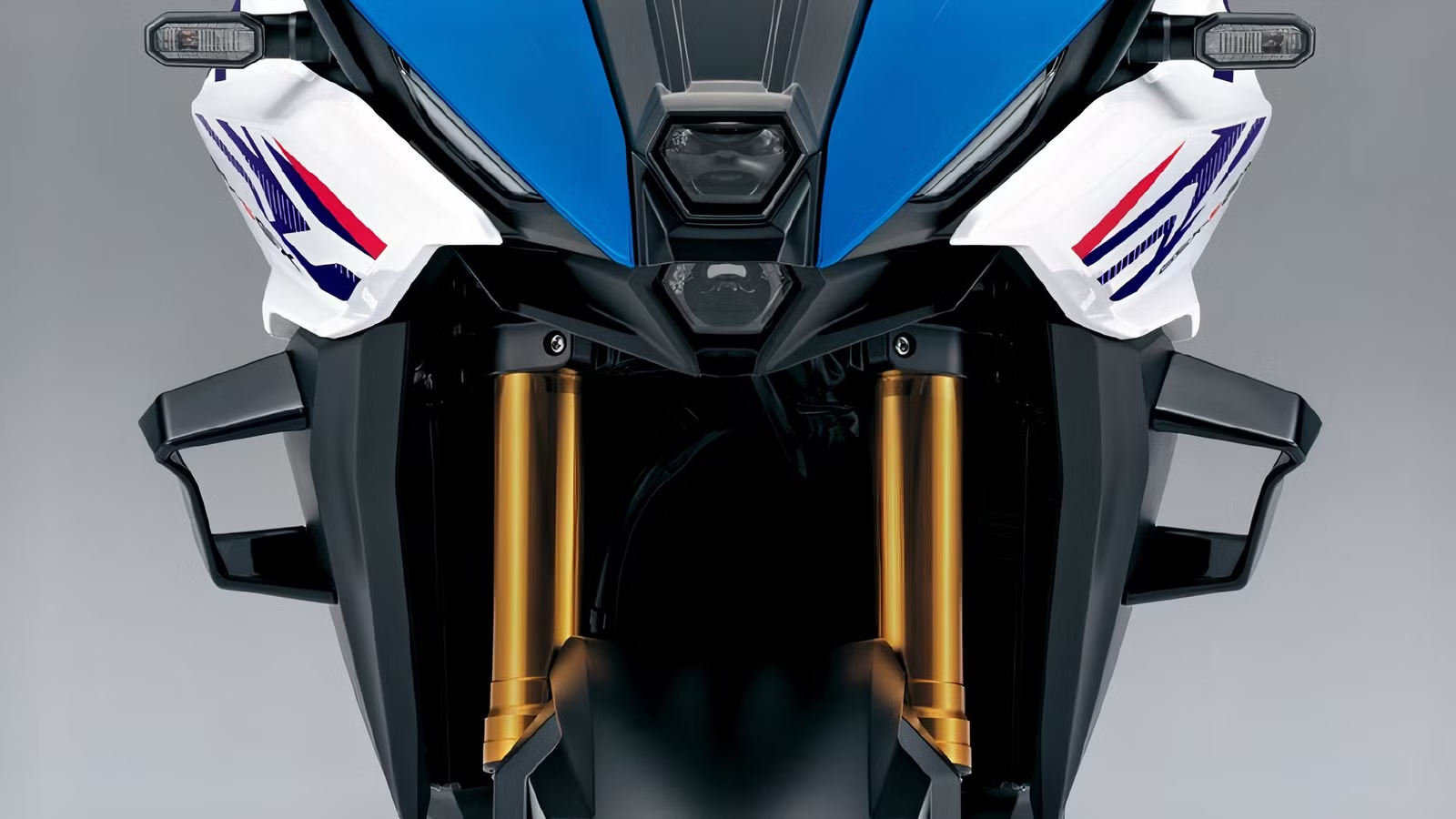
Do-it-all motorcycles make a lot of financial sense, as they can replace almost all motorcycles in a garage with one all-rounder. Generally, adventure bikes take the spotlight here given their impressive on-road and off-road versatility. But in this quest, riders often compromise on grin-worthy performance and sporty riding dynamics.

Tarmac-focused sport-tourers fill this gap and are essentially more practical sportbikes with a touring-first approach. Crossovers, a niche sub-segment of sport-tourers, add even more usability. These motorcycles add versatility to the mix by offering everyday ridability without compromising superbike-grade performance and dynamics. An underrated Suzuki sport-tourer offers the best balance of track-ready performance and daily ridability.
Superbikes Are Generally The Least Practical For Daily Use
Superbikes demand significant physical and mental strength. These are hardcore sportbikes designed for the racetrack. They feature aggressive ergonomics, razor-sharp steering, and insane accelerating force that demands the utmost presence of mind. The riding triangle places heightened physical demands on the rider, who sits in a forward-leaning posture for extended periods. If done incorrectly, it can also cause back and wrist pain.


Furthermore, because most superbike engines are high-revving, slow-speed riding is often jittery. This is mainly because lightweight components are designed for high revs and quick acceleration. Also, superbikes can feel uncomfortable in sharp corners or tight urban roads because of their limited steering travel. Sensitive braking and throttle make stoppies and wheelies way too easy on superbikes. All of these features demand high physical and mental endurance to tame these beasts.

Superbikes and comfort are a tough combination to achieve. While not impossible, as shown by examples like the Suzuki Hayabusa and the Kawasaki Ninja ZX-14R, they lean into a grey area where sportbikes are stretched, and the performance curve is made more linear to suit their added practicality. But these modifications can at most make these “superbikes” more comfortable mile-munchers. They will still struggle as a daily companion, especially on urban roads.
But Sport-Tourers Offer A Middle Ground Of Sportiness And Practicality

Sport-tourers are the perfect riding companion for those who want grin-worthy performance and dynamics without compromising on practicality or comfort. These bikes are essentially superbikes transformed into more comfortable mile-munchers with features like more comfortable ergonomics, better seat padding, linear engine tunes, and forgiving suspension and braking hardware.
Sport-tourer sub-frames are also reinforced to handle the load of an adult pillion and even saddlebags. As impressive as they are, full fairings and low ground clearances still leave room for improvement, especially in city riding.
Crossovers: The Unsung Sub-Segment Of Sport Tourers That Offers More

Crossovers refine the sporty-practical formula even further and offer the most versatile types of sport-tourers. They add more comfortable, upright ergonomics, longer suspension travel, and better ground clearance without compromising superbike-grade performance and sharp handling. In fact, after ADVs, crossovers are the next best option for someone who wants a truly do-it-all motorcycle.

From daily city commuting to fast highway cruising and spirited weekend cornering, crossovers can do it all with ease. Popular examples include the Yamaha Tracer 9and the Triumph Tiger Sport 800. But these are, at most, “sportbike”- grade crossovers. The Suzuki GSX-S1000GX+ dials it up further, blending superbike pace with daily ridability as a flagship crossover.
The 2026 Suzuki GSX-S1000GX+ Is An Exciting Crossover That Goes Under The Radar
Aggressively Priced At $18,749 Thanks To Smart Component Sharing

Its value proposition is eye-popping, as Suzuki offers a lot for under $20,000 here. Its aggressive pricing comes from the brand’s proven component-sharing strategy. It shares its engine and chassis with the K5 GSX-R sportbike. This helps deliver superior refinement and mature performance and handling. Suzuki further refines the package by focusing more on suspension, electronics, comfort, and even luxury features.
It Balances Performance, Comfort, Longevity, And Daily Ridability

Its tall, rather slim profile also helps with maneuverability, especially on tight roads. The rider sits relaxed and upright, and there’s ample room for a pillion too. Suzuki deploys a bold design language, fusing sharp lines with muscular arches that even extend to the standard weatherproof side cases. There is very little to complain about here, and that’s no easy feat.
Superbike Pace Is Courtesy Of A Gixxer-Derived Engine

The Suzuki GSX-S1000GX+ is powered by a de-tuned 999 cc inline-four engine from the last-gen GSX-R sportbike. It is a proven mill that can be pushed to its limits without compromising reliability or refinement. It has a compression ratio of 12.2:1 and produces 152 horsepower at 11,000 RPM and 78.2 pound-feet of torque at 9,250 RPM. Adding to its versatility, the engine tune concentrates power and torque in the mid-range.

This helps equally with high-speed touring runs, controlled mountain attacks, and composed urban rides. Power is delivered through a six-speed manual gearbox, which is coupled to the rear wheel via a chain drive. It gets an assist-and-slipper clutch and a two-way quickshifter for precise, swift gear changes.
Complemented By Flexible Underpinnings

It shares its main frame with the K5 Gixxer. This contributes significantly to its sporty riding dynamics. Its aluminum twin-spar frame is paired with a modified, stronger subframe to handle the added load of an adult pillion and luggage.
Its suspension setup adds a more predictable, daily-ridable side to the mix. It comprises inverted front forks and a rear monoshock. Both ends offer full adjustability. The rear also gets electronically adjustable preload, which, in “Auto” mode, helps this sport-tourer adapt seamlessly to changing tarmac conditions.

Braking duties are handled by dual 310 mm discs paired with radial four-piston Brembo fixed calipers up front. The rear gets a 240 mm disc coupled to a Nissin single-piston caliper. Adding to the riding confidence are grippy tubeless 120-section front and 190-section rear tires wrapped around 17-inch lightweight alloy wheels at both ends.
Comfortable Ergonomics For Daily Ridability

The Suzuki V-Strom-inspired stance helps with all-day riding comfort on the GSX-S1000GX+. The seat height is fairly high at 33.3 inches, but with 6.1 inches of ground clearance and a relatively tall stance, it’s manageable. The saddle is also foamed up for comfortable hours on the road. A fairly tall windscreen also helps with wind deflection on the highway. Its side cases are quick-release, which, when removed, can make urban runs more comfortable.
A Loaded Electronics Suite Sprinkles A Bit Of Lux-Appeal

The Suzuki GSX-S1000GX+ is packed with top-spec technology features, especially for its price. The cockpit gets a clean layout with a sharp 6.5-inch TFT. This screen supports Bluetooth connectivity and navigation. Using the Suzuki mySPIN app, riders can access more hands-free features, including contacts, phone, music, and even the calendar.

The Suzuki Intelligent Ride System (S.I.R.S.) handles all the safety, assistive, and ride-enhancing features. Notable ones include ride modes, traction control, lift control, roll torque control, active damping control, and Suzuki Road Adaptive Stabilization. More engagement and practicality come from features like a by-wire throttle, a smart cruise control system, a motion-traction brake system, and a Low RPM assist that should come in handy, especially in heavy urban traffic.
This Is Suzuki’s Best All-Rounder That Quietly Leads The Crossover Segment

The only true rival to the Suzuki GSX-S1000GX+ is the BMW S 1000 XR. Like the Suzuki crossover, BMW also created the XR from its flagship sportbike—the S 1000 RR. While the BMW is also aggressively priced at $18,825, things can get expensive real fast, given BMW’s notorious “bundled” accessory packages.

Even adding cruise control (standard on the Suzuki crossover) to the BMW S 1000 XR requires riders to opt for the $2,365 Premium Package. This alone bumps up the price to well over $20,000. The Suzuki GSX-S1000GX+ offers many of the BMW S 1000 XR’s optional features as standard fitment. This adds to its value proposition and helps the underrated Suzuki sport-tourer lead the segment.
Source: Suzuki Cycles

Related posts




Latest Post


No Comments