
The Kawasaki Motorcycle That Rarely Gives Owners A Reason To Worry
A lot of times, buying a motorcycle is about styling, horsepower, performance, who’s the fastest on track, who’s the quickest in the dirt. But there are times when that’s not all you’re looking for. A lot of riders plan to keep their bikes for years rather than just a few seasons until the next best one rolls off the line. The Japanese brands all have this bulletproof reputation. No matter which bike you choose from them, be it ADV, dual-sport, naked, or sport bike, they don’t crack under pressure, they don’t break down suddenly, and they maintain their rideability, even when they start getting old.
Kawasaki Has Built Its Reputation On Dependability

Kawasaki has been building motorcycles since the early 1960s, and throughout that time, the company has developed a reputation for producing machines that combine strong engineering with everyday durability. The brand may be associated with high-performance machines like the Ninjas and headline-grabbing superbikes, but its real strength has always been building motorcycles that owners can confidently rely on for years.

Kawasaki’s bikes regularly rack up impressive mileage with routine maintenance alone. You’ll often find riders praising Kawasaki engines for their longevity, robust transmissions, and relatively simple maintenance schedules. The company has also made a habit of refining successful platforms instead of constantly reinventing them. This steady evolution has created a kind of confidence in the community, because components have been tested by many owners over countless miles in predecessor motorcycles.
Team Green Is More Than Just The Ninjas

The Ninja family may be Kawasaki’s most recognizable nameplate, but it’s only a part of the brand’s lineup. Bikes like the Versys 650, Z650, retro-styled W800, or even the muscular Vulcan cruisers have all developed loyal followings thanks to their balance of performance, price, and reliability. Adventure bikes are another area where Kawasaki has built an almost “nuclear-bomb-tested” reputation, and one bike stands out far more than the others. It is one of the most famous dual-sport bikes thanks to its reputation as the cockroach.

The Kawasaki KLR650 Prioritizes Reliability Above Everything Else

The KLR650 isn’t the fastest adventure motorcycle or the most technologically advanced, but it is one of the most bomb-proof bikes out there. Everything about the motorcycle focuses on long-term usability and reliability. It has built a following not just among travelers, but also among commuters, military personnel, first-time adventurers, and globe-trotters, all of whom just need a motorcycle that keeps working no matter what.
Unlike many modern ADVs packed with premium electronics and expensive components, the KLR650 is extremely straightforward. Its design keeps maintenance simple, and Kawasaki modernized the bike recently without changing any of the characteristics that made it famous.
The KLR650 Was Designed To Be Functional First

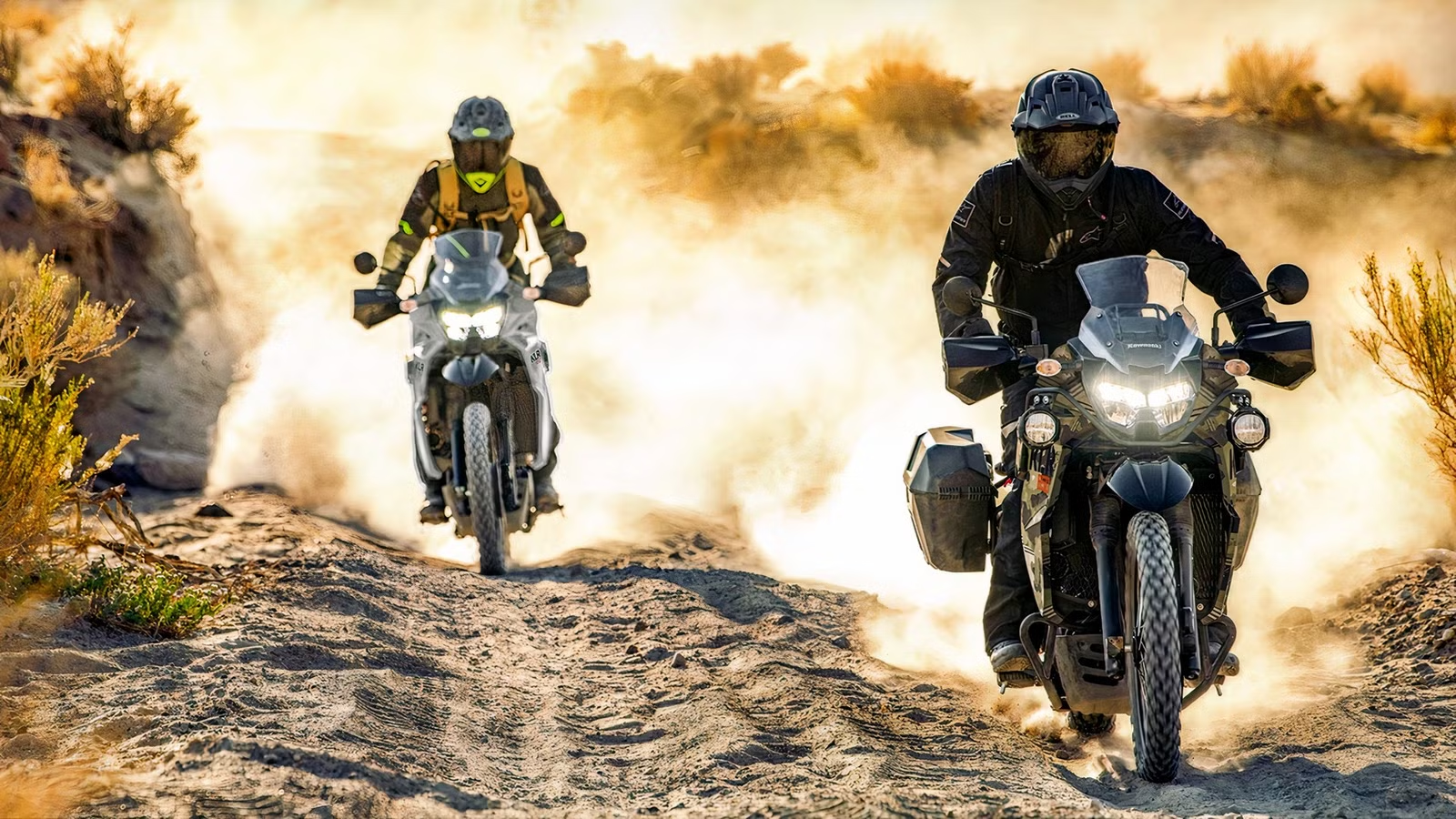
Kawasaki didn’t try to win any beauty contests with the KLR650, and it is an odd-looking bike to be sure. At least the newest iteration of it, and the old one, was just a big dual-sport. But a lot of its design choices support some sort of practical purpose.
The windscreen, along with the front fairing, all deflects wind around the rider. The tank, on the other hand, is slim, so while this looks like an odd transition, its proportions allow you to stand rather comfortably in tricky terrain. If you plan to travel longer and farther, Kawasaki has integrated luggage mounting points. The seat itself is flat, so you can move around easily on inclines and declines. The aggressive styling gives way to functionality on the KLR650, but the real proof of the KLR’s philosophy isn’t in how it looks — it’s in what’s underneath.
Practicality Has Always Been The KLR650’s Greatest Strength

Powering the KLR650 is a 652 cc liquid-cooled single-cylinder that produces 40 horsepower and 39.1 pound-feet of torque. The engine redlines at 7,000 rpm, but peak power arrives at 6,000 rpm, and peak torque comes in at 4,500 rpm. Kawasaki has made sure to tune the bike for both pavement and dirt. This broad delivery allows riders to climb steep trails and even cruise comfortably on highways. It doesn’t demand high revs and encourages low-rev cruising while still offering the shove you need to slide the rear in the dirt.
The current-gen KLR even benefits from electronic fuel injection, replacing the carburetor from earlier versions. So cold starts and throttle response at varying elevations and temperatures are not an issue. Combine this with the bike’s generous 6.1-gallon fuel tank, and you haveplenty of miles to explore.
Suspension Designed For Adventure

Now, the KLR650 uses a semi-double cradle frame. While some modern ADVs rely on lightweight materials, the KLR’s frame prioritizes durability over outright weight savings. Kawasaki made this choice to be able to handle heavy luggage, rough trails, and years of very demanding use. There’s a 21-inch/17-inch front and rear wheel combo that perfectly sums up the bike’s dual-purpose intent. It also allows you to choose from a wide variety of tire choices depending on how much pavement or trail you intend to see.
The highlight of the KLR is the suspension, though. A 41 mm telescopic front fork handles the suspension up front. Pretty basic-sounding until you realize it has 7.9 inches of travel. The rear is a Uni-Trak single shock with preload and rebound adjustment and eight inches of travel. Potholes, gravel, rocky trails, nothing will faze this bike.
The Third-Gen KLR Finally Gets Modern Tech — With One Frustrating Catch

The old-gen KLRs didn’t have anything. The new one gets fuel injection (as we’ve already mentioned), a digital dash, LED lighting, and USB charging. ABS is also available, but unfortunately not switchable from the factory. This seems like one of Kawasaki’s biggest oversights, but there are modifications available if you look carefully and are willing to pursue a potentially warranty-voiding solution.
Why The KLR650 Continues To Win Riders Over

The Kawasaki KLR650 earned its reputation the old-fashioned way: with grit, grime and a lot of determination. The billboards didn’t showcase it, and the TVs didn’t praise it, but the people rode it, and they spoke about it. It doesn’t rely on power or electronics, and it demands very little in the way of maintenance. It is reliably bulletproof and boasts a thoughtful design, impressive range, and a kind of mechanical simplicity. The market is filled with complex machines with mechanical issues and electronic gremlins, but the KLR650 continues to soldier on in its third generation, changing almost nothing except for a few refinements and styling upgrades.
Source: Kawasaki USA

Related posts


Latest Post


No Comments