
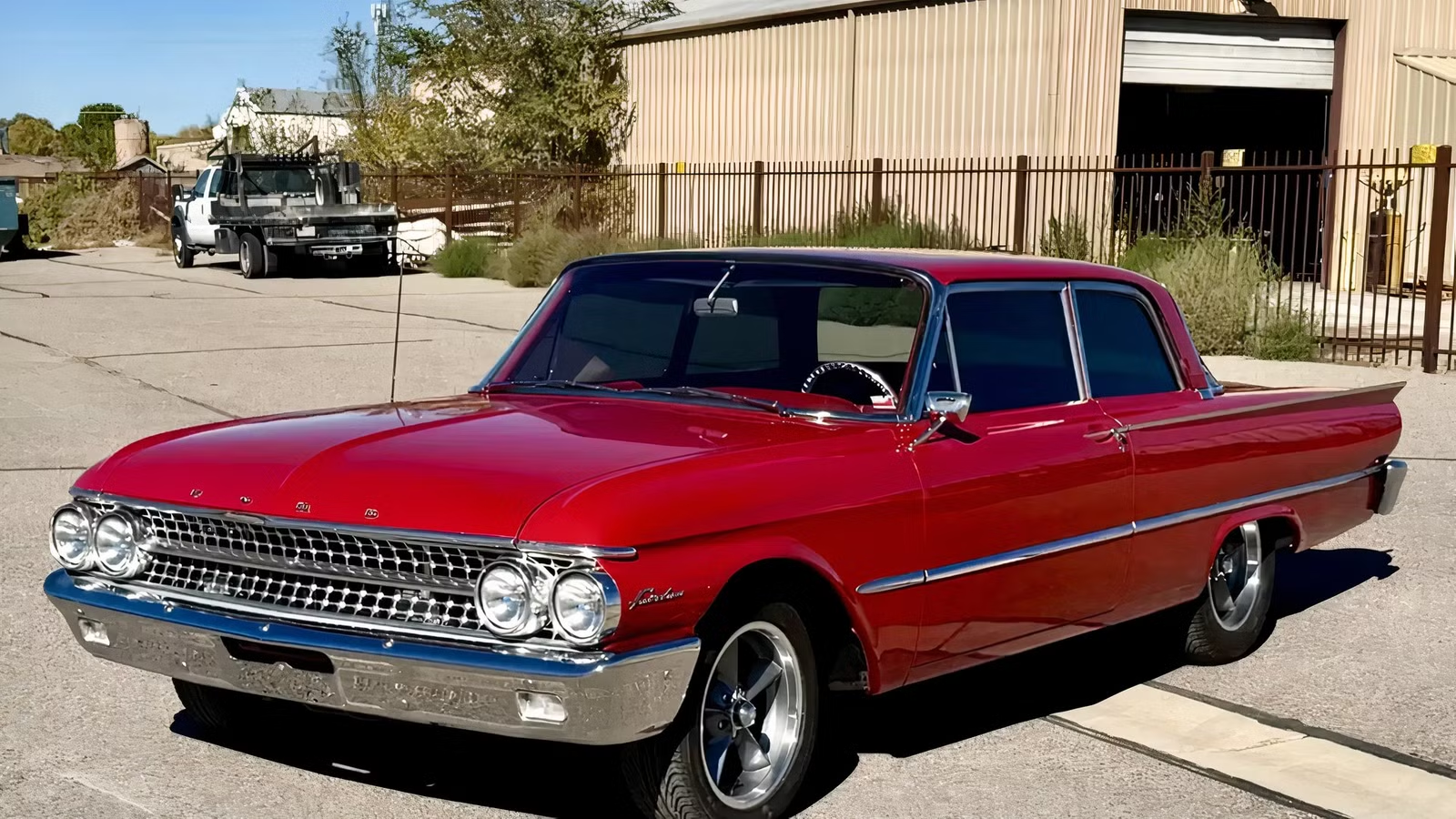
1961 Ford Fairlane 500: The First Muscle Car?
The Pontiac GTO is often credited as the car that invented the “muscle car”. While the GTO fits the textbook definition of a muscle car, it wasn’t necessarily the first — it just happened to define the term.

Other cars got there first, including vehicles that looked for all the world like family sedans. Indeed, one particular Ford sedan that looked more like a taxicab or police car received the muscle-car treatment three years before the GTO hit the market. Buyers in the know could have a hot-rod without drawing attention to themselves if they bought a 1961 Ford Fairlane 500 with the right engine.
We’ll get to that. First, some background.
Why The Pontiac GTO Gets Credit For Inventing The Muscle Car

It all started with Pontiac marketing. In the early 1960s, General Motors was banning its divisions from participating in auto racing, following a voluntary decision not to race by the Automobile Manufacturers Association. With that in mind, Pontiac focused its marketing and advertising on street performance.
The Roots of GTO
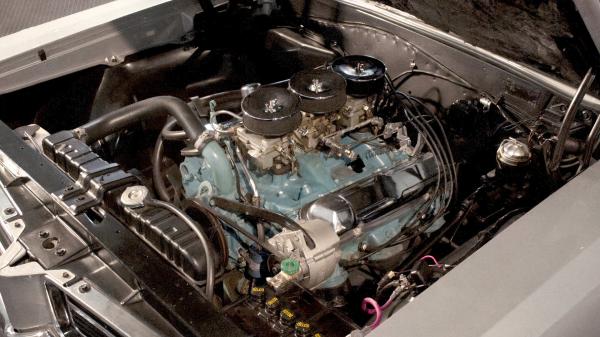
Pontiac engineers then put their muscle where their marketing money was when they took the mundane Pontiac Tempest-based LeMans and refined it, giving it a 6.4-liter V8 and the name “GTO” as a nod to the Italian phrase Gran Turismo Omologato, which means Grand Touring, Homologated, in English. The name came from the Ferrari 250 GTO, and the phrase GTO indicated that a production car was certified for FIA racing. Pontiac even had the GTO certified by the FIA, in order to show that the name was more than a marketing stunt.
With a four-barrel carburetor, three-speed manual (a four-speed was optional), dual exhaust, and more, the GTO package, which cost $295 in 1964 (about three grand today), turned the Tempest-based LeMans into something more. One could pay $4,500 for the full GTO package with all options (something like $46K in today’s dollars), and if they did so, they’d have a seriously quick car on their hands. Pontiac expected to sell 5,000 that first year; it sold over 32,000.
Looking at the spec sheet and considering how Pontiac turned a commuter sedan into a powerful street machine, it’s easy to see why the GTO has often been considered the textbook muscle car. But a closer look at history shows that while Pontiac made the formula famous, Detroit automakers were already working on large-displacement performance cars. Some were obvious, and some were family cars with hot-rod grunt under the hood.
The 1961 Ford Fairlane 500 Looked More Like A Taxicab or Cop Car Than A Muscle Car

Anyone who looked at a Ford Fairlane 500 in 1961 wouldn’t have thought “muscle car” or even “sporty car.” They would have thought taxi, or police cruiser, or anonymous sedan for the uninterested buyer who cared little about cars and just needed basic transportation. Ford even offered the flashier Galaxie as an alternative to the Fairlane — one that was a step up.
Cars that have an ordinary appearance but big power under the hood and the ability to offer sporty performance — even if it’s just winning a street-light drag race — are referred to as sleeper cars. That term could apply to the Fairlane 500 with the 390 big-block V8. A nondescript car that could leave rubber off the line and leave other cars in its wake — that would certainly leave an onlooker staring in surprise.
Ford Stuffed A 375-HP 390 V8 Under The Hood Of The Fairlane

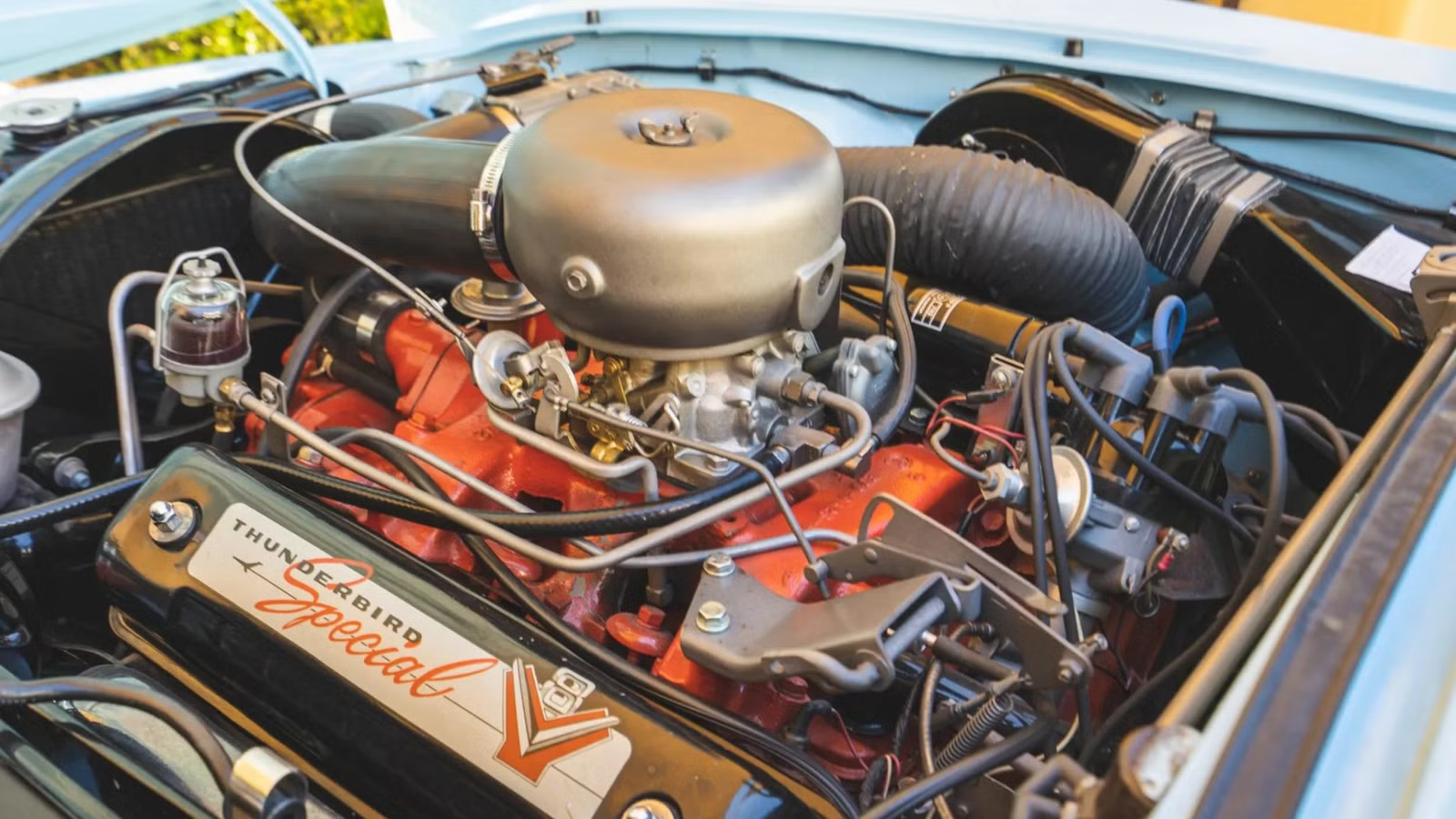
Here’s how Ford made that plainly styled car go so fast — it dropped a 375 hp, 390 cubic-inch-displacement, big-block V8 under the hood. The 390 FE was used in many Ford cars and trucks, and in this application it had cast-iron header exhaust manifolds, a solid-lifter valvetrain, 10.5:1 compression ratio, and a four-barrel carburetor.
These cars could be ordered in an unusual way. One could order a Fairlane with a special intake manifold in the trunk. The dealer was supposed to install the manifold, and once they did so, the car pumped out 401 horsepower using a triple-carburetor setup.
That was a lot of horsepower back then — it’s still a notable number today, though it’s a far more common number than it was during the ’60s. Certainly enough horsepower to make bystanders take notice as they wonder why a car with such unremarkable styling is tearing down the street at such a prodigious rate. Oh, and Ford showed it was serious about performance by offering three- and four-speed manual transmissions.
This Family Sedan Had Serious Early-’60s Performance

Whether Ford knew it or not, it was perfecting the muscle-car formula. Take a mundane commuter car chassis and body, drop in a powerful V8 (small- or big-block), give it some heavy-duty hardware and a manual-transmission option, and set it up to be a strong drag racer.
Eventually, of course, the body and styling would be sporty, too — see the GTO — but at first, muscle cars were sleepers. And the 1961 Ford Fairlane 500 with the 390 V8 was the perfect example of a sleeper car.
Sleepers had a few advantages. They could blend into traffic, making them less visible to law enforcement that might otherwise watch for drag racing. And they could cause a potential drag-racing opponent to underestimate their car’s ability.
Plus, there is something undeniably appealing about a car that looks ordinary but can blow your doors off.
Did The 1961 Ford Fairlane 500 Really Beat The GTO To Be The First Muscle Car?

It’s important to note that there was one key difference between the Fairlane and the GTO. The Fairlane was a full-size car, while the GTO was intermediate in size. So the formula was a bit different. And Pontiac’s use of a smaller body meant that the big motor had less weight to work with. That’s better for performance, especially acceleration, and better for fuel economy. Intermediate-sized cars generally cost less in terms of a base price, too.
So Pontiac made a trade-off with the GTO. It looked as sporty as it was, so it wasn’t a sleeper car. But it was lighter than a full-size car, enhancing performance and making it a bit more budget-friendly.
Ford Gets It Started, Pontiac Finishes It Off

Ford established the muscle-car formula, but Pontiac took the concept further. Pontiac traded the sleeper-car image for a sportier look, aggressively marketed the GTO’s performance, and used an intermediate body to enhance that performance.
So you can make a strong case that Ford actually started the muscle-car craze with a boring family car — the Fairlane — but it was Pontiac that made the segment recognizable culturally.
The GTO is perhaps, the ultimate symbol of muscle cars. But it appears that Ford got there first, just much more quietly. Ford started the segment, but Pontiac made it what it was — and captured all the attention.

Related posts


Latest Post


No Comments