
The Cruiser That Owners Refuse To Replace
Some motorcycles aren’t just bought; they are kept forever. They may start life as just another addition to the garage, but over time, they become the motorcycle that riders instinctively choose whenever they want to enjoy the ride. Such machines become part of their owner’s identity, refusing to be traded in for something newer or more practical. In a market obsessed with upgrades and the next big thing, a rare breed of cruiser continues to defy obsolescence. This is the story of one such American motorcycle.
Why Some Cruisers Are So Hard To Replace

Cruisers occupy a very interesting place in the motorcycle world. While today’s market is filled with many capable options, only a handful achieve true icon status. Not every motorcycle can earn lifelong loyalty, but the ones that do create a unique bond with the rider that feels less like ownership and more like partnership. Owners don’t just ride them – they live with them, customize them, and ultimately refuse to let them go. For many cruiser owners, replacing a familiar machine means giving up a combination of character, comfort, and connection that can be difficult to replicate with another motorcycle.
The Emotional Bond That Outweighs Specs And Upgrades

The decision to keep a motorcycle for years isn’t usually driven by rational factors. It is deeply emotional. A motorcycle’s specifications can explain what it is capable of, but they cannot fully explain why an owner keeps coming back to it, ride after ride, every single time. Beyond the world of spec sheets, the connection between a rider and a cruiser can be deeply personal. When you throw a leg over a machine that commands attention at every stoplight, every ride becomes an event rather than a commute.

A cruiser that truly resonates becomes an extension of its rider’s personality – a machine that reflects their taste, attitude, and lifestyle. When a motorcycle delivers that kind of connection, the idea of replacing it can feel almost like betrayal. That emotional attachment is precisely what makes this American cruiser so difficult for its owners to let go.

The Harley-Davidson Breakout Is Built Around A Distinctive Personality
Starting MSRP: $22,999

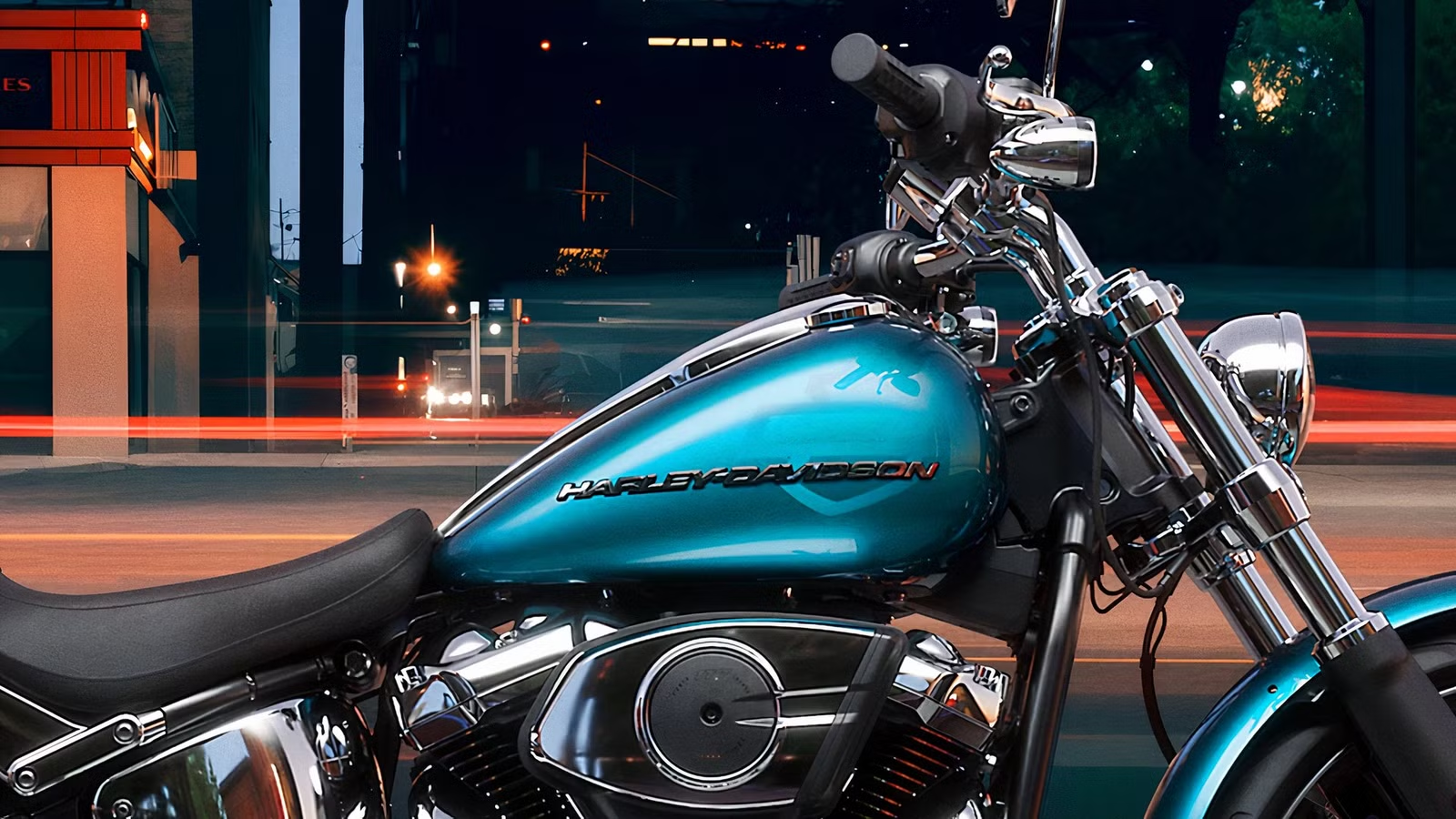
The cruiser motorcycle at the center of this story that has cultivated a cult-like following ever since its introduction is the Harley-Davidson Breakout. First introduced as a limited-run Custom Vehicle Operations (CVO) model in 2013 before becoming part of the standard Softail family, the Breakout quickly carved out a niche with its unmistakable chopper-inspired styling and muscular stance. Over its decade-plus evolution, it was briefly removed from the North American market, only to return following strong customer demand, proving just how strong its cult following is.

For the 2026 model year, the Harley-Davidson Breakout carries a $22,999 starting MSRP, positioning it as a premium statement piece in the company’s cruiser lineup. It blends authentic low-and-long dragster styling with modern refinement, showing that Harley understands what makes this bike so compelling to its loyal owners. Even as the cruiser segment continues to evolve, the Breakout remains a distinctive machine, continuing a legacy of pure, unadulterated street presence.
Iconic Chopper Proportions Give This Harley Serious Presence

The Breakout’s design language is unapologetically bold and remains one of its biggest strengths. With a raked-out front end featuring 34 degrees of rake, a stretched 66.7-inch wheelbase, and a towering 21-inch front wheel, its silhouette screams classic chopper. The low-slung 25.6-inch laden seat height keeps the rider planted, while the pulled-back, wide handlebars create an aggressive riding posture that complements the bike’s drag-inspired stance.

What truly sets the Breakout apart on the road is its rear-end styling. It gets a massive 240mm Michelin Scorcher 11 rear tire that dominates the view, framed by a bobtail fender that leaves the rubber largely exposed – a signature design cue that has become synonymous with it. Beneath the styling lies serious engineering. The 49mm dual-bending-valve telescopic front forks provide plush yet controlled comfort, while the hidden rear monoshock with hydraulic preload adjustment allows the Breakout’s riders to fine-tune the setup for solo or two-up riding.
The Muscular Milwaukee-Eight 117 Matches The Styling

If the Breakout’s looks are macho, its performance is outright brute. It comes equipped with the Milwaukee-Eight 117 Custom engine as standard – a 1,923cc air-cooled V-twin that produces 103 horsepower at 4,800 RPM and a whopping 126 pound-feet of torque at just 3,000 RPM. This is an engine built around low-end grunt, delivering immediate throttle response and effortless roll-on acceleration in almost any gear.
The 117-cubic-inch displacement makes it the largest engine in Harley’s cruiser lineup (non-CVO models), while its performance-tuned two-into-two staggered exhaust system ensures the exhaust note is as aggressive as the acceleration. Moreover, the six-speed Cruise Drive transmission provides smooth shifts and relaxed highway cruising, while the chain primary drive with its 34/46 ratio contributes to the bike’s raw, old-school character.

Reliability is a hallmark of the Milwaukee-Eight platform. With electronic sequential port fuel injection (ESPFI), the engine delivers consistent fueling while retaining the classic air-cooled V-twin character that Harley loyalists demand. The Breakout is also reasonably fuel-efficient for its size, with a claimed fuel economy of 29 MPG despite its substantial 681-pound weight in running order.
Modern Tech And Safety Make Long-Term Ownership Effortless

While the Breakout wears its retro chopper heart on its sleeve, the updated 2026 model is thoroughly modern underneath. Harley-Davidson’s Rider Safety Enhancements come standard, offering a suite of electronic aids designed to keep the bike stable and controllable in unpredictable conditions. The package includes traction control, ABS, and drag-torque slip control, along with their cornering-enhanced versions.

The Harley-Davidson Breakout also gets three riding modes, namely Road, Sport, and Rain. Taking center stage in the rider’s cockpit is a four-inch analog speedometer with a multifunction digital display that looks clean while providing essential ride information. Other key features include fully LED lighting, a USB Type-C charging port, a tire pressure monitoring system, and cruise control, making the Breakout better equipped for long-distance riding.
Why Harley-Davidson Breakout Owners Rarely Shop For A Replacement
In the end, it’s worth pondering why Harley-Davidson Breakout owners hold onto their bikes for years, even decades. The answer lies in the convergence of everything the Breakout represents. It’s not just a cruiser; it’s a statement. The combination of unmistakable chopper styling, the torquey pull of the Milwaukee-Eight 117, and the confidence inspired by modern electronic aids creates a package that feels genuinely special.

For many owners, the Breakout is the culmination of their cruiser journey. It delivers the custom look they want without the compromises of a home-built chopper, while offering the performance they crave without sacrificing everyday usability. And perhaps most importantly, it carries an emotional weight that newer bikes simply can’t match. When a motorcycle becomes this deeply intertwined with a rider’s identity, the idea of replacing it doesn’t just seem unnecessary; it can feel almost wrong.
Source: Harley-Davidson

Related posts

Latest Post


No Comments