
The Triumph That Quietly Masters Everyday Riding
Some motorcycles only make sense after you have spent enough time riding them. They’re not the performance-oriented sport bikes or the lazy-riding cruisers, but they are the everyday naked motorcycles in the entry-level class. These small naked bikes are the ones that understand the small details that shape every ride. They move easily through traffic, turn naturally, and demand very little effort while the comfort levels remain strong.

These qualities can be easy to overlook when only thinking about headline numbers. But for riders who spend their time on ordinary roads on a daily basis, these same qualities can matter more than outright speed. Triumph is a particular leader in building this kind of bike, evident in both its current and previous lineup.
Triumph Motorcycles Often Prioritize Everyday Riding
Triumph motorcycles have traditionally been associated with character, style, and wonderfully smooth and useful engines. Their roadsters and modern classics have always been designed to be approachable with upright ergonomics and predictable handling, but they are also comfortable enough to deal with everything from crowded streets to an open weekend road. The brand also has the likes of the Street Triple series that brings excitement to riding, and the ADVs in the Tiger lineup can take you on adventures most people only dream of. And finally, you can take the Daytona to the track.
Bigger Isn’t Always Easier

All said and done, these over-600cc bikes can be a bit unwieldy when the road becomes crowded, and the journey becomes mundane. The Bonneville Bobber or Speedmaster can take more effort to push around because of their weight. The tall stance of the Tiger is going to make things difficult in tight spaces and traffic. And powerful engines in the Daytona or the Street Triple will have you giving an exam on restraint inside the city.

That’s where you’ll need the underrated entry-level bike from Triumph. It removes most of those demands, and that is the thinking behind our choice for this article. With the right dimensions, approachable ergonomics, and a spirited engine, this tiny Triumph keeps even experienced riders interested on a morning work run.
The Speed 400 Makes A Strong Case For Everyday Rideability

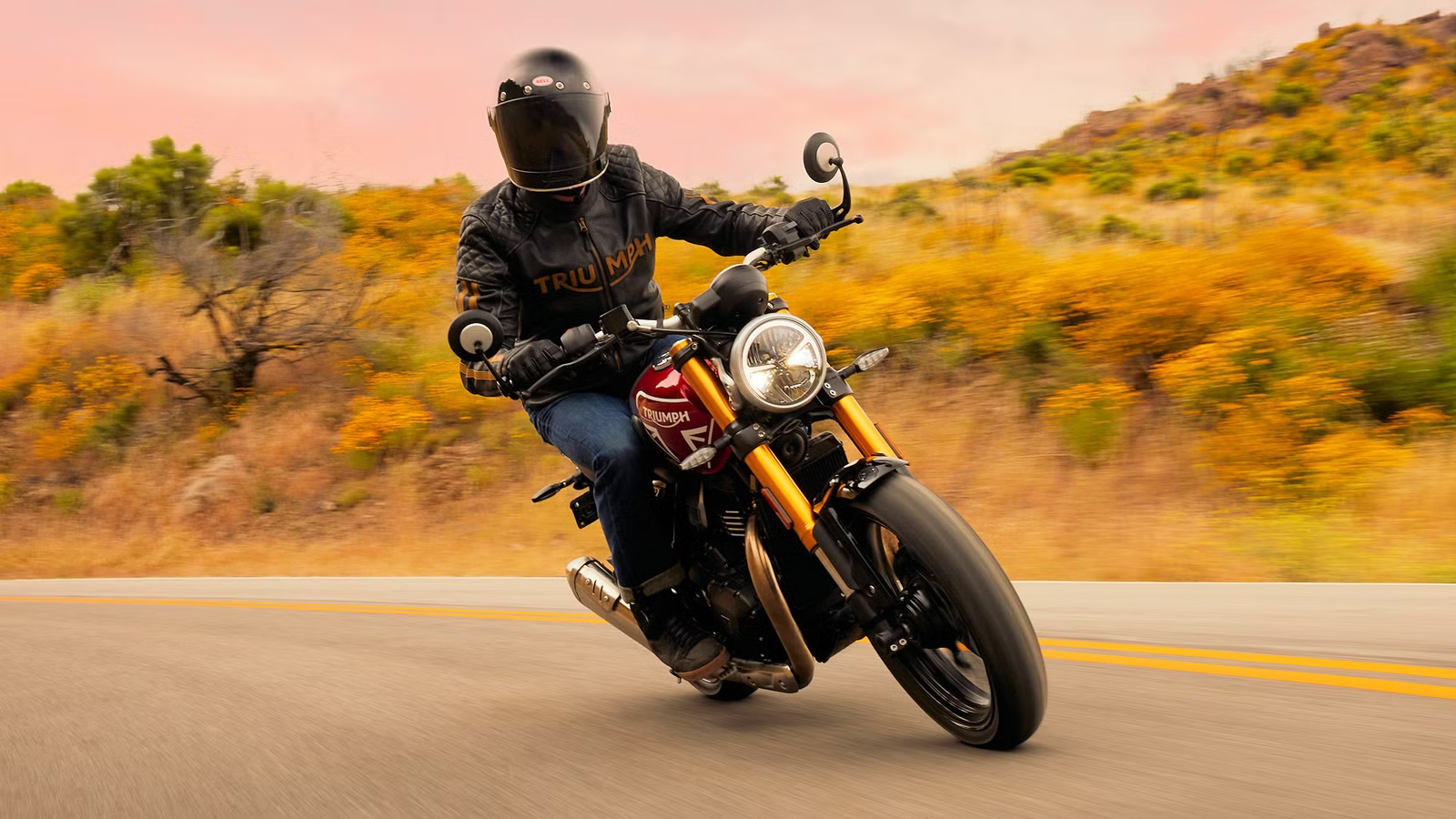
Enter the Triumph Speed 400. It is an interesting motorcycle, sitting in this space where accessibility and motorcycle character overlap. Triumph has given it the visual identity of its larger modern classic machines, but the physical package is so much more approachable. There’s not a lot of electronics, and the design itself is fairly straightforward. The small-displacement single, the manageable seat height, the upright riding position, and more importantly, the bike’s maintenance costs, all come together to give you a motorcycle that is genuinely convenient to use on a daily basis.
The Engine Is Small But Characterful

At the heart of the Speed 400 sits Triumph’s TR-Series single-cylinder engine. This liquid-cooled 349cc engine uses four valves, an 89mm bore, and a 56.1mm stroke. Triumph claims maximum power of 39.1 horsepower at 8,000 rpm and 27.7 pound-feet of torque at 6,500 rpm. This shows that torque is available lower in the rev band for better acceleration when taking off from a stoplight or overtaking. Triumph also says the crankshaft has been weighted and balanced to optimize inertia for low-speed drivability; a useful feature when maneuvering through traffic is routine rather than a one-off headache.

Triumph also uses a torque-assist clutch to transmit power from the engine to the six-speed gearbox. While the gear ratios have been optimized for the engine’s torque-rich character, the lighter clutch is useful in start-stop traffic. When you put all of this together, the Speed 400 becomes particularly useful in an everyday setting. There’s plenty of grunt for city streets and a light clutch lever so that your arm doesn’t tire. But when the situation calls for it, the engine has enough reserve power to make things lively.
The Chassis Is Compact And Confidence-Inspiring

Triumph uses a hybrid spine/perimeter tubular-steel frame and a bolt-on rear subframe as the backbone for its chassis. The wheels are lightweight 10-spoke cast aluminum units measuring 17 inches at both ends. Wheelbase measures 54.21inches; this, combined with the 24.6-degree rake and 4.02-inch trail, gives the bike its agile nature. There is plenty of stability for normal road use, but on the weekends when the fun begins, the Speed 400 is perfectly capable of turning into corners with gusto.

Suspension is equally sporty with a 43mm upside-down Big Piston fork up front and a gas rear monoshock with preload adjustability. Suspension travel is limited to 140 mm up front and 130 mm out back, but they’ve been tuned slightly stiffer than normal commuters. They are plenty soft in pothole-riddled city streets, but perform better when riding a bit aggressively on curvy roads. Another advantage the Speed 400 is the wide handlebar that provides a decent amount of leverage when maneuvering the bike.
A Decent Technology List Is Standard

Yes, there is very little to boast about when it comes to the bike’s technology, but that can also be considered a boon. What’s the point of overwhelming electronics when the bike is going to see more commute rides than long vacation tours? ABS and switchable traction control come standard, and while there is a ride-by-wire system, there are no riding modes. Lighting is fully LED, but instrumentation is a digi-analogue dial. There is also no connectivity on this motorcycle, which doesn’t change much for weekend rides, but as an everyday bike, there is less hassle to deal with.
Classic Triumph Design Promises To Turn Heads

The Speed 400’s design is perhaps not one of its obvious strengths. Based on its bigger Speed Twin siblings, the 400’s styling is wonderfully restrained. It’s the familiar roadster silhouette, a sculpted fuel tank, and a classic-looking engine profile. What this does is open up the bike for easy maintenance. All the main serviceable parts and components that require regular check-ups are easily accessible rather than hidden behind panels.
Ownership Costs Solidify The Speed 400’s Claim
Price: $5,495

Speaking of maintenance, since the Speed 400 is an entry-level motorcycle, all of the parts used are significantly less expensive when compared to the bigger bikes. Triumph lists a 10,000-mile or 12-month service interval, which also means longer periods between visits to the mechanic. Add in the modest 67-mile-per-gallon fuel consumption, and the Speed 400 becomes an interesting choice for a daily driver. Lastly, the base MSRP is under $5,500, which puts it well within reach for entry-level riders or experienced riders looking for a cheap commuter.
Source: Triumph Motorcycles USA

Related posts




Latest Post


No Comments