
The Timing Chain Was The Least Of This 180,000-Mile 2022 F-150 EcoBoost Engine’s Problems
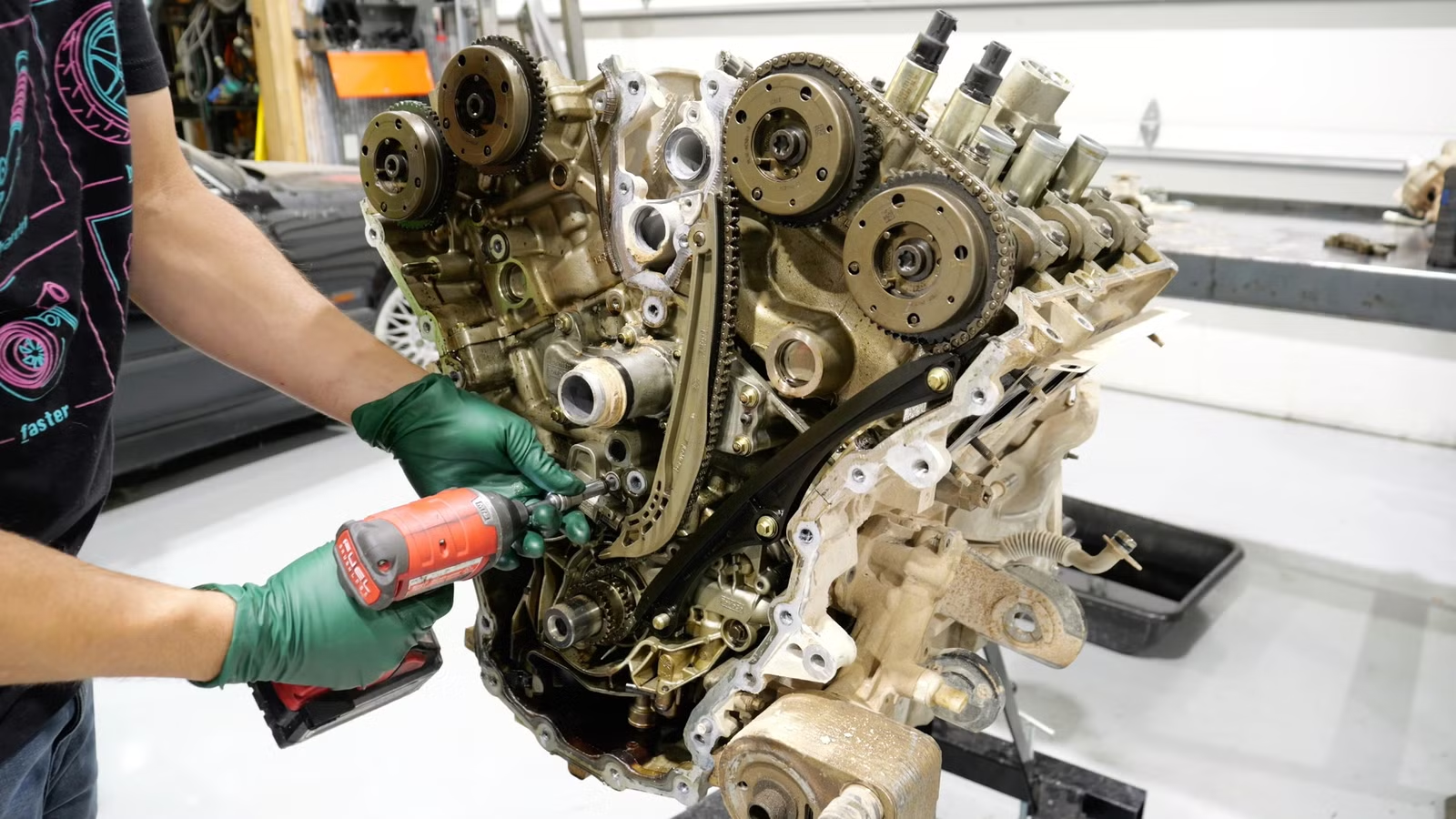
A 2022 Ford F-150 Lariat that served as a commercial fleet truck covered 180,000 miles in roughly four years before someone pulled its 3.5-liter EcoBoost V6. Nobody told the buyer why the engine came out, so Eric Berg of the I Do Cars YouTube channel bought it and tore it down to find the answer.

The timing system, which gave earlier versions of this engine a bad reputation, held up well for the mileage. The real damage to this Ford engine sat deeper inside the engine, and it was far more serious than a worn chain.
Ford’s Third-Gen EcoBoost Timing System Held Up For 180,000 Miles
The engine came out of a commercial fleet truck, which explains how it piled up 180,000 miles so quickly. That truck is still on the road with a different engine, and the seller believed the old one might still run. It arrived on Eric’s stand missing one turbocharger, one ignition coil, and the oil filter, and it was caked in what looked like gravel-road dust.

The 3.5-liter EcoBoost twin-turbo V6 in the 2022 F-150 makes 400 hp and 500 lb-ft, using both port and direct injection. It’s the third generation of the engine, which debuted for 2021 with new cam phasers, chain tensioners, and timing chain guides after earlier versions struggled with chain stretch and rattling cam phasers. Ford even ran Customer Satisfaction Programs for phaser problems on certain 2017 to 2020 F-150s.

Eric said this engine’s chains and guides looked excellent for 180,000 miles, although one guide shattered as he removed it, which he blamed on years of heat cycles. The water pump had noticeable play, and the right-side variable cam timing (VCT) solenoids were brand-new genuine Ford parts that weren’t fully bolted down.
A Burned Piston Was This 2022 F-150 EcoBoost’s Real Problem
The engine’s real problem was a piston burned straight through its crown and rings. Eric missed it when he first pulled the cylinder heads and only spotted it once the pistons and rods came out of the block. Heavy carbon covered the tops of the other pistons, but none of them showed similar damage.

Aluminum from the burned piston fell into the oil pan and circulated through the engine, scoring every rod and main bearing. The same contaminated oil likely left the metal debris on the original left-side VCT solenoids and the deep scoring on the camshaft caps and journals. Eric suspects whoever installed the new right-side solenoids was chasing trouble codes without finding what caused them.
The crankshaft escaped with light wear and would only need a polish, but one cylinder bore picked up aluminum transfer and wear that will require machining. That damage wipes out most of the block’s value as a rebuild candidate, so Eric plans to sell its usable parts instead. The oil pump showed wear too, with fine debris in its screen and heavy scoring on its housing.
What May Have Burned The Piston In This 180,000-Mile EcoBoost

The truck’s CARFAX report showed some oil changes about 5,000 to 6,000 miles apart, which Eric considers the most he’d stretch this engine. Other gaps reached 12,000 or 13,000 miles, past the one-year or 10,000-mile maximum Ford sets for the F-150’s oil-life monitor. Ford’s guidance calls for even shorter intervals of 5,000 to 7,500 miles for trucks that tow or carry heavy loads.
Missing records don’t prove the oil went unchanged, since some shops never report to CARFAX, but Eric said the varnish inside the engine matched the long gaps. Dirty oil explains the varnish and camshaft wear, but it doesn’t explain on its own how a piston burns through.

Eric couldn’t confirm a cause but listed a tune, bad gas, oil consumption, a stuck wastegate, or a faulty injector as possibilities. Each can lead to detonation, and so can heavy carbon on the piston tops or a failing water pump, both of which this engine had.
Nothing in the teardown pointed to a design flaw, and the 3.5-liter EcoBoost still reached 180,000 miles in hard fleet service. Owners running a twin-turbo EcoBoost hard, especially on dusty roads, are better off changing the oil every 5,000 miles regardless of what the oil-life monitor says. Fresh oil keeps varnish and debris from building up, and it’s a cheap habit compared to replacing an engine.

Those half-replaced VCT solenoids hold the other lesson, since they suggest someone fixed a symptom instead of tracing its cause. A proper diagnosis at that point might have caught the problem before the debris reached the bearings and cylinder walls.
Source: I Do Cars via YouTube, Ford Service Content

Related posts




Latest Post




No Comments