
How the Russian car industry has changed since the West’s exit
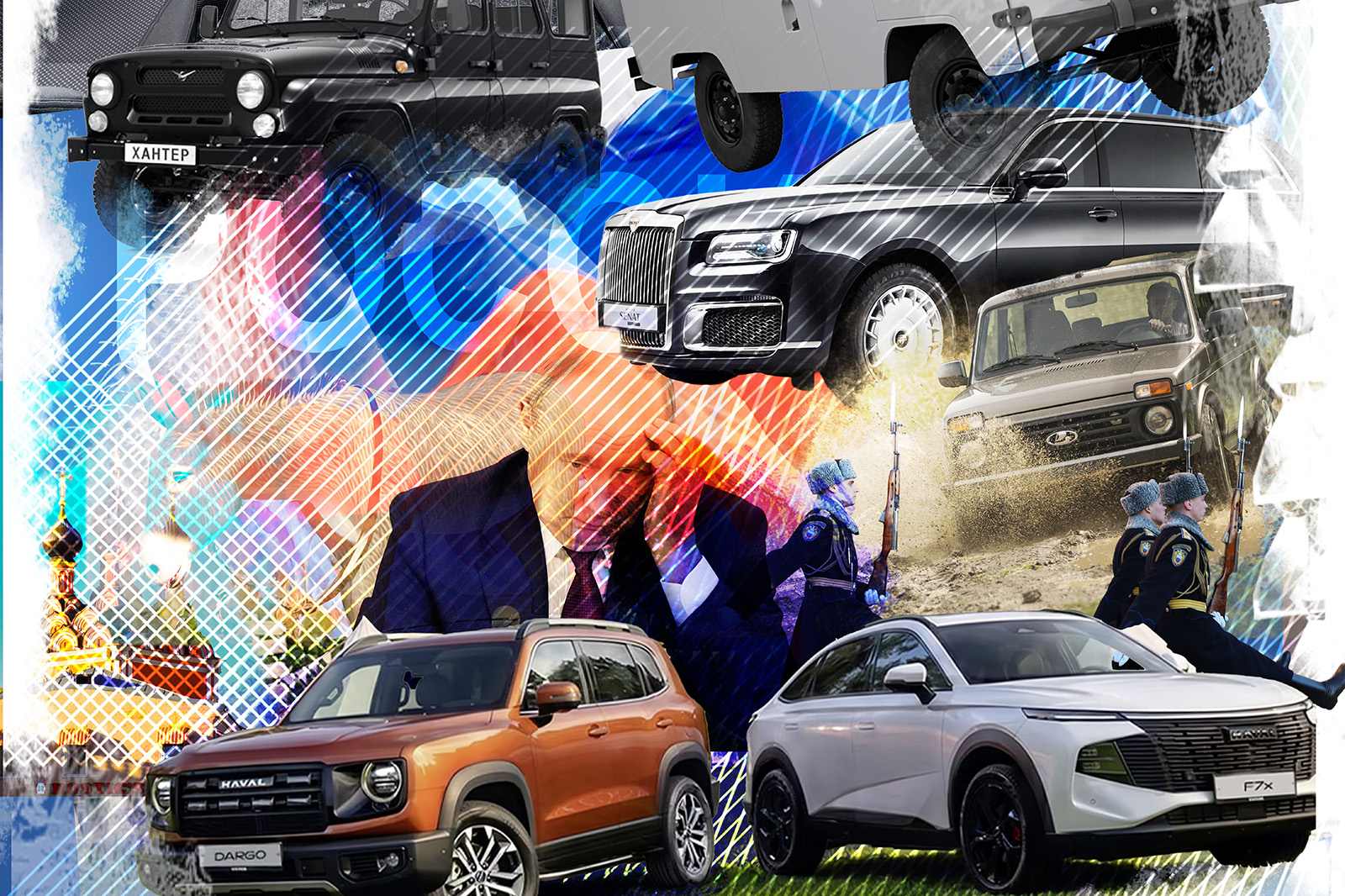
Russia’s car industry has had to rapidly adapt to survive in self-inflicted isolation from the West

“Genuinely, people have their heads turned more by it than a 12-cylinder Ferrari.”
Jack Morgan-Jones, a senior salesperson at Bramley Motor Cars, isn’t talking about one of the exotic cars that fill this Surrey showroom. Instead he’s referring to a small, boxy 4×4, priced at around £20,000, that looks as though it belongs to another age-namely a 2021 Lada Niva Luxe, one of only a few dozen still on British roads.
“It is staggering,” continues Morgan-Jones. “People smile when they see it on the road.”

A major part of the Niva’s appeal is that it’s a throwback to an earlier era of motoring.
“They are utterly dependable,” says Morgan-Jones. “It’s all route-one mechanical engineering. There’s very little that can go wrong. If there’s ever going to be a turn-key car out there that we could always rely on, it’s probably that one.”
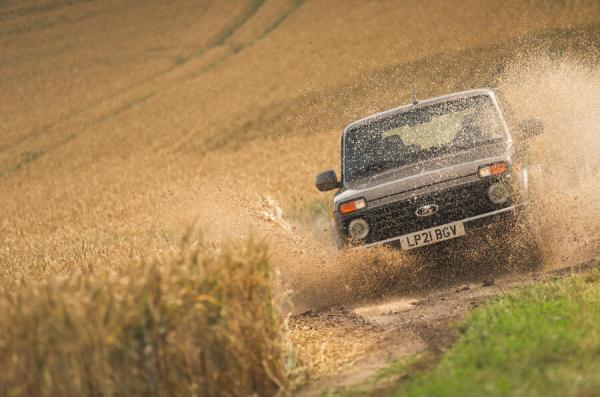
However, this isn’t the story that Lada expected to be telling in 2026. In 2021, its manufacturer Avtovaz and its then parent company the Renault Group announced plans for a new generation of the Niva.
Two models were planned. The first was a short-wheelbase Niva, due to be launched in Russia in 2025; the second, a larger Grand Niva, was expected in 2026. Both were going to use Renault’s CMF-B platform, and sales in Western Europe were also planned. Then, in February 2022, Russia unexpectedly invaded Ukraine.
Three months later, Renault pulled out of the country and the new Niva plans were aborted.
Avtovaz unveiled an updated 1.8-litre version of the half-century-old Niva this year. Svyatoslav Kuchko, an analyst at Mobility Global, says sales are expected to begin in September.
With Russia heavily sanctioned by Western countries, how did it continue to develop the Niva, and what does this development say about the Russian automotive sector?
According to figures supplied to Autocar by GlobalData, 1.53 million new cars were sold in Russia in 2021, the year before the war started. Lada’s market share was around 22%, while European, American, Japanese and Korean brands collectively took 69.6%. In contrast, the Chinese market share was only 7.5%.
The invasion changed that dramatically. Vivek Kumar, an automotive project manager at GlobalData, notes that Western manufacturers left the market and supply chains were severely disrupted, hampering production. In 2022, car sales plummeted to just 629,922.
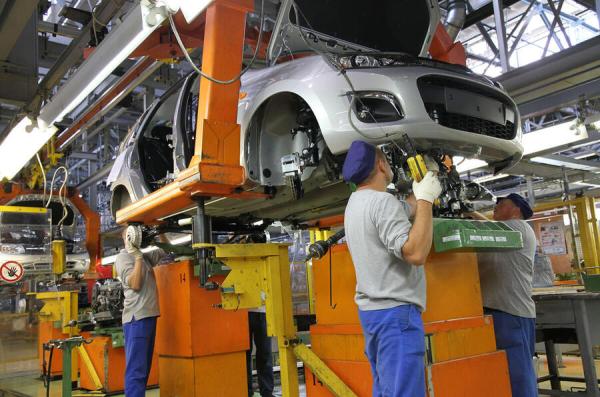
Charles Hecker, an associate fellow at the Royal United Services Institute and an expert on Russia, says the departure of foreign manufacturers left the country’s automotive industry in an “extremely fragile state”.
“Supply chains did collapse, so there was a significant decrease in output,” he says. “Every foreign auto maker that had investments on the ground in Russia left.”
Since then, China’s share of the Russian car market has soared. In 2019 it accounted for just 2.5% of car sales; by 2025, its share had risen to 54.3%. The main beneficiaries have been Chery, Great Wall Motor, Geely and some local joint ventures, such as Belgee (Geely), Tenet (Chery), Evolute (Dongfeng) and Moskvitch (JAC).
According to Felipe Munoz, founder of Car Industry Analysis, China’s involvement goes far beyond selling cars in Russia: through partnerships between Russian capital and Chinese car makers, it supplies technology, spare parts and cars in kit form for local assembly.
“It’s a market that is now totally dependent on China, and in the future that is only going to become more evident,” says Munoz. “Whether through joint ventures, imports or local production, the Russian car industry is slowly becoming a satellite of China.”
Kumar says that “while striving to localise its manufacturing base”, Russia “has moved from one dependency to another.”
“It has moved from Nissan, Renault and Volkswagen to Chery and GWM,” he says. “But it has also lost some of the R&D quality that came from working with Western partnerships. If Chinese auto makers left tomorrow, the Russian automotive sector would survive, but it would be much smaller than it is now.”
However, Hecker adds: “Russia realised that it had a certain technical dependency on China and has been trying to reduce that dependency.”
In 2021, before the war, Lada’s market share was around 22%. Despite its Western parent company leaving Russia, that share has grown to 25.6%, and its Granta (a cheap little saloon, hatchback or estate) has been the best-selling model for six of the past seven years.
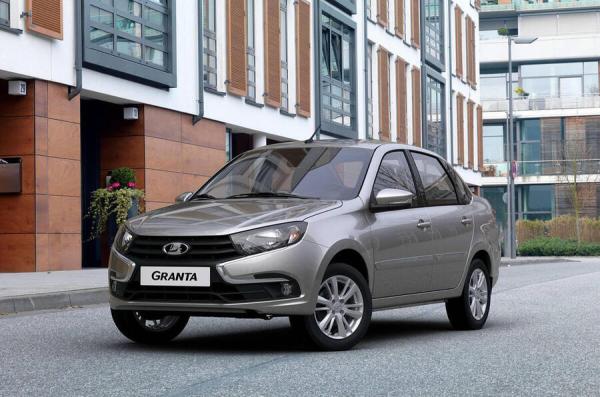
Munoz isn’t at all surprised: “Lada is still alive because of government support, because basically it’s alone in those segments.”
That Lada occupies the least expensive part of the market also helps explain why its market share hasn’t risen further, he says.
“A Lada is more Russian than before, but that doesn’t mean that it’s better. They are popular because they are the only choice and they are the cheapest. But whenever you have more income, you just buy something else.”
Avtovaz claims 99.8% of its components are locally sourced. That figure has been questioned, but Kuchko says the engine and transmission “remain genuinely Russian”.
Any Autocar readers wishing to see a new Niva on British roads will be disappointed. Regardless of international sanctions, Ladas haven’t been officially sold here for many years, because of the manufacturer’s failure to keep pace with advancing safety and emission regulations.
Plus, as Hecker says: “I just can’t see a Russian car brand being popular in Western Europe or the United States right now. Western Europe is firmly in punishment mode on Russia right now.”
Back at Bramley Motor Cars, the black Niva Luxe sitting next to Ferraris and Rolls-Royces is still waiting for a buyer-but Morgan-Jones says he has had enquiries from people who owned Ladas back in the 1980s and 1990s: “I must say, when it does go, we’ll miss it.”

Related posts

Latest Post


No Comments