
Aion UT review – first UK drive
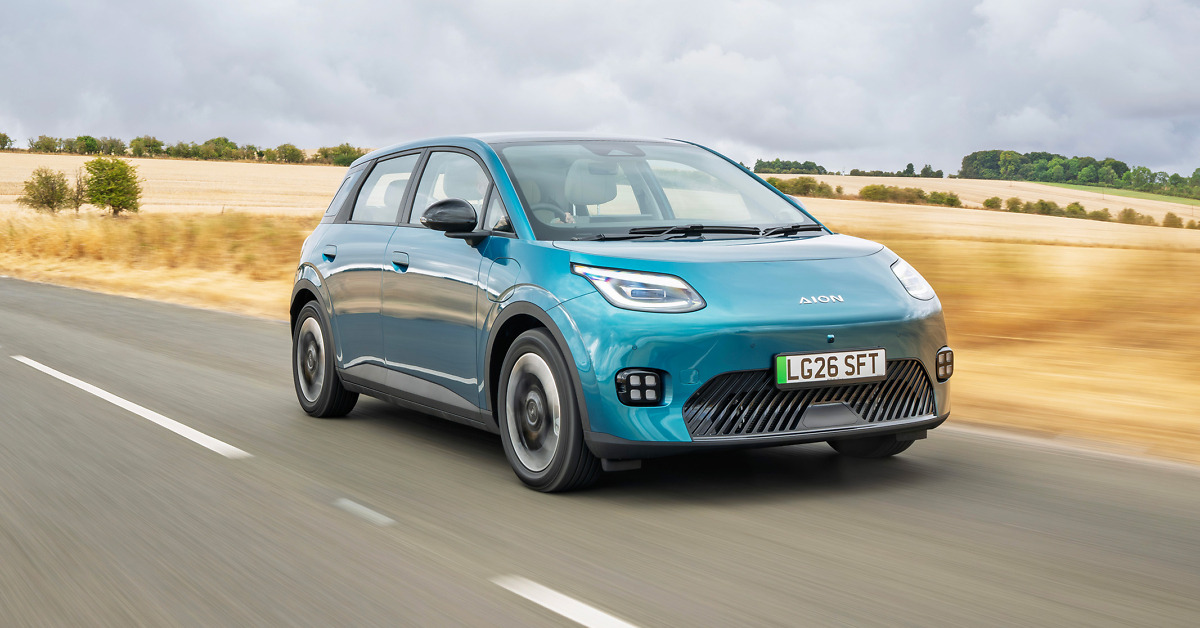
Make and model: Aion UT
Description: Small electric hatchback
Price range: From £28,950
Summary: The Aion UT is roomy, comfortable and well equipped, with a strong ownership package, although its size and price put it uncomfortably close to larger electric cars.

For a broader ownership picture, see our Aion UT Expert Rating, which combines media reviews, safety data, reliability, running costs and warranty cover.
Additional reporting by Stuart Masson.
Aion arrived in the UK in April 2026 with the Aion V, a mid-sized electric SUV, and the claim that arriving later than other Chinese brands had given it more time to understand what British buyers actually want.

The UT is its second UK model and the next step in a planned eight-car range by 2030. Aion pitches it as a small family car, putting it up against the likes of the Renault 5, Vauxhall Corsa Electric and Kia EV2.
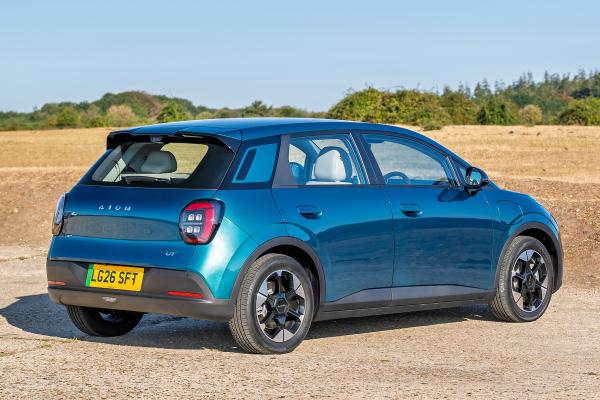
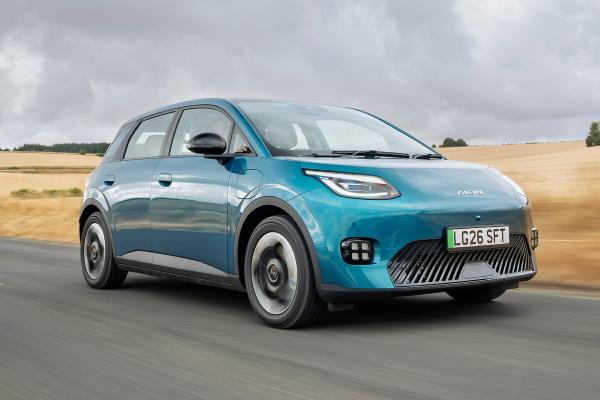
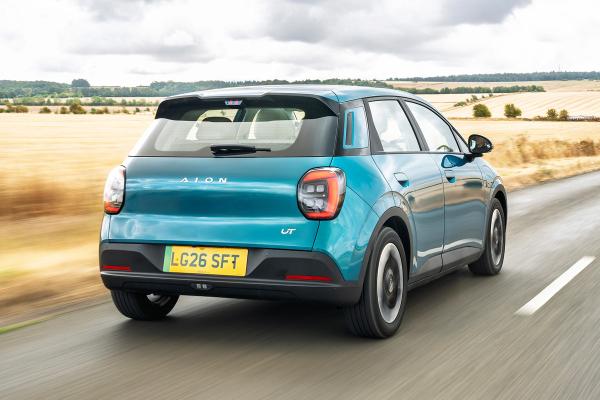
Except it isn’t actually all that small. The UT is noticeably bigger than most cars in this class and uses the same basic platform as the larger Aion V. That gives it plenty of interior space, but it also pushes the car into awkward territory on price, where buyers may start comparing it with larger electric hatchbacks and SUVs instead.
That size is both one of the UT’s greatest strengths and one of its main problems.
Price and equipment
The Aion UT keeps things simple. There’s one main specification at £29K, with the Premium Pack adding £1,200. As of September 2026, it doesn’t qualify for the government electric car grant.
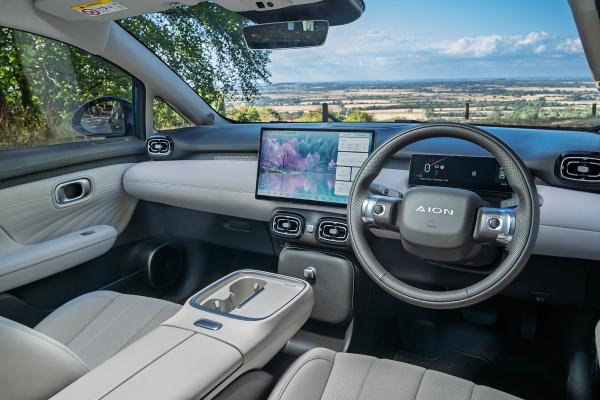
Standard equipment is generous, as we’ve come to expect from newer Chinese brands. Heated front seats and steering wheel are included, with electric adjustment for both front seats. Even the rear seats recline, which is unusual in this part of the market.
Wireless Apple CarPlay and Android Auto are standard, along with both USB-A and USB-C ports, a wi-fi hotspot and a huge 15-inch central touchscreen. A separate driver display shows essentials such as speed and battery range.
The £1,200 Premium Pack adds a full-length glass roof with sunshade, ventilated front seats, wireless phone charging with cooling and a powered tailgate, which is another feature you don’t often find on a small hatchback.
There are very few other options. Seine Silver paint costs £595, while a cream leather interior is another £195.
Safety equipment is also extensive. The UT received a five-star Euro NCAP rating in September 2026 under the organisation’s tougher new testing regime, while all models include the usual collection of driver assistance systems plus useful extras such as door-opening warnings and a 360-degree camera.
Inside the car
The Aion UT feels as big inside as it looks from the outside. There’s loads of legroom in both rows, headroom is perfectly adequate and the cabin has plenty of useful storage. The rear doors also open to almost 90 degrees, which makes fitting child seats much easier and should help passengers with restricted mobility.
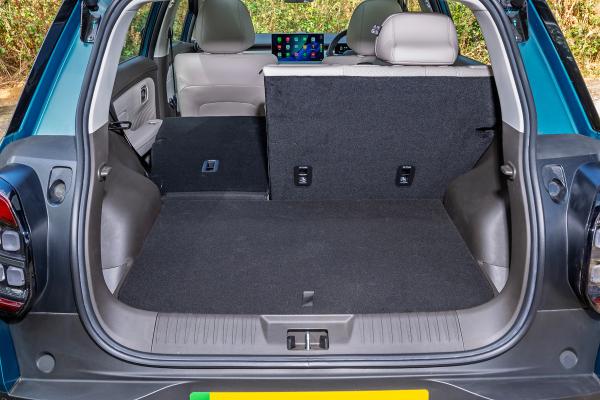
The boot is reasonably deep rather than huge, with a floor that can be mounted at different heights depending on whether you want a flat load area or more hidden storage underneath.
General build quality is good. There are some cheaper plastics around the cabin, but the panels fit together neatly and the main surfaces feel decent enough.
Unfortunately, the driver’s environment follows the current fashion of putting almost everything into one enormous touchscreen.
That means functions such as the door mirrors are hidden away in menus rather than controlled by a conventional switch. There are, at least, permanent touch-sensitive shortcuts along the bottom of the screen for things like climate control, volume and the heated rear window, which is better than having to dig through several menu layers every time.
But this is still very much a screen-first interior. If you prefer proper physical controls for everyday functions, the UT won’t win you over.
Driving range and charging
There’s one 60kWh battery option, giving the Aion UT an official driving range of 268 miles. That’s a good figure for a car positioned in this class, although the UT’s size and price put it close to larger EVs offering significantly more range.
Maximum DC charging speed is 87kW. A 10-80% charge takes a little over half an hour, while 30-80% takes 24 minutes. Using an 11kW AC wallbox, a full charge takes just under seven hours.
Two useful features are standard on every UT. There’s a heat pump to help efficiency in colder weather, plus vehicle-to-load capability for powering external electrical equipment from the car’s battery.
On the road
The UT uses essentially the same electric hardware as the larger Aion V but weighs about 200kg less, so it feels reasonably brisk. With 150kW / 204hp, it gets from 0-62mph in 7.3 seconds. That’s more than quick enough for this sort of car, although Aion is keen to point out that it isn’t supposed to be a hot hatch.
Before the UK launch, pre-production cars apparently spent several months being tuned specifically for British roads, and that work seems to have paid off.
The UT generally goes about its business in a pleasantly unobtrusive way. Ride quality is impressive, particularly at higher speeds, and it feels perfectly happy covering longer motorway journeys despite being marketed as a small family car.
The steering is less convincing at lower speeds. It can feel a little too light and over-sensitive around town, which is a familiar problem with many modern EVs. It settles down as speed rises, though, and the car becomes more composed.
Brake regeneration is included, although the different settings don’t make as much difference as you might expect and there’s no proper one-pedal mode.
There’s also rather a lot of driver assistance intervention, another increasingly common theme with newer cars. Some systems are genuinely useful, but the overall experience can become a little too busy.
Still, the basic driving experience is solid. The UT isn’t memorable or exciting, but neither does it do much wrong.
Ownership
The Aion UT currently holds an A-grade New Car Expert Rating of 74% in our unique Expert Rating Index. Its individual scores are a slightly unusual mix. Media reviews average just 45%, an E-grade, but the UT scores very strongly elsewhere: A-grade for safety at 84%, A-grade for running costs at 90% and an almost perfect A-grade warranty score of 99%. There isn’t yet enough reliability data to generate a reliability score.
The five-star Euro NCAP result is another strong point, particularly as the UT was tested under the tougher 2026 assessment regime.
But the standout ownership feature is Aion’s Great Eight package. The car itself is covered for eight years or 100,000 miles, while the battery warranty extends to eight years or 125,000 miles.
Aion also includes scheduled servicing, roadside assistance and MOT testing throughout the eight-year period. That’s far more comprehensive than simply offering a long warranty, and it removes several significant ownership costs for anyone planning to keep the car for a long time.
That package is also a major reason why the UT scores so strongly for running costs and warranty in our Expert Rating Index.
Verdict
There’s quite a lot to like about the Aion UT. It’s spacious, comfortable and well equipped, with decent range and a driving experience that remains pleasantly unobtrusive. The interior also feels solidly put together, even if there’s too much reliance on the central touchscreen. The eight-year ownership package is another major advantage and goes well beyond the headline warranty figure.
The problem is where the UT sits in the market. At nearly £29K before options, it costs noticeably more than some smaller electric hatchbacks. Yet because it’s almost as large as cars from the class above, it also finds itself uncomfortably close to bigger alternatives with longer ranges and more established badges.
That makes it harder to judge simply as a small EV. If you value interior space, comfort and long-term ownership support, the UT has plenty going for it. But buyers shopping primarily on price or range may find more convincing alternatives elsewhere.

Stuart’s view:
“What stands out to me most about the Aion UT isn’t the way it drives, although it’s perfectly pleasant, or even the amount of space inside. It’s the ownership package.
Eight years of warranty, servicing, roadside assistance and MOT testing is an unusually comprehensive offer, and takes a lot of uncertainty and expense out of running the car for a very long time.
“The cabin itself is roomy and has plenty of useful storage, but I’m less keen on the almost entirely screen-based controls. For a car that gets so much of the practical stuff right, a few more proper buttons would make everyday life much easier.”
We like:
- Comfortable ride, especially at higher speeds
- Lots of interior space and useful storage
- Heat pump and vehicle-to-load standard
- Five-star Euro NCAP safety rating
- Exceptional eight-year ownership package
We don’t like:
- Too many functions buried in touchscreen menus
- Steering can feel over-sensitive at low speeds
- Regeneration settings make little difference
- No proper one-pedal driving mode
- Price overlaps with larger electric cars
Similar cars
BYD Dolphin | Citroën ë-C3 | Fiat 500e | Fiat Grande Panda Electric | Geely EX2 | Honda Super-N | Hyundai Inster | Kia EV2 | MG 4 Urban | Mini Cooper Electric | Nissan Micra | Peugeot E-208 | Renault 5 E-Tech | Vauxhall Corsa Electric | Volkswagen ID. Polo
Key specifications
Model tested: Aion UT Premium Pack
Price as tested: £30,150
Powertrain: Electric motor, 60kWh battery
Gearbox: Single-speed automatic
Power: 204 hp (150 kW)
Torque: 210 Nm
Top speed: 99 mph
0-62mph: 7.3 seconds
Battery range (combined): 268 miles
CO2 emissions: 0 g/km
Euro NCAP safety rating: Five stars (September 2026)
TCE Expert rating: A (74%), as of September 2026

Related posts




Latest Post


No Comments