
The Kawasaki Motorcycle That Refuses to Feel Old
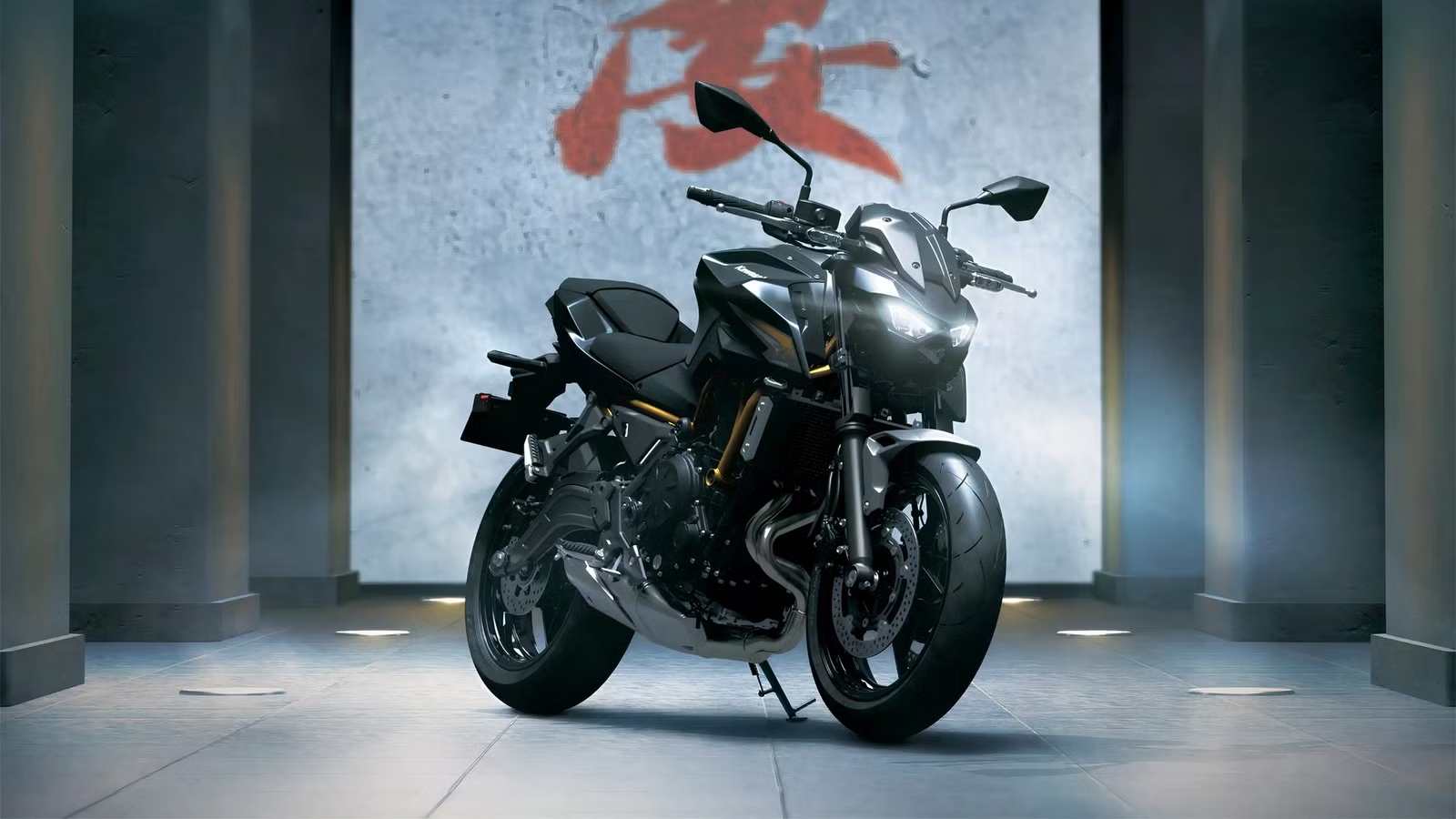
Since its inception, Kawasaki has always had potent streetfighters that prioritize rider connection over mindless complexity. When the fourth-gen Z1000 debuted with its radical Sugomi design philosophy, it gave everyone a jolt. That menacing, low-slung aesthetic has established an identity that runs from the baby Z500 all the way up to the supercharged Z H2. Somewhere in the middle lies a Kawasaki streetfighter that hasn’t had too many updates since it debuted, but still doesn’t feel old against its newer middleweight rivals.
Tech-Heavy Middleweights Distract You From Pure Mechanical Simplicity

We have to understand today’s middleweight naked segment first. This is fiercely contested, with lineups that are constantly overhauled, giving them ever more electronics. Yet, competition is fierce, and these feel dated pretty quickly when the new best arrives. The result is that the consumer ends up with a discontinued product that’s enough to drain the joy from ownership. Practical enthusiasts just want an agile, dependable product that delivers thrills time after time without draining the wallet.
Kawasaki Takes A Different Approach

Kawasaki does not succumb to short-lived industry fads, instead pursuing a strategy that is long-term with its middleweight naked portfolio, as it does with all its other naked motorcycles. What it has done is stick with the products it has, but give them refinement and optimization regularly. What this has done is retain their reliability while making them more enjoyable to ride and own, which is as much as you can ask from a practical middleweight motorcycle. Kawasaki has proved that a well-engineered parallel-twin naked bike will never go out of fashion.
This philosophy has given rise to a lightweight, sharp streetfighter that continues to show up against newer, more expensive competition. It has gotten updates over the years with an assist and slipper clutch, a TFT instrument cluster, an optional quickshifter, and now even an aggressive look. All that helps it stay relevant, refusing to feel old.

The Kawasaki Z650 S Injects Aggression Into A Dependable Platform

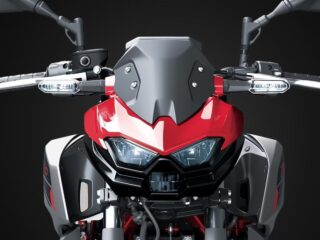
The Kawasaki Z650 is that middleweight naked bike. It is now available in a new avatar in the form of the 2026 Kawasaki Z650 S, armed with the indestructible 649 cc parallel-twin engine that still makes it one of the most powerful naked bikes under $10,000. The new S variant looks sharper with Z900-inspired styling. It blends modern visual aggression with old-school mechanical purity, and it proves that thrills in the real world do not need depressingly high price tags, at least not in the middleweight naked segment.
A Sub-$7,700 MSRP Ensures Strong Value

The 2025 Z650 retails for $7,249, and ABS adds another $500 to that price, making it one of the Kawasakis that delivers serious performance for the money. But the 2026 Z650 S ABS has a base price of $7,699, and it makes far more sense than the more expensive older Z650 ABS. That helps it undercut most of its rivals with relative ease. More on that later.
A 180-Degree Parallel Twin Prioritizes Linear Pull Over Peak Drama

The Z650’s engine has been around since its inception, and it has proven its reliability year on year. Kawasaki has not fixed what has not broken and left it the same on the updated Z650 S. This is a 649 cc parallel-twin engine with a 180-degree firing order and a compression ratio of 10.8:1. It generates 67 horsepower at 8,000 RPM and 47.2 pound-feet of torque at 6,700 RPM. It has a progressive build-up of power as the revs build, but it trades the snap of a 270-degree crank for such great reliability that it refuses to break down.

The six-speed gearbox has an assist and slipper clutch and now has the option of a quickshifter as well. However, since this is a cable-actuated throttle, the quickshifter is upshift-only. Still, it makes the Z650 a more rideable motorcycle, and this engine’s flexibility and reliability, not to mention appetite for revs, has pleased everyone who has ridden it.
Conventional Suspension Delivers A Compliant Urban Ride

The Z650 S uses a steel tubular trellis frame with the engine as a stressed member to deliver all-round fun with great versatility. It helps keep the weight down, but in keeping with its affordable mindset, the rest of the chassis parts are seemingly ordinary. It has a 41 mm telescopic fork paired with a horizontal back-link monoshock. The only adjustability is rear preload, which translates to front-end dive under hard braking, especially on a bumpy surface. The travel available is 4.9 inches in the front and 5.1 inches at the rear.

There are dual 300 mm semi-floating brake discs at the front with two-piston floating calipers and a single 220 mm disc at the rear with a single-piston caliper. These are mounted on 17-inch alloy wheels with tubeless tires. These simple components are nevertheless up to the job in the city, and the Z650 is an enjoyable motorcycle to ride within those limits.
A 55.5-Inch Wheelbase Maximizes Flickability In The City
The Z650 S has been changed ever so slightly compared to the older Z650. Similarities include the length and width of the same at 80.9 inches and 31.7 inches, along with a wheelbase and ground clearance of 55.5 inches and 5.1 inches. The fuel tank remains with a capacity of four gallons, and the curb weight is 416.7 pounds. Where things have changed is in the seat height, which is a little higher now at 31.7 inches. Likewise, the handlebar is also a little higher, which gives the Z650 S a more open, upright seating position.
A 4.3-Inch TFT And Basic Traction Control Cover Essential Commuter Tech

The Z650 S has a new 4.3-inch TFT instrument cluster with added display modes and Bluetooth connectivity. It also has traction control that can be set to one of two levels, or off. Dual-channel ABS is standard as well. From a visual perspective, the Z650 S matches newer Z designs with its three-LED headlamp design. It also gets a gold trellis frame instead of the original green one. If you don’t like the gold, we have bad news. There’s no other color option for 2026, which is a bit surprising, considering most Kawasaki bikes always come with multiple liveries to choose from. Even the outgoing Z650 did that.
Fresh Triple-Cylinder And E-Clutch Rivals Expose The Z650’s Spec-Sheet Deficits

The middleweight naked bike segment is one that has extremely fierce competition. One of the oldest-running middleweights is the Suzuki SV650 ABS ($8,149), whose similar bulletproof reliability quietly builds lifelong owners. However, it has a lot more character thanks to its 90-degree V-twin engine, but it lacks in the features department because it has an LCD instrument cluster and no traction control or quickshifter.

An underrated motorcycle that gives riders more than they pay for is the CFMoto 675NK ($6,999). In typical CFMoto fashion, it offers the most bang for the buck with 95 horsepower from an inline three-cylinder engine. It also has inverted front forks, fully adjustable suspension, and radial front brake calipers. If that were not enough, it has both a USB-A and a USB-C port. The five-inch TFT display has curved glass with screen mirroring and navigation, allows for OTA updates, and the traction control system is multi-level.

One of the most reliable and fun bikes in the segment that outsells more glamorous rivals is the Yamaha MT-07 ($8,599). It has a 270-degree parallel-twin engine and recently got a big update that gave it a TFT screen. More importantly, a by-wire throttle was added. That means it is now equipped with ride modes and has the option of a two-way quickshifter. But it still retains the capability to go the distance with minimal ownership costs.

Finally, there is the Honda CB750 Hornet ($7,999) that quietly leads its segment. It is available in the US market with only the E-Clutch system. Since there is no need to use the clutch at any point, it makes it the easiest bike to ride in the city. It also helps that it looks great and has great handling, with power to match from its engine.
Source: Kawasaki USA

Related posts

Latest Post


No Comments