
The First Naturally Aspirated Production Engine To Break 1,000 Horsepower
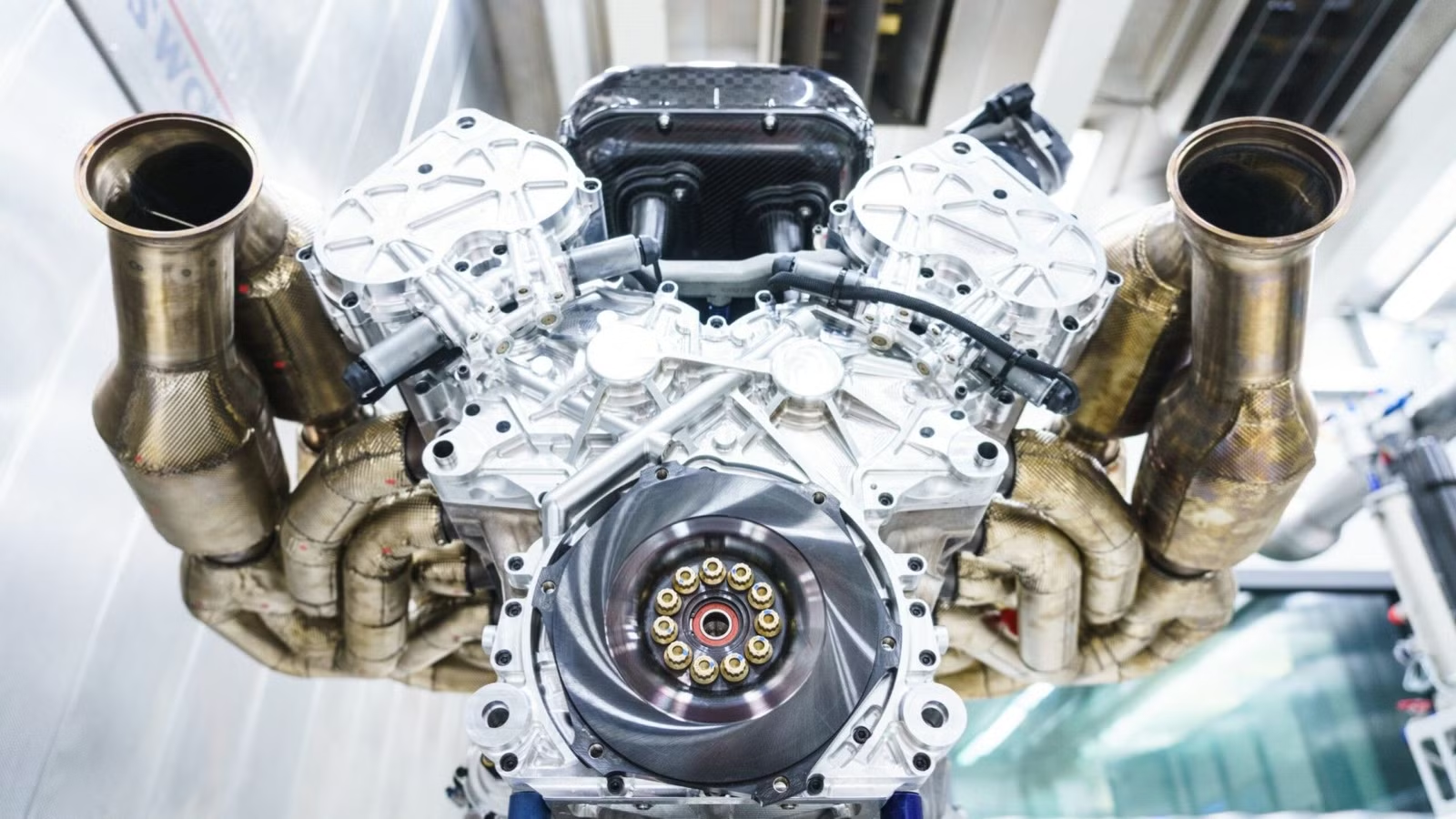
There was once a time when engines continuously got more and more powerful. Now, that’s not so much the case. Engine development is more about efficiency and pairing ICE engines up with electrification, rather than outright power. But, one engine that surfaced quite recently has completely bucked that trend, kind of. Not only does it power one of the coolest hypercars ever made, but it also integrates some cutting-edge technology from the world of motorsports. The car it’s featured in does use hybrid technology, but it still managed to shake the performance world to its core when it became the first naturally-aspirated engine to produce 1,000 horsepower, proving what’s possible with internal combustion in the modern age.
Today’s Supercars Are Getting More And More Powerful

If you’ve been paying attention to the world of Supercars and Hypercars, you’ll have noticed that they keep on getting more and more powerful. The ever-increasing adoption of hybrid and fully-electric powertrains has only made it more obvious. It’s almost par for the course now for hypercars to have a thousand horsepower or more. Because of that, performance records are being broken left, right and center. The latest example of absolute power excess has to be the fully-electric Yangwang U9 Extreme, with nearly 3,000 horsepower and a recorded top speed of 308 mph.
There Are Very Few Engines That Produce Over 1,000 Horsepower

In that league of 1,000+ horsepower cars, you’ll very rarely find one where the engine is at that level just on its own. Bugatti’s W16 managed to get to that point, producing up to 1,183 horsepower in the Veyron Super Sport and Grand Sport Vitesse and up to 1,578 horsepower in the Chiron Super Sport and Super Sport 300+. The Dodge Demon 170’s V8 also managed to produce 1,025 horsepower. But, a key way that both of these engines achieved that was through forced induction. The Bugatti W16 has four turbochargers, while the 6.2-liter V8 used in the Dodge Demon 170 is supercharged. There is only one purist, naturally aspirated engine that’s ever managed to get to that 1,000 horsepower figure.

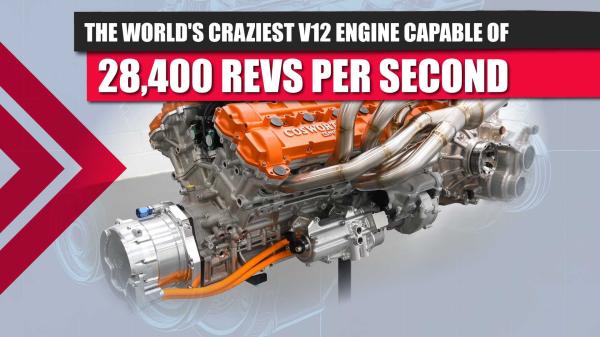
The World’s Craziest V12 Engine Capable Of 28,400 Revs Per Second
This NA V12 engine can reach its 12,100 RPM redline in just 0.3 seconds, going through a ridiculous 28,400 revolutions per second.
The Cosworth V12 In The Aston Martin Valkyrie Is The First Naturally Aspirated V12 To Break 1,000 Horsepower
|
Type |
Displacement |
Power |
Torque |
Units Made |
|
V12 |
6.5 liters |
1,000 hp |
546 lb-ft |
257 |
In a world that’s leaning more and more towards forced induction and electrification, the Cosworth RA V12 is a bit of a breath of fresh air. Specially commissioned for use in the Aston Martin Valkyrie, this 6.5 liter V12 legitimately produces 1,000 horsepower in its road-going specification. In the track-only Valkyrie AMR Pro, it’s estimated to produce as much as 1,100 horsepower. That makes it the first (and currently only) naturally aspirated production engine to hit and exceed that 1,000 horsepower mark.
It Uses Advanced Engineering Taken From The World Of Formula One

A big reason why the Cosworth RA V12 is able to produce so much power as a seemingly old-school, naturally aspirated V12 is because it’s actually quite advanced. A lot of it was designed using engineering derived from Formula 1. The pistons are built to F1 specifications, and it uses titanium connecting rods. The engine also acts as a fully stressed structural element of the Aston MartinValkyrie’s chassis, a technique that’s common in F1 cars.
One of the results of this is that not only is this engine incredibly powerful, it’s also incredibly light. Despite being a big V12, the whole engine weighs just 454 pounds. It is much lighter than the other 1,000+ horsepower internal combustion engines. The Dodge Demon’s V8 weighs around 683 lbs, while the Bugatti W16 is even heavier at around 882 lbs. That helps keep the entire car as light as possible (the Valkyrie weighs around 2,954-2,987 lb), improving both performance and driving feel.
It Revs Higher Than Almost Any Road Car Ever Built

One of the most outrageous things about the Cosworth-built V12 isn’t just the power figure. It’s the way the engine actually delivers it. The Valkyrie’s 6.5-liter V12 screams to an 11,100-rpm redline, making it one of the highest-revving production-car engines ever created. For context, most modern supercars rarely exceed 8,500 rpm, and even legendary naturally aspirated engines like the Lexus LFA’s V10 topped out at 9,000 rpm.
That sky-high rev ceiling is a huge reason why the engine can produce 1,000 horsepower without turbochargers. Instead of relying on boost, Cosworth engineered the V12 to breathe efficiently at extreme engine speeds, allowing it to generate massive power through sheer airflow and rotational speed. The sound it produces at full throttle has often been compared to older naturally aspirated Formula 1 cars from the V10 and V12 era, which is part of what makes the Valkyrie feel so different from modern turbocharged hypercars.
The engineering required to make that possible is also incredibly complex. The crankshaft alone reportedly weighs just around 28 pounds and is machined from a solid billet of steel. Cosworth even claimed that if the engine were allowed to rev freely from idle to redline with no limiter, it could reach maximum rpm in less than a second. That level of responsiveness is almost unheard of in a road-legal production car.
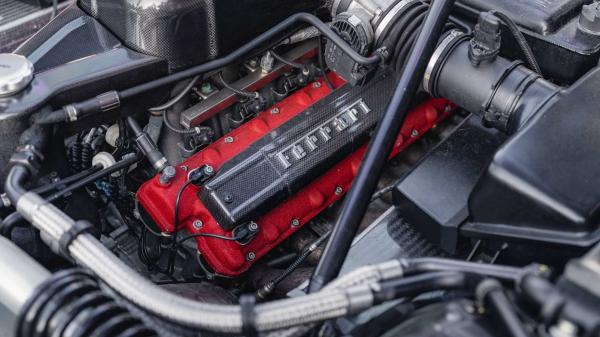
10 Fastest Naturally Aspirated Sports Cars Of All Time
These pure-bred sports cars don’t need any kind of forced induction to reach ridiculously high speeds.
The Valkyrie Actually Has More Than 1,000 Horsepower, Thanks To Hybrid Technology

|
Engine |
Transmission |
Drivetrain |
Power |
Torque |
|
6.5-liter V12 with an electric motor |
7-speed automated manual |
Rear-wheel drive |
1,160 hp |
664 lb-ft |
While that big, naturally aspirated, old-school feeling V12 is a huge part of the Aston Martin Valkyrie’s character, it’s not the full story when it comes to its power. The street-legal version of the Valkyrie is actually a hybrid, with a bit of extra boost coming from a KERS system. This system is made by Rimac, and is made up of a small battery and a 160 horsepower electric motor. Altogether, this gives the Valkyrie 1,160 horsepower and 664 lb-ft of torque. The KERS system is similar to the hybrid boost found on previous hybrid hypercars like the McLaren P1, and is again derived from Formula 1 technology.
If the hybrid system is a part of why the Valkyrie is so powerful, then why is it not mentioned so much? Well, part of it has to do with how impressive that Cosworth engine is. Another part of it is down to the Valkyrie AMR Pro not having the KERS system at all. The AMR Pro is all about that V12, and all about providing as pure of a driving experience as possible with no compromises.
Adrian Newey Designed The Valkyrie Like A Le Mans Prototype For The Road

A huge part of why the Valkyrie became such a sensation had nothing to do with horsepower numbers alone. The car was heavily shaped by legendary Formula 1 designer Adrian Newey, the same aerodynamic mastermind behind multiple championship-winning Red Bull F1 cars.
Instead of designing the Valkyrie like a traditional road-going hypercar, Newey approached it more like a Le Mans prototype or Formula 1 machine with license plates. The entire shape of the car was built around airflow efficiency, downforce generation, and weight reduction. Massive Venturi tunnels underneath the body help suck the car toward the road without relying on oversized wings that create drag.
Its Entire Powertrain Is Surprisingly Durable

With such an exotic engine mated up to a hybrid system, you’d expect the Aston Martin Vakyrie’s powertrain to be delicate. The opposite seems to be true, though. Around the time it was being developed, Cosworth reckoned that the Valkyrie’s powertrain would be able to last around 62,000 miles before the engine would need a rebuild.
This is a huge mileage compared to the Mercedes-AMG One,which Mercedes-Benz says needs to have its ICE completely refurbished ever 50,000 kilometers (around every 31,000 miles). While 62,000 miles is still a fairly low figure compared to how long most production engines are designed to last, it is still impressive compared to what Mercedes says that the AMG One requires. There also don’t seem to be any major complaints from Valkyrie owners about the internal combustion end of the powertrain yet, so Cosworth’s predictions may actually be holding up to be true.
Sources: Aston Martin, Bugatti, Cosworth, Dodge, Mercedes-Benz

Related posts


Latest Post


No Comments