
BMW’s Long-Wheelbase Strategy Is Really Paying Off In India
News
More than half of BMW India’s sales are already stretched models, and the company’s local boss believes that figure could climb to 60% by the end of the year.
Article Summary
- LWB models already account for 52 percent of BMW India’s sales in 2026.
- BMW expects stretched models to make up around 60 percent of sales by the end of the year.
- The recently launched i5 LWB and the upcoming iX3 LWB are expanding BMW’s India-specific long-wheelbase lineup.
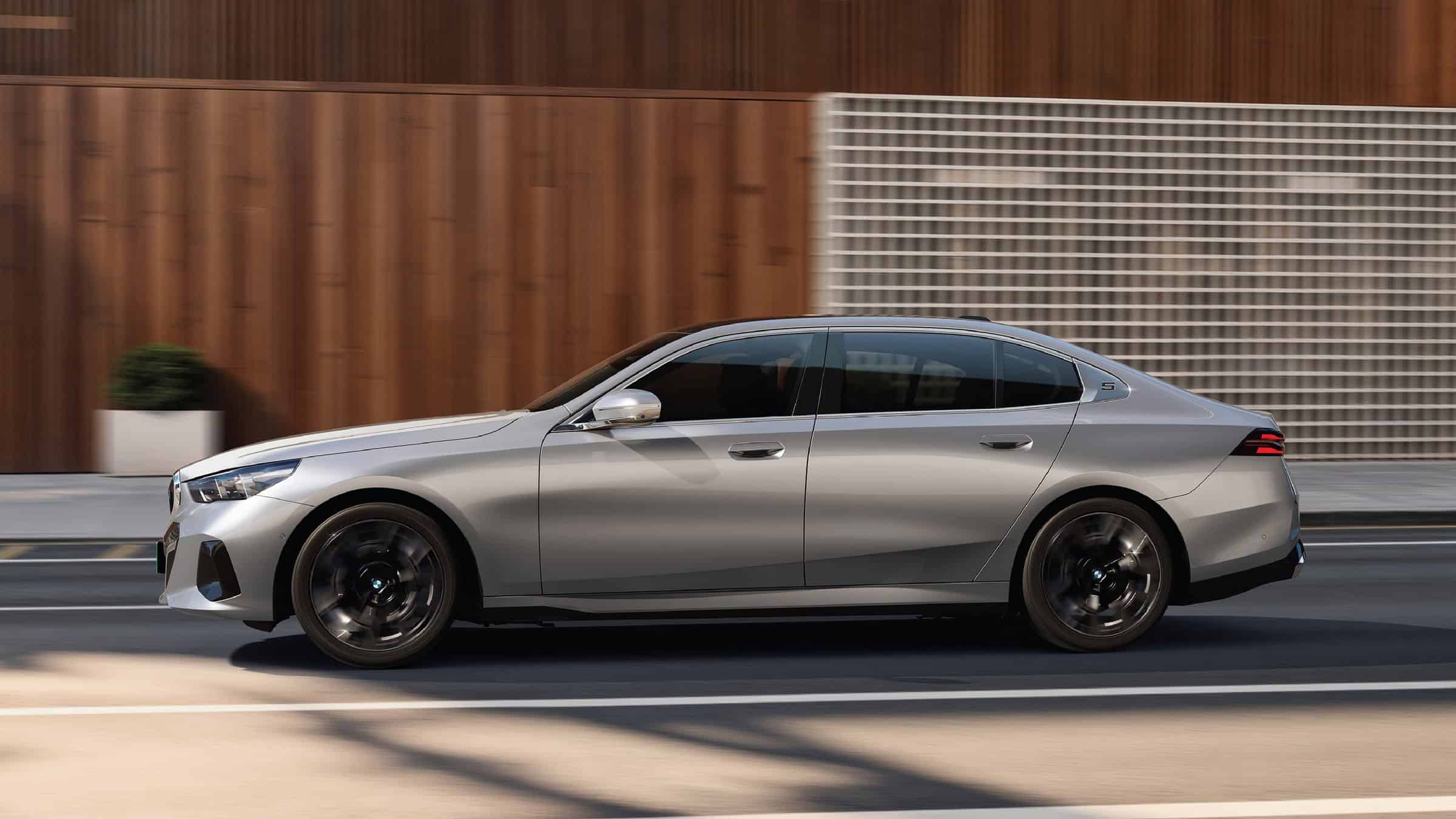
BMW is stretching beyond its cars in India. It’s stretching the definition of what buyers in the country want from a luxury vehicle. Long-wheelbase models already accounted for 52 percent of BMW India’s sales in the first half of 2026, and the company now expects that figure to reach roughly 60 percent by the end of the year.
That’s a remarkable shift for a strategy once mainly associated with China, where the LWB formula was created. “Long wheelbase and electrification are the two pillars we are working on this year,” Hardeep Singh Brar, president and CEO of BMW Group India, told the Indian edition of Autocar. He added that the share should grow further as more LWB products arrive.

And BMW certainly isn’t holding back. The company currently sells the 3 Series and 5 Series/i5 sedans, along with the X1/iX1 crossovers. The new long-wheelbase iX3 won’t be exclusive to China either. Aside from India, it’s also coming to at least three additional markets: Thailand, Indonesia, and Malaysia. The stretched X5 is also coming to India.
More Rear-Seat Room Without Paying For A Higher-Segment Car
Circling back to India, the formula is fairly simple. Local luxury-car buyers place a particularly high value on rear-seat space, especially when the owner isn’t necessarily the driver. BMW’s own experience suggests the appeal goes well beyond the traditional executive-sedan crowd. The automaker has progressively expanded the LWB formula from sedans to SUVs.

There is, however, one major market that won’t be joining the LWB party. BMW has ruled out bringing its LWB models to the United States for now. Bernd Körber, BMW’s product boss, recently spoke to us about the difference in customer priorities: China wants legroom, while the U.S. wants cargo room. Internal research apparently hasn’t found enough demand to justify offering stretched models in North America. We wouldn’t hold our breath for Europe to get LWB models either.
India, meanwhile, is telling BMW the exact opposite. With LWB models already making up more than half of its sales, and the share potentially growing further, Munich has plenty of reason to keep feeding the market what it wants. The company’s growing LWB portfolio also fits neatly with its broader strategy of tailoring products to individual regions rather than forcing every market to accept exactly the same lineup.
Of course, in an ideal world, buyers would be allowed to choose between the standard- and long-wheelbase models. However, we can easily imagine that would be a logistical nightmare for BMW. Not to mention, costs would go through the roof if it had to sell both.
Source: Autocar India

Related posts

Latest Post


No Comments