
Genesis Magma GT V8 Concept Tackles Italian Hillclimb
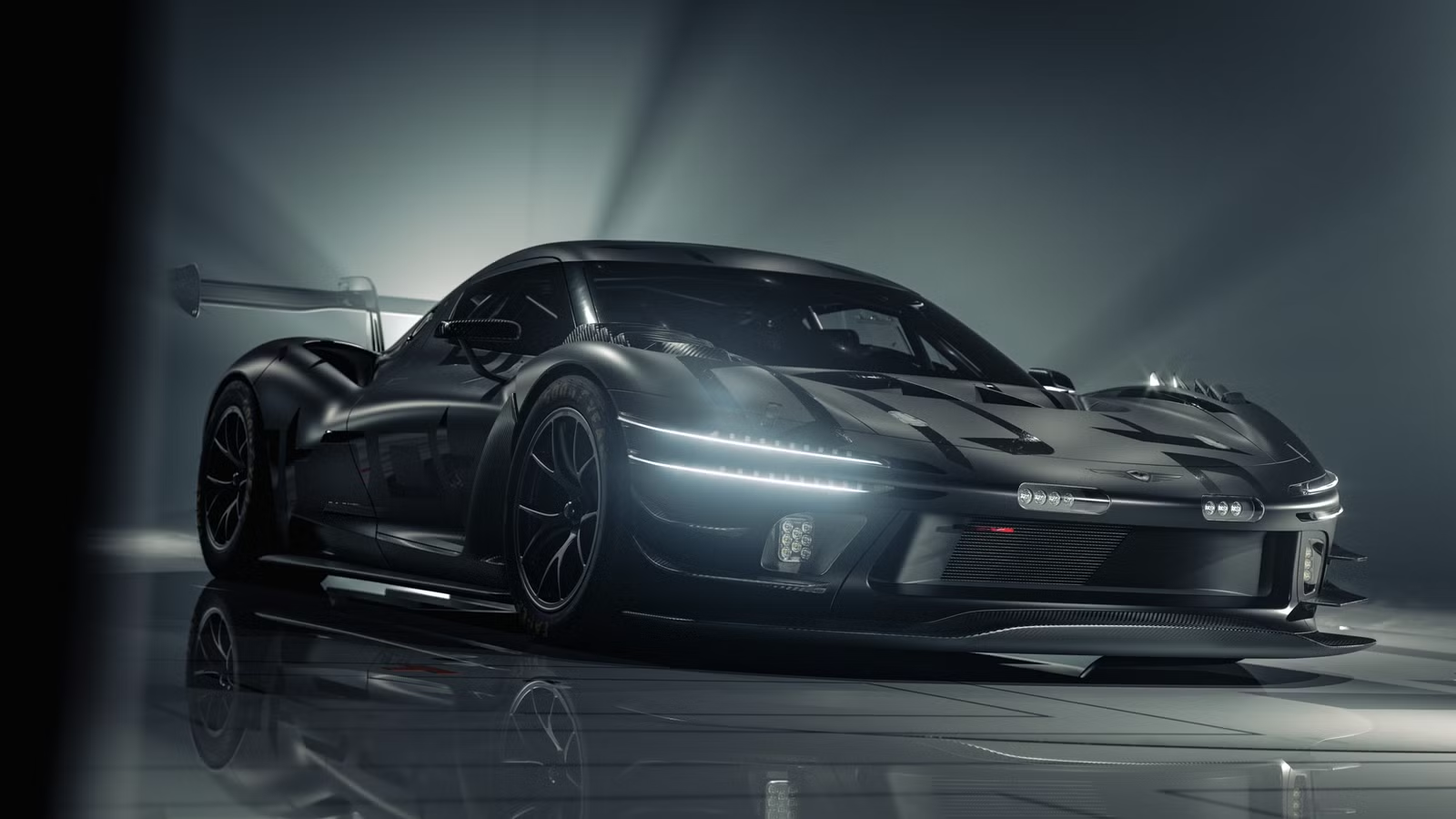
Genesis just gave the Magma GT its most convincing argument yet for production. Footage from the Tutto Bene Hillclimb on Mount Mottarone in Italy — released this week — shows the low-slung mid-engine prototype accelerating from a standstill, hunting for grip on damp asphalt, and filling the mountain air with the kind of V8 exhaust note that no press release can fake. This is not a design study on a rolling chassis. It drives.

The timing is deliberate. While Audi winds down its combustion performance programs, BMW pushes M into hybrid territory, and Mercedes-AMG electrifies its flagship, Genesis is committing to a twin-turbocharged, 3.2-liter V8 with up to 800 horsepower for its halo car. That’s a contrarian position in 2026 — and the hillclimb footage is the clearest signal yet that Genesis intends to follow through on it.
A Racing Engine in a Road Car, Tested the Hard Way
The Magma GT’s V8 isn’t a bespoke supercar engine designed in isolation. It shares its architecture with the powerplant in the GMR-001, Genesis’s LMDh prototype currently competing in the World Endurance Championship. That lineage matters: endurance racing is one of the most demanding development environments in motorsport, and running a variant of this engine at Le Mans and Spa is a more rigorous durability test than any laboratory simulation. Interestingly, the V8’s own architecture traces back to Hyundai’s 1.6-liter turbocharged four-cylinder from the i20 N WRC rally car — a modular engineering approach that scales from rally stages to prototype racing to, eventually, a road-going supercar.

The hillclimb footage confirms the engine is mid-mounted, as Genesis has indicated since the car’s debut last fall. The driver wasn’t pushing hard — wet conditions and the value of a one-of-a-kind prototype tend to encourage restraint — but even at modest pace the car showed wheelspin off the line and a deep, layered exhaust note that carries through the video. The 800-hp figure remains unconfirmed by Genesis officially, but multiple sources corroborate it, and the sound is consistent with a high-output forced-induction V8 rather than anything smaller.
What Genesis Has Confirmed, and What It Hasn’t
Genesis has been methodical about how it releases Magma GT information. Since the car’s debut, the brand has shown a leather-appointed interior with an analog gauge cluster and minimal screens — a deliberate statement that this is a driver’s car, not a tech showcase. A green-hued variant followed, then a GT3 racing concept with a widened track, enlarged intakes, and additional aerodynamic bodywork. Genesis described the GT3 as an independent study that could inform future performance vehicles, which is automaker-speak for “we’re serious about racing this thing.”
Genesis Brand Director for Italy and France Charles Fuster told Motor1 Italy that the Magma GT “isn’t a temporary exercise” and that the brand would “like to get there soon” on a production timeline. Genesis has also publicly stated it doesn’t build show cars purely for display purposes. A production version is widely expected by 2030, with convertible and track-focused variants potentially joining the coupe. An earlier timeline — 2027 or 2028 — has also been reported, though Genesis hasn’t confirmed a date. What the brand has confirmed, through action rather than announcement, is that this car runs, sounds right, and is being developed with a racing program running in parallel.
The Contrarian Bet That Sets Genesis Apart

The Magma GT’s significance isn’t just about horsepower. It’s about positioning. Aston Martin still builds combustion V8s and V12s, but Aston is a legacy sports car brand — the expectation was always there. Genesis is a luxury brand that launched as a standalone division a decade ago, built its reputation on sedans and SUVs, and is now attempting to plant a flag in supercar territory with a naturally aspirated-adjacent V8 at the exact moment the European establishment is retreating from combustion performance.
The rivals Genesis is targeting — the McLaren Artura, Ferrari 296 GTB, Chevrolet Corvette — are either hybrid or pure combustion, and the Corvette comparison is one that’s come up repeatedly in coverage of the Magma GT. An 800-hp, mid-engine coupe with a racing pedigree and a production date before 2030 would land Genesis in a segment it has never occupied. Whether the production car delivers on the concept’s promise is still an open question. But the hillclimb footage at Mottarone answered the most basic one: the Magma GT is a real car, and it moves under its own power. That’s further than most halo concepts ever get.

Related posts






Latest Post


No Comments