-
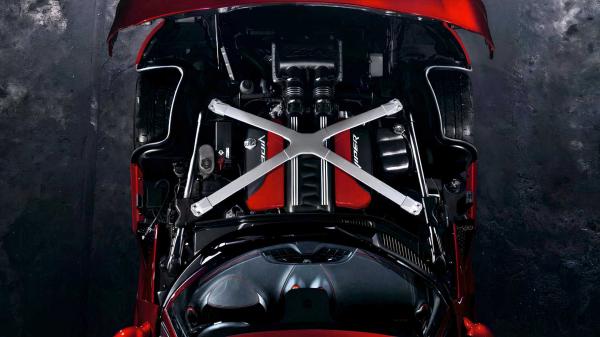
Close-up shot of 2013 Dodge Viper SRT engine bay Stellantis -
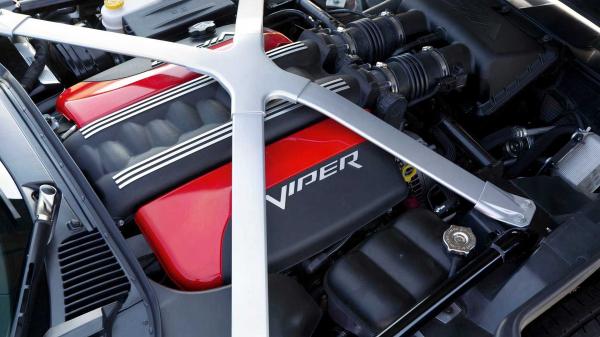
Close-up shot of 2015 Dodge Viper engine bay Stellantis -
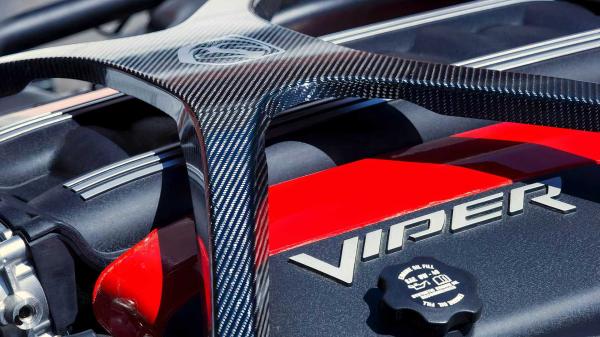
Close-up shot of 2016 Dodge Viper engine bay Stellantis

A New Dodge Track Weapon Is Coming For The Mustang GT3’s Throne
12 minutes reading
Wednesday, 16 Sep 2026 02:01 0 45 autotech

The Dodge Copperhead is making a comeback, and that alone would be enough to get the attention of anyone who remembers Dodge’s more rebellious sports-car era. But the really interesting question is what Dodge could do with the name this time around. There is already a strong historical connection between the Copperhead and the Dodge Viper. The original Copperhead concept was conceived as a smaller, more accessible sports car beneath the Viper, giving Dodge a chance to build something that could deliver some of the same attitude without requiring quite the same commitment from its driver or wallet. A modern Copperhead could take that idea much further.

88 autotech
There is, however, an important distinction to make at the outset. The Copperhead’s return is the premise; a new Dodge GT3 race program is not confirmed. Any connection between the new sports car and Ford’s Mustang GT3 is therefore speculative. If Dodge decided to take the Copperhead racing, though, its history suggests it would have a remarkably appropriate target. The Mustang GT3 has turned Ford’s pony car into a genuine international endurance racer. Dodge, meanwhile, has already proved that its Viper can compete at the highest levels of GT racing. Put those two histories together, and a Copperhead-based GT3 challenger starts to sound less like fantasy and more like an intriguing possibility.
The Copperhead Name Has More Potential Than Its History Suggests
The Original Copperhead Was Almost A Viper For The Everyman
The original Dodge Copperhead arrived as a concept in the 1990s, at a time when the Viper was establishing itself as one of America’s most outrageous performance cars. The Copperhead was different. Rather than trying to match the Viper’s sheer intimidation factor, Dodge imagined a smaller sports car with a more approachable character. It still had the classic front-engine and rear-wheel-drive layout, which were complemented by an elongated front hood and short overhangs, but its proportions were more compact and its design was less overtly aggressive.

56 autotech
That positioning is important because it gives Dodge a useful blueprint for the modern car. The Copperhead name does not have to denote “smaller Viper” in a literal sense. Instead, it can represent a sports car that is positioned between a conventional muscle car and an exotic performance machine. That could give Dodge considerably more freedom than simply reviving the nameplate. And Dodge has already demonstrated that it knows how to make performance cars feel special. The Viper is the obvious example, but the brand’s more recent muscle cars also established a reputation for excessive power and unapologetic styling. The Hellcat, Demon and other high-output Dodges showed that the company understands the emotional side of performance just as well as the engineering.
The Copperhead could take that philosophy in a different direction. Rather than building another heavyweight muscle car with enormous straight-line performance, Dodge could use the Copperhead to establish a more focused sports-car identity. That would make the name particularly interesting in an era when performance is increasingly about how quickly a car can go around a corner, not simply how quickly it can reach 60 mph.
Dodge Has The Ingredients For A Serious Sports Car
Dodge would not be starting from nothing if it wanted to build a serious sports car. The Viper gave the company decades of experience developing a front-engine, rear-wheel-drive performance platform. More importantly, it gave Dodge experience building cars that could survive serious competition on a racetrack. That distinction matters.
The Viper was not merely a fast road car that happened to appear at a few racetracks. Its racing career became an important part of the car’s identity. The GTS-R competed successfully in endurance racing, while later Viper race cars entered GT3 competition. The Viper GT3-R, developed with Riley Technologies, was built specifically to GT3 regulations and went on to win in IMSA and other series. That means Dodge has a performance-car history that extends well beyond quarter-mile heroics. A new Copperhead could potentially build on that heritage while being designed for a completely different generation of performance technology. And that is where the Mustang GT3 enters the story.
A Modern Copperhead Could Take Aim At The Mustang GT3
The Mustang GT3 Changed What A Mustang Could Be
The Mustang GT3 represents an interesting evolution of Ford’s iconic performance car. For decades, the Mustang was primarily associated with American muscle. It could handle, certainly, but its reputation was built around its V8, rear-wheel-drive layout and ability to deliver enormous performance for relatively accessible money. The GT3 program pushed that formula into another league.
Instead of simply modifying a road-going Mustang for occasional track use, Ford created a competition machine designed around the demands of professional endurance racing. That means aerodynamics, suspension, braking, cooling and durability become just as important as engine output.
The result is a Mustang that can compete against purpose-built GT machinery from manufacturers such as Porsche, Ferrari, BMW and Aston Martin. It also provides a fascinating benchmark for Dodge. A hypothetical Copperhead GT3 would not need to beat the Mustang by producing more horsepower. In fact, that would probably miss the point entirely. GT3 racing uses balance-of-performance regulations to keep different cars competitive, meaning outright engine output is only one piece of a much larger puzzle.
The Viper demonstrated that Dodge could understand that philosophy. Its racing history includes major endurance victories, including overall success at Daytona, Sebring and Le Mans around the turn of the century. The later Viper GT3-R also competed successfully in modern GT racing. So while there is currently no confirmed Copperhead GT3 program to rival the Mustang, Dodge’s history means the idea has a legitimate foundation.
Dodge Would Need More Than Horsepower To Beat Ford
This is perhaps the biggest difference between the Dodge of the Hellcat era and the Dodge that would be required to challenge a car like the Mustang GT3. Horsepower is easy to match. Racing performance is not. A road car can get away with being heavy, powerful and slightly unruly because its driver might spend 99% of the time accelerating away from traffic lights or merging onto a highway. A GT3 car has to perform lap after lap without overheating its brakes, destroying its tires or losing its balance.
Aerodynamic efficiency becomes crucial. So does suspension geometry. Cooling has to work in traffic. Brakes need to survive repeated heavy stops. The chassis needs to remain predictable as fuel burns off and tire performance changes. And the car has to be durable enough to run for hours. A Copperhead designed with those requirements in mind could therefore represent a major departure from Dodge’s recent performance formula. Instead of asking, “How much power can we put into it?” the question would become, “How quickly can we make it go around a circuit?” That is a much more interesting question.
The Next Copperhead Could Be A Viper In Everything But Name
A V10 Would Make The Copperhead Impossible To Ignore
Few things would connect a modern Copperhead to the Viper more effectively than a V10. There is no indication that Dodge has confirmed a V10 powertrain for the new Copperhead, so it would be premature to suggest that one is coming. But from an enthusiast perspective, the argument is obvious. The Viper’s V10 was one of the defining engines of the American performance-car world. Its enormous displacement, naturally aspirated character and unmistakable sound helped make the Viper unlike almost anything else on the road. A Copperhead with a modern interpretation of that formula would instantly have an identity.
It would also create an intriguing contrast with the Mustang GT3. Ford’s race car uses a naturally aspirated 5.4-liter V8 derived from the Mustang’s racing architecture, while Dodge’s hypothetical contender could revive the character of the Viper’s V10 in a completely new package. There would be something almost wonderfully old-school about that matchup. But there is another possibility, and it may be far more realistic for the modern performance-car market.
But Electrification Could Change The Formula

If Dodge really wanted to make the Copperhead a technological statement, electrification could be the more interesting route. Hybrid assistance could give a smaller sports car the instantaneous torque associated with an EV while allowing an internal-combustion engine to provide the character enthusiasts still expect from Dodge. It could also improve performance where it matters most. Electric motors can deliver torque almost instantly, potentially helping a performance car accelerate out of slow corners with extraordinary force. Depending on the architecture, electrification could also provide greater freedom when engineers are distributing power between the front and rear axles.
That does not necessarily mean the Copperhead needs to become a quiet electric sports car. In fact, the more interesting possibility could be a car that combines traditional Dodge drama with modern electrification. The brand has already shown that it is willing to experiment with what an American performance car can be as the industry moves beyond conventional V8 muscle. For a future Copperhead, that could be the difference between simply reviving an old name and creating something genuinely new.
The Real Battle Would Be On The Track
Turning A Road Car Into A GT3 Contender Is A Huge Challenge
Even if Dodge decided to build a Copperhead, turning that car into a GT3 contender would be an entirely different undertaking.
The existence of a suitable road car would only be the beginning. GT3 competition demands extensive development, and the race car would need to be engineered around regulations governing everything from performance to aerodynamics. The road-going Copperhead could provide the basic architecture, but the competition version would need substantial changes to make it suitable for endurance racing. Dodge’s history suggests the company understands this better than most.
The Viper GTS-R was developed with specialist racing partners and became one of the defining American GT race cars of its era. Later, the Viper GT3-R demonstrated that Dodge could take the Viper concept into the GT3 category specifically. There are even clues that Dodge’s current performance thinking extends toward serious driver-focused hardware. A racing-seat patent associated with Dodge has added another intriguing piece to the puzzle, although a patent should not be treated as proof of a future race program.
That is the important distinction regarding the Copperhead. A patent is not a confirmation. A revived Copperhead is not automatically a GT3 car. And Dodge’s Viper racing history does not mean the company has committed to returning to international GT competition. What it does provide is a credible foundation for asking what could happen next.
A Copperhead-Mustang Rivalry Could Be Exactly What Dodge Needs
There is a bigger reason the idea of a Copperhead GT3 is so appealing. Dodge needs a performance identity for the next era. The muscle-car world that produced the Hellcat and Demon cannot remain unchanged forever. Electrification, emissions regulations and changing customer expectations are forcing every performance manufacturer to reconsider what its cars should be. Ford has responded by taking the Mustang into increasingly diverse territory. The Mustang is no longer simply a muscle car. It is a global performance nameplate with a racing program capable of competing at some of the world’s biggest endurance events.
A Copperhead could give Dodge a similar opportunity. It would not have to become a direct Mustang competitor on the showroom floor. In fact, it might be better if it did not. The Copperhead could occupy a more focused sports-car space while the Charger carries the muscle-car torch.
Then, if Dodge ever decided to take the Copperhead racing, the Mustang would be the obvious rival. And that would create a compelling continuation of an old American performance rivalry. The Mustang and Dodge have spent decades representing different interpretations of American speed. Putting their modern sports cars on the same GT3 grid would transform that rivalry from a horsepower argument into a battle of engineering, aerodynamics, and endurance. That is considerably more interesting than another drag race.

The most exciting thing about the Copperhead may not be what Dodge has confirmed. It may be what the name makes possible. The original Copperhead was conceived as a more approachable alternative to the Viper. A modern version could reinterpret that idea as a lightweight, technologically advanced sports car capable of giving Dodge an entirely new performance identity.
Could it become a GT3 racer? That remains speculation. There is no confirmed Copperhead GT3 program, and the existence of a racing-seat patent is not enough to establish one. But Dodge’s history makes the idea difficult to dismiss outright. The Viper already proved that Dodge could build a world-class GT racer. Its GTS-R program achieved major endurance-racing success, while the Viper GT3-R later competed successfully in the GT3 category.
If Dodge wanted to revive that spirit with the Copperhead, it would have the history, the name and the performance pedigree to make the attempt credible. And if that hypothetical race car ever lined up alongside a Mustang GT3, it would be about much more than two American sports cars. It would be the return of one of America’s most entertaining performance rivalries, this time with the stopwatch, rather than the drag strip, deciding the winner.
Sources: Ford, Viper Racing History, dailysportscar

Related posts





Latest Post


No Comments