
HondaJet Echelon Program Advances with Completion of First Aircraft Wing Assembly
• Five total wing structures now in various stages of final assembly
• Mainline final assembly targeted to begin in early 2027
• Equipment qualification continues in support of safety of flight declaration
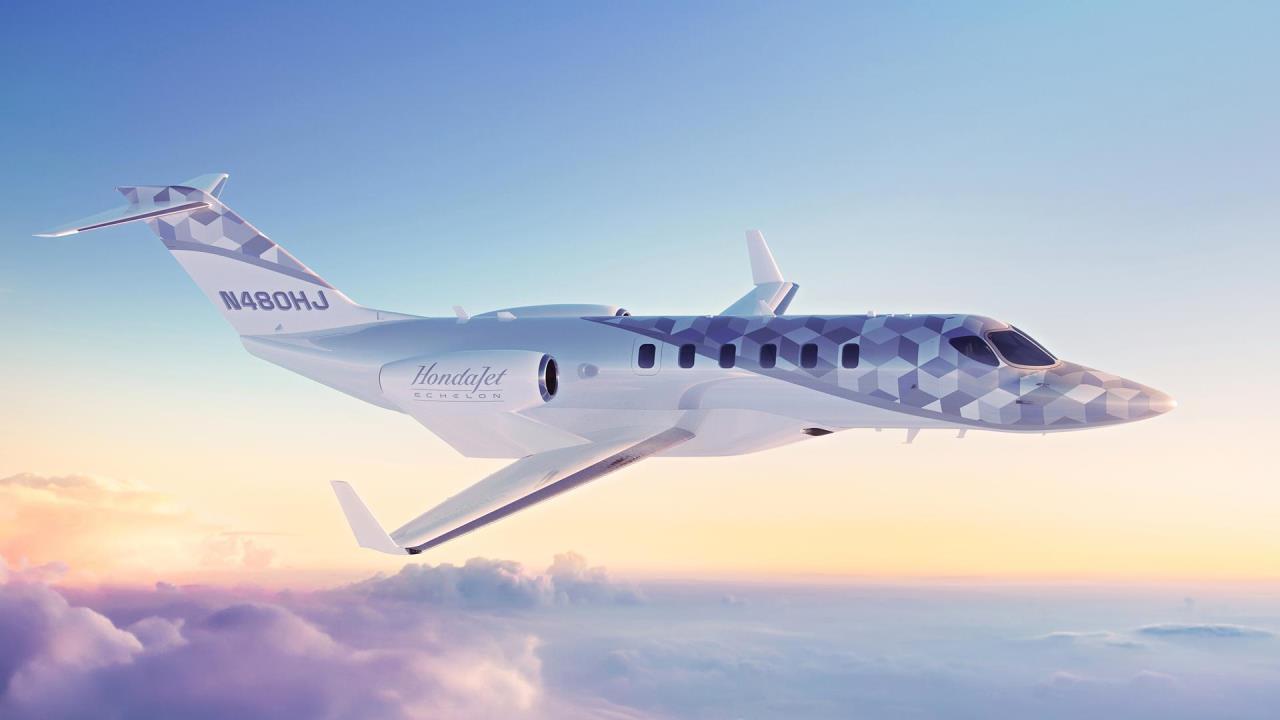
Honda Aircraft Company today announced completion of the first wing structure of the HondaJet Echelon test unit, marking a significant milestone in the aircraft’s development and advancing the program toward mainline final assembly. The HondaJet Echelon will feature a larger cabin with increased passenger capacity compared to the current HA-420 and is designed to become the world’s first single-pilot certified light jet capable of U.S. transcontinental range*, bringing the award-winning design features of the HondaJet to a new segment of the aviation market.
This assembly milestone reflects continued progress across the HondaJet Echelon development program as the company, which is now targeting first flight in 2028 and type certification and first delivery in 2031. The updated timeline reflects tier-one supplier-related schedule adjustments and ongoing development activities, ensuring the aircraft meets the highest standards of quality and performance.
Structural testing activities have advanced with key component tests complete. System integration efforts continue through Honda Aircraft’s Integrated Test Facility, where a fully operational cockpit test environment is supporting active integration campaigns, and a second cockpit is being commissioned to evaluate key aircraft systems prior to the test aircraft taking flight. Manufacturing activities have also accelerated, with more than 70% of parts required for first assembly now on hand and more than 88,400 sq feet now provisioned for manufacturing the Echelon.
‘The HondaJet Echelon continues to take shape through the dedication and expertise of our associates and numerous OEM supplier partners,’ said Amod Kelkar, Senior Vice President, Chief Commercial Officer and HondaJet Echelon Program Leader at Honda Aircraft Company. ‘Completion of the first wing assembly represents an important achievement as we continue advancing testing, systems integration, and equipment qualification activity across the program. In spite of some schedule challenges, with steady progress towards the final assembly, we are committed to delivering an aircraft that will redefine light jet performance, efficiency, and capability.’

The HondaJet Echelon is planned to incorporate foundational technologies, including Honda Aircraft Company’s breakthrough Over the Wing Engine Mount, composite fuselage, and advanced avionics. Features like Auto Throttle, Emergency Autoland, Autobrake, Runway Overrun Awareness and Alerting System (ROAAS), and the Advanced Steering Augmentation System (ASAS) will offer an unprecedented combination of size, range, safety, productivity, comfort, and fuel efficiency.
‘With more than 530 signed letters of intent, enthusiasm from customers around the world remains exceptionally strong,’ said Kelkar. ‘That confidence reflects the unique value customers see in the aircraft’s planned combination of range, comfort, and single-pilot capability. As we achieve each new development milestone, we remain focused on delivering an aircraft that will open new possibilities for operators and owners around the world.’

Related posts






Latest Post




No Comments