
Mazda’s 2000s AWD Sports Sedan That Outran A Subaru WRX STI
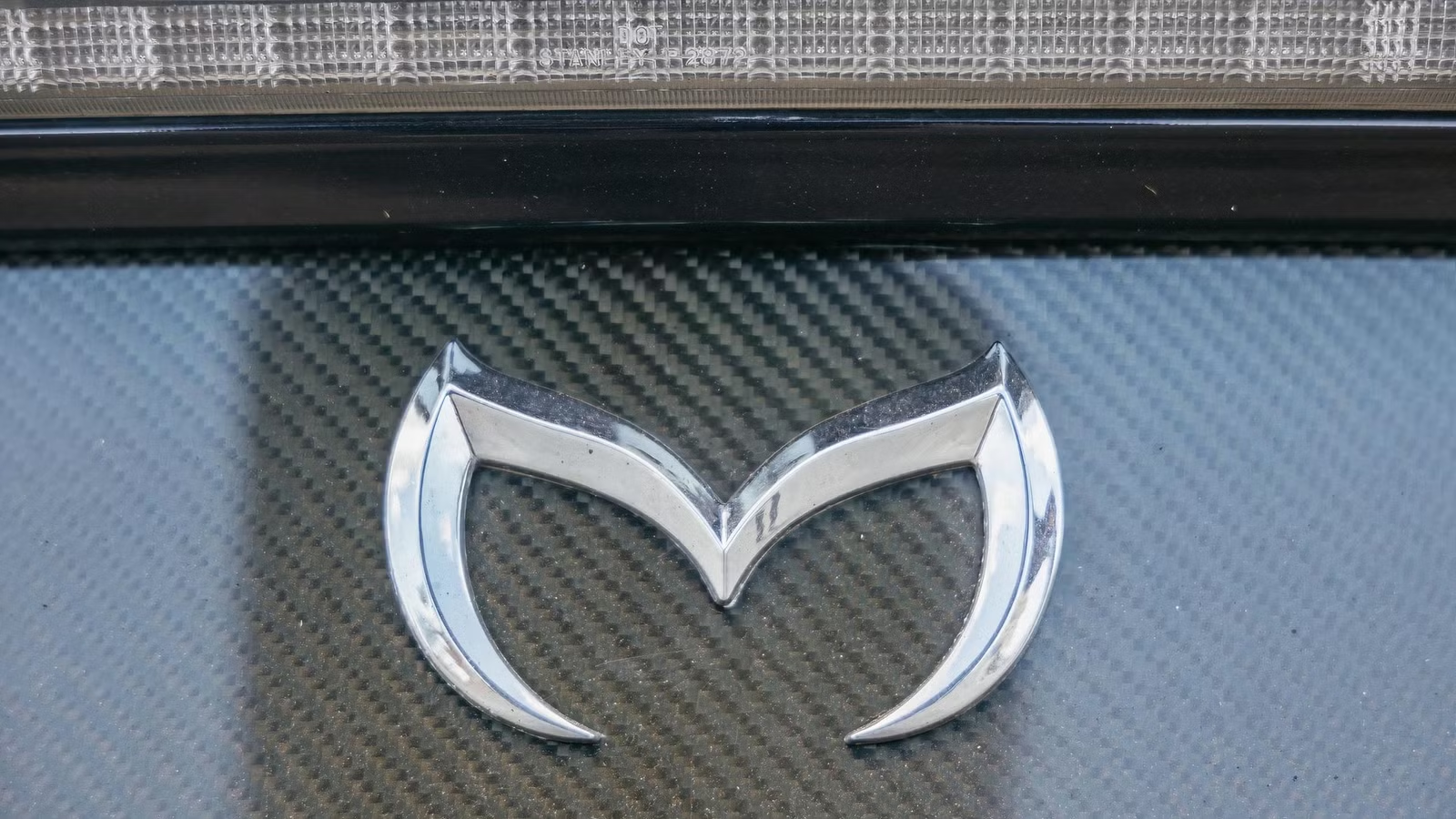
There’s a certain kind of performance car that never needed to shout. No rally-bred reputation, no motorsport mythology, no legion of forum devotees demanding you respect it. The Mazdaspeed6 was exactly that car — a turbocharged, all-wheel-drive sports sedan that slipped into the 2000s performance landscape almost unnoticed, quietly embarrassing better-known rivals on back roads while its owners smiled and said nothing. Built by a brand better associated with lightweight roadsters than tire-shredding sedans, it remains one of the most capable and underappreciated performance machines of its era. If you’ve never given it a serious look, now is the time.
The 2006 Mazdaspeed6 Is Mazda’s Greatest Sports Sedan Ever

Say hello to the 2006 Mazdaspeed6—the most powerful, most advanced sedan Mazda had ever built at the time. It launched during a golden era of affordable turbocharged sedans and hot hatches, but Mazda took a different route from the start. Unlike the front-wheel-drive Mazdaspeed3 that came later, the Speed6 was a ground-up attempt at building a genuinely quick AWD sports sedan with a premium feel. Under the hood sat a 2.3-liter turbocharged inline-four producing 274 horsepower and 280 lb-ft of torque—numbers that still raise eyebrows today. But the real party trick was its Active Torque Split all-wheel-drive system, which could send up to 50% of the power rearward. Pair that with a slick-shifting six-speed manual and a limited-slip rear differential, and the Mazdaspeed6 was anything but a sleepy commuter. This thing was built to wake you up and then dare you to take the long way home.

And the best part? It didn’t need loud colors or a towering wing to prove it. No boy-racer theatrics here. From a distance, it looked like a Mazda6 that had woken up on the wrong side of the bed. But enthusiasts could spot the truth instantly: the flared fenders, the dual exhaust, the subtly aggressive stance—little whispers that something properly mischievous was hiding underneath.
The One That Got Away—And Maybe Still Can Be Yours

Looking back, the Mazdaspeed6 was Mazda swinging for the fences. They wanted to prove they could build a proper turbocharged, AWD sports sedan—and they did. It was refined but fierce, understated but potent. It didn’t need a giant wing or a rally pedigree to stand out. It was quick, capable, and built with genuine passion. In a market now obsessed with crossovers and tech-heavy EVs, the Mazdaspeed6 feels like the kind of car that shouldn’t exist—but did. It came from a brand that loved to do things differently, and it offered a glimpse of what Mazda could achieve when it really let its engineers run wild.

And the best part? Unlike some other JDM legends, the Mazdaspeed6 hasn’t skyrocketed in price—yet. Clean examples can still be found at surprisingly accessible prices; just don’t wait too long. Cars like this don’t stay underground forever.
The Mazdaspeed6’s Zoom-Zoom Philosophy Kept The WRX STI In Check

The obvious rival for the Mazdaspeed6 at the time was the Subaru WRX STI. On paper, the STI had more power and was a known quantity in the AWD turbo performance scene. But the Mazda struck back with better real-world grip, a quieter, more refined cabin, and a more balanced ride. Where the STI could feel a bit raw and rally-focused, the Mazdaspeed6 blended that punch with genuine composure.
Effortless Performance For The Mazdaspeed6
In terms of acceleration, the numbers were close. Some tests clocked the Speed6 hitting 60 mph in 5.4 seconds—nearly neck and neck with the STI. The torque arrived early and hit hard, and the midrange surge was the kind that made you invent excuses to keep driving. Where the STI sometimes felt like it needed to be pushed to the limit to really shine, the Mazdaspeed6 delivered effortless speed—like it was in on the joke and happy to play along. Mazda’s engineers didn’t phone this one in, either. They reinforced the chassis, fitted uprated suspension components, fitted larger brakes, and added structural bracing throughout. This wasn’t a quick raid of the parts bin. This was Mazda rolling up their sleeves and declaring they were ready to stand toe-to-toe with Japan’s turbo legends—and they absolutely meant business.
It Was Packed With Serious Tech, Even By Today’s Standards

One of the most impressive aspects of the Mazdaspeed6 is how much technology and hardware Mazda managed to package into a relatively affordable car. The turbocharged engine featured direct injection—genuinely rare for the segment at the time—and the AWD system was far more than a basic slip-and-grip setup. It was dynamic, predictive, and tuned specifically for performance driving.
Restrained, Mature, And Accessible Performance
The transmission was a six-speed manual only—no automatics, no CVTs, no dual-clutch wizardry. Just a proper stick shift with short, satisfying throws and that wonderful mechanical feel—no gimmicks, no fluff. The rear differential was a true limited-slip unit, and the torque split adjusted on the fly based on throttle input and available grip. This wasn’t some AWD system built just to save you in a snowstorm—it made the car come alive in the corners, like it was eager to dance. Inside, Mazda went unexpectedly upscale. You got supportive sport seats, red-lit gauges, a leather-wrapped steering wheel, and just enough Mazdaspeed badging to remind you what you were driving. It didn’t shout “look at me, I’m fast!” with tacky graphics or neon accents. Instead, it felt mature and quietly confident—the kind of cabin you could daily-drive without feeling like you were sitting in a rolling metal drum covered in stickers.
Why The Mazdaspeed6 Deserves A Second Look Today

Despite its impressive resume, the Mazdaspeed6 was a slow seller, especially compared to the flashier STI and Evo. Mazda pulled the plug after just a short production run (2006–2007 in the U.S.), and it quietly disappeared from the market. But that low-key exit is exactly what makes it a smart buy now.
The Ideal Analog Daily Driver
If you can find a clean example, you’re getting a rare AWD turbo sports sedan that can still outrun some modern performance cars—and you’re doing it with a manual transmission and mechanical grip that’s getting harder to find these days. Plus, the aftermarket support for the turbocharged 2.3-liter engine is strong, so there’s plenty of room to modify if you want to. It’s also one of the last Mazdas that felt truly analog. Before the touchscreen era, before everything was drive-by-wire and cloud-connected, this was a car you drove by feel. It was balanced, rewarding, and surprisingly quick. You could daily it, track it, or just enjoy it on a back road. Either way, it always felt like something special. Sources: Mazda, Classic.com, KBB.

Related posts



Latest Post


No Comments