
The 2027 Yamaha WR450F Proves 450cc Enduro Wars Are Won On Handling, Not Horsepower
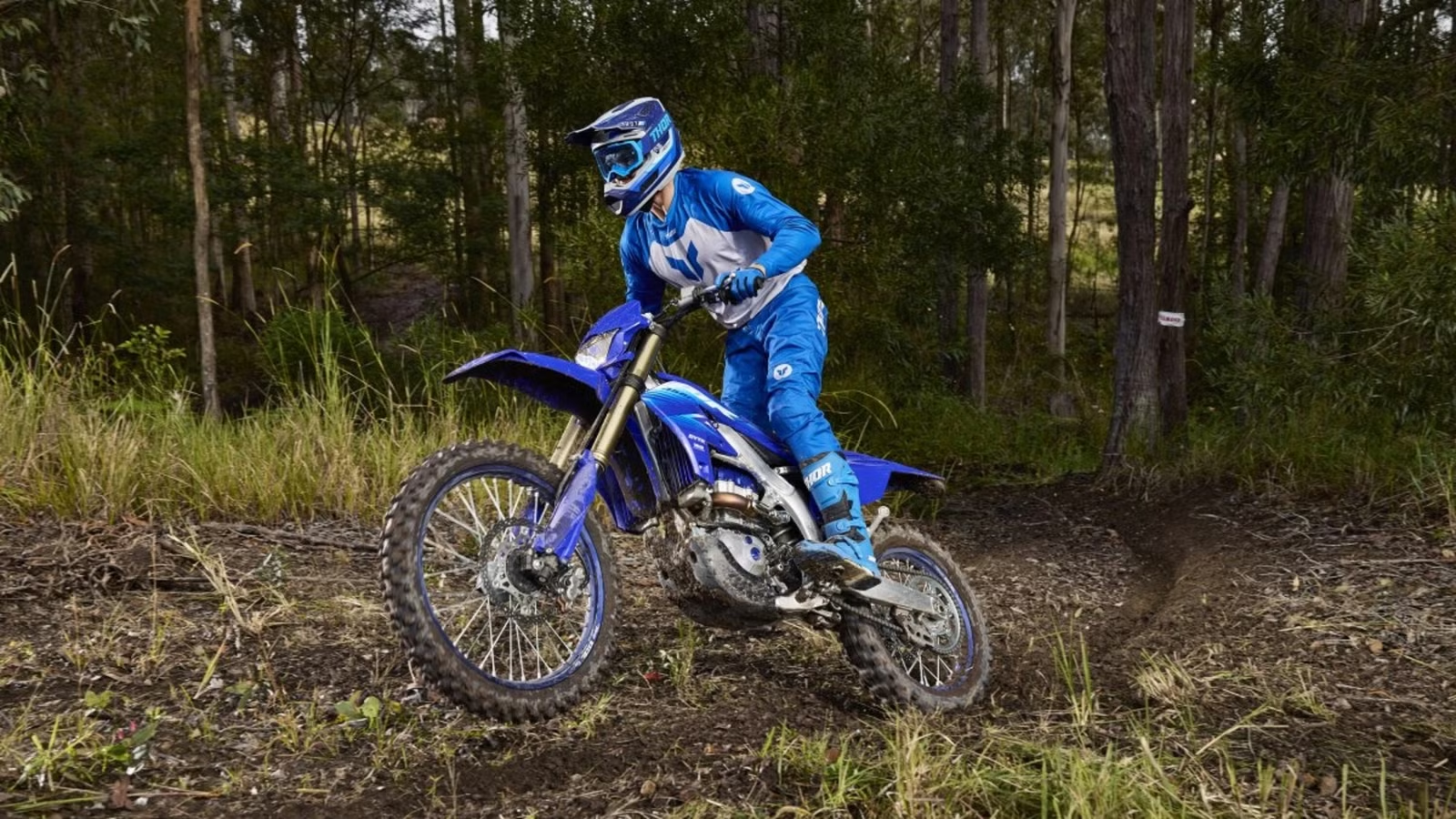
Yamaha just announced the 2027 WR450F, and the headline isn’t a horsepower number. Instead of chasing the dyno-sheet arms race that has defined 450cc enduro competition for the past decade, Yamaha went after something harder to market but easier to appreciate on a rocky trail at hour three: low-rpm torque delivery, stall resistance, chassis balance, and suspension that actually absorbs punishment.

That strategic choice is worth reading carefully. The KTM 450 EXC-F and Beta RR450 have been setting the benchmark for 450cc enduro rideability, and both bikes have built their reputations on handling and accessible power delivery as much as outright output. Yamaha’s 2027 refresh is a direct acknowledgment that the WR450F had ground to make up in exactly those areas.
Engine Changes Target Usability, Not Peak Output
The 450cc four-stroke single carries over as the heart of the WR450F, but Yamaha has revised it with a specific brief: more useful power lower in the rev range, and fewer stalls when the trail gets technical. On a 450 enduro bike, where traction management and throttle control matter far more than top-end aggression, that’s a meaningful shift in priority.


Stall resistance is the less glamorous half of that equation, but arguably the more important one. A 450 that cuts out mid-obstacle costs time, energy, and sometimes skin. Yamaha’s work here targets the real-world scenarios enduro riders face — log crossings, slow-speed rock gardens, tight switchbacks — rather than the wide-open sections where the WR450F was already doing fine. No specific horsepower figures were confirmed; Yamaha’s focus is on torque character and engine manners, not peak numbers.
Chassis and Suspension Refinements Close the Gap on KTM and Beta

The aluminum bilateral-beam frame is WR450F-specific in its engine mounts and has been retuned to balance rigidity with the controlled flex that gives a bike predictable handling on uneven terrain. Fully adjustable KYB suspension handles both ends, dialed by Yamaha for bump absorption, cornering confidence, and rider comfort across extended technical riding — the kind of all-day enduro use where the KTM 450 EXC-F’s WP XACT suspension and the Beta RR450’s Sachs or KYB setups have earned strong reputations.
Braking hardware gets compact calipers, aggressive pads, and lightweight discs — a combination aimed at strong stopping power while keeping unsprung weight in check. Unsprung weight reduction is one of those changes that doesn’t show up on a spec sheet dramatically but pays dividends in how the suspension tracks rough ground at speed.
At 256 pounds wet, the WR450F is competitive in a segment where weight is a constant conversation. The KTM 450 EXC-F comes in around 228 pounds in race-ready trim without certain street-legal equipment, while the Beta RR450 sits in a similar range. The WR450F’s wet weight reflects its full enduro kit — two-gallon tank, 18-inch rear wheel, lighting, radiator fan, skid plate, O-ring chain, kickstand, and a spark-arrestor muffler — so the comparison isn’t always apples-to-apples, but the gap is real and worth noting.
What Yamaha’s Strategy Says About the 450cc Enduro Segment

The 2027 WR450F refresh is a signal about where Yamaha believes the segment is actually contested. KTM and Beta have spent years building bikes that are fast because they’re easy to ride fast — low-rpm tractability, predictable chassis behavior, and suspension that keeps the rider fresh enough to push hard late in a stage. Yamaha’s answer isn’t to out-spec them on paper. It’s to address the specific rideability gaps that have made the WR450F the third choice for riders who care about all-day enduro performance.
At $10,499, the WR450F slots competitively against the KTM 450 EXC-F, which typically runs in the $11,000–$12,000 range depending on market and configuration, and the Beta RR450, which occupies similar territory. The price positioning gives Yamaha room to compete, but the hardware changes are what will determine whether the 2027 model actually closes the handling and rideability gap that riders have noted. The answer to that question will come from the trails, not the announcement.

Related posts



Latest Post


No Comments