
Trump Says Chinese Automakers Can Enter the U.S. With One Condition
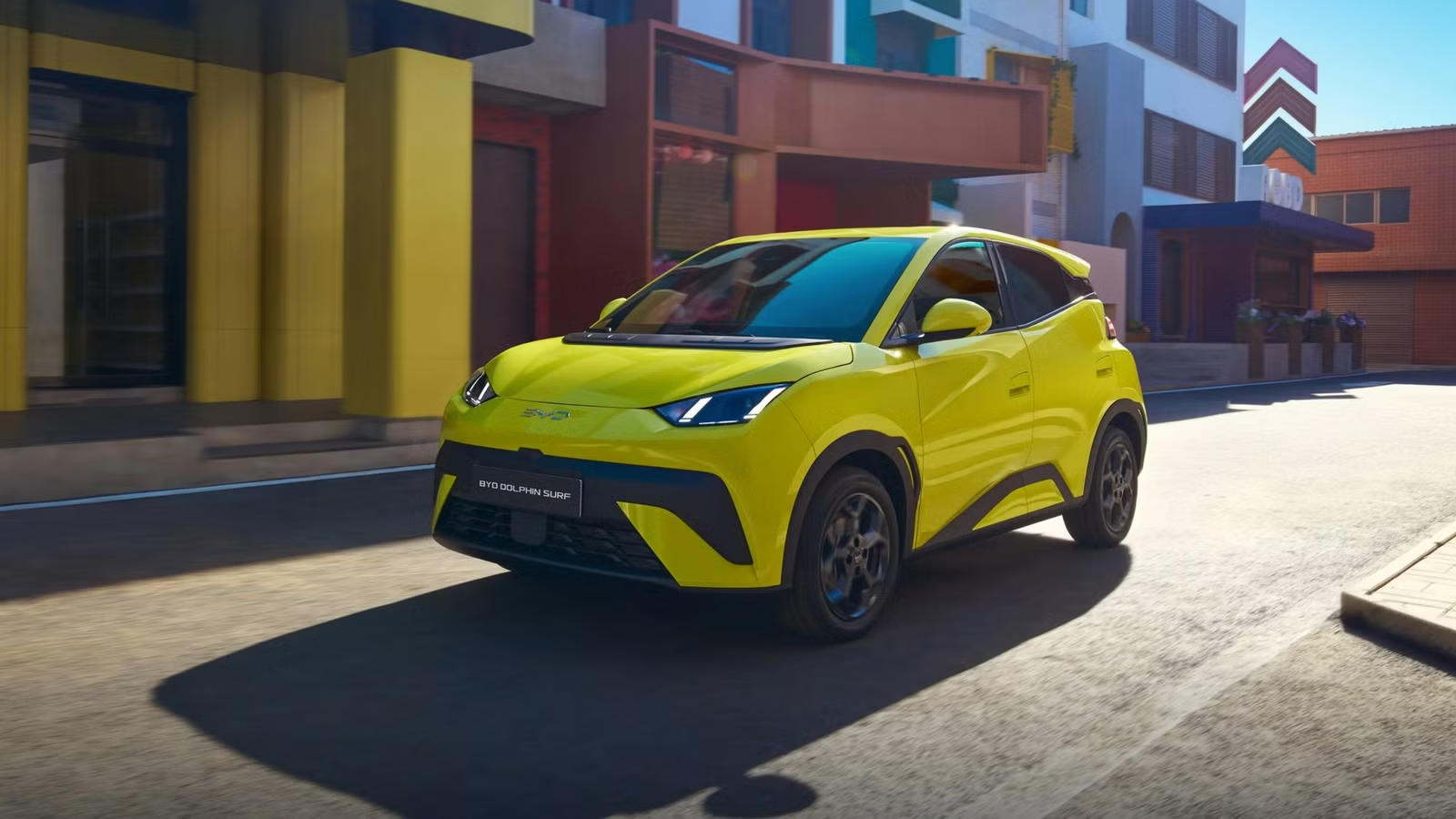
President Trump said this week he would not stand in the way of Chinese automakers entering the American market — but only if they build their cars here. Speaking on Fox News’ “The Ingraham Angle” on September 11, Trump stated plainly: “If China wanted to come in and open a plant to build their cars here, I’d be okay with that.” The comment puts him at direct odds with Detroit’s automakers and a growing bipartisan coalition in Congress, both of which have been pushing hard for a permanent legislative ban on Chinese vehicles.

The timing matters. Trump is set to meet with Chinese President Xi Jinping in Washington in the coming weeks, and the statement reads less like a policy reversal than a negotiating signal — an indication that U.S. market access could be on the table, under the right terms.
Trump’s Conditions: American Plants, American Workers
Trump’s position comes with two clear requirements: a Chinese automaker must establish a domestic manufacturing facility and hire American workers to staff it. He pointed to Japanese automakers as the model. “Japan does it, but they hire our people,” he said. “The big thing is they hire our people.”

What he explicitly ruled out is the workaround that has raised alarms in Washington — Chinese brands building cars in Mexico or Canada and shipping them across the border into the U.S. market. “I’m not knocking Chinese cars,” Trump added, though he has maintained that vehicles assembled outside the U.S. by Chinese companies would remain blocked. The distinction is meaningful: Trump is signaling openness to Chinese investment and job creation on American soil, not to Chinese imports by another route.
Detroit and Congress Push Back Hard

The auto industry’s response has been swift and unified. The Alliance for Automotive Innovation — which represents General Motors, Ford, Toyota, Volkswagen, Hyundai, Honda, Stellantis, and most other major automakers operating in the U.S. — sent a letter to congressional leaders just days before Trump’s Fox News appearance, urging them to “enact a permanent ban on the sale, import and manufacture of Chinese connected vehicles, hardware and software” before the current legislative session ends in January. The group’s CEO, John Bozzella, warned that Chinese automakers are “dumping subsidized vehicles with connected software and hardware around the world.”
On the legislative side, Senator Elissa Slotkin, a Michigan Democrat, had already flagged the issue earlier in the week, posting on X that there were “rumors that Trump is planning to allow Chinese cars to be sold in the U.S., as part of a larger deal he’s putting together. That would be a strategic mistake.” Trump called Slotkin’s characterization a “total phony rumor” and argued he had kept Chinese vehicles out of the U.S. — a claim that holds under the current regulatory framework, which includes more than 100% tariffs on Chinese electric vehicles and Biden-era Commerce Department rules restricting connected-vehicle hardware and software linked to China.
What the Current Rules Actually Say

For now, Chinese automakers face a formidable wall of barriers in the U.S. market. Tariffs on Chinese-made passenger vehicles exceed 100%, and rules finalized under the Biden administration in early 2025 effectively bar connected-vehicle systems linked to Chinese or Russian entities — a regulation that pushed Polestar, owned by China’s Geely, out of the U.S. market. A Senate committee advanced legislation in July that would go further still, prohibiting any company with more than 15% Chinese ownership from selling vehicles in the U.S., with a target effective date of 2027.
Trump’s comments don’t change any of that today. But they do complicate the legislative push for a permanent ban, and they arrive at a moment when Chinese automakers are rapidly expanding in neighboring markets — BYD is preparing models for Canada, and Chinese-made vehicles already account for roughly one in five sales in Mexico. The Xi summit could clarify whether this week’s statement was a genuine policy opening or leverage in a broader trade negotiation.
For car buyers, none of this translates to Chinese vehicles appearing in U.S. showrooms anytime soon. The regulatory and tariff barriers in place are substantial, and building a domestic manufacturing operation takes years. But Trump’s willingness to say publicly that the door isn’t permanently closed — even as his own administration pressures Ford over its Chinese partnerships — signals that the question of Chinese automakers in America is far from settled.

Related posts


Latest Post


No Comments