
2026 Yamaha YZF-R7: First Look
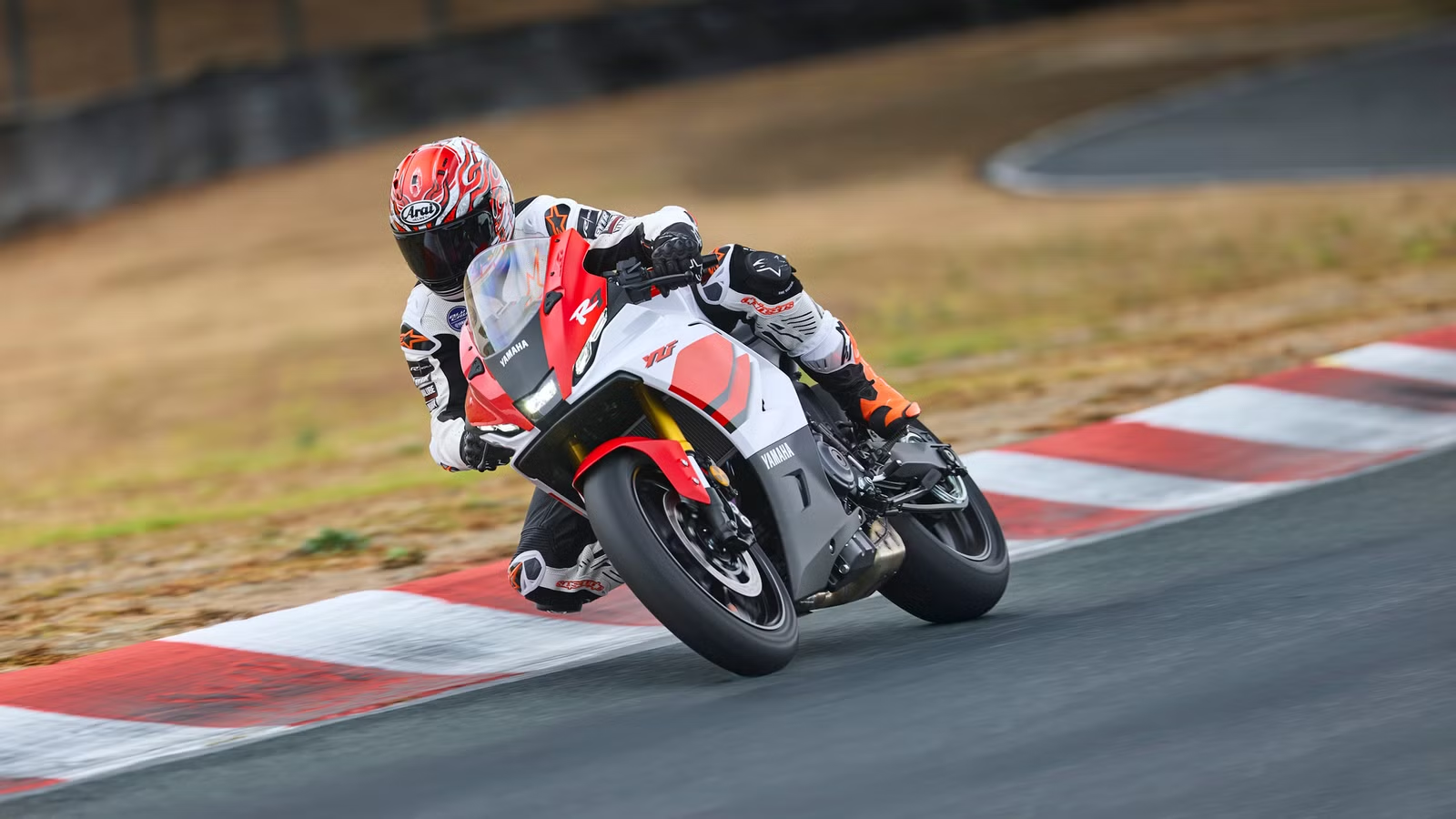
Yamaha has updated its middleweight sportbike, the YZF-R7, for the 2026 model year. Due for an update since its 2021 launch, the refresh moves it upmarket with chassis refinements, advanced electronics, and revised styling. It now has an MSRP of $9,399 and is available at Yamaha dealerships in the United States.
YZF-R7 Receives An Extensive Update For 2026

Parallel-twin sportbikes are nothing new; they’ve been around for a long time as all-rounders, like the Kawasaki Ninja 650, which has been around for two decades. With emissions norms choking inline-four supersports, twin-cylinder sportbikes now largely carry that mantle, with the YZF-R7 as the face of the segment. The Yamaha R7 isn’t a “pure” supersport, but it’s a close modern replacement, pairing the CP2 engine with a diamond frame, adjustable suspension, and aggressive riding triangle. The Japanese brand released the YZF-R9 as a replacement for the YZF-R6.
Yamaha says the new R7 raises the bar again with a sharper-handling chassis, advanced IMU-based electronics, and sleek new-generation R-Series styling. To celebrate the Japanese manufacturer’s 70th anniversary, there’s also a special edition wearing the iconic white-and-red block livery inspired by the legendary 1999 Yamaha YZF-R7 OW02. Let’s dive into what these updates bring to the table.
What’s New vs. What’s The Same


One area that remains familiar on the new R7 is the engine, which is the same torquey 698cc twin-cylinder DOHC fuel-injected CP2 engine, producing 72 horsepower and 50 lb-ft. of torque, according to Yamaha Europe, as Yamaha Motor Corporation USA does not publish performance figures. The company has, however, overhauled various components around the engine to improve performance, comfort, and control. These new features add only 3 pounds to the bike’s curb weight, bringing it to 417 pounds wet.
New Ride-By-Wire, Gen 3 Quickshifter, And Refined Intake

The new R7 features Yamaha Chip Controlled Throttle (YCC-T), Yamaha’s version of an advanced ride-by-wire system that eliminates cable maintenance and enables Yamaha Ride Control (YRC) settings for rider aids, cruise control, and the quickshifter. The R7 also gets the new Gen 3 Quick Shift System (QSS) bidirectional quickshifter. Additionally, it adopts the new intake duct shape and asymmetrical funnel length from the current MT-07, which are said to improve the induction roar.
Stronger Frame And Swingarm, And New SpinForged Wheels

The high-tensile steel frame has been completely revised for greater strength and higher rigidity in all directions, without increasing its weight. Similar updates follow on the asymmetrical swingarm. Up front, the 41mm fully-adjustable USD fork now features lightweight aluminum pistons instead of steel ones. Yamaha says these updates offer a solid chassis feel and clearer feedback than the older model. The link-type rear shock remains the same with adjustable preload and rebound damping.
For the first time, the bike also features new lightweight, spin-forged 10-spoke aluminum wheels that are said to reduce unsprung mass and improve suspension action and looks. They are shod with high-performance Bridgestone Battlax Hypersport S23 radial tires, designed for aggressive street riding and occasional track days.
Ergonomics Refined For Better Ride Movement And Comfort

According to the company, the riding position has been revised for better rider movement and comfort. To that end, the handlebar position is slightly raised and moved closer to the rider, and the redesigned seat now sits 5 mm lower at 830 mm. The fuel tank shape has been revised to improve leg grip and allow greater freedom of movement while cornering.
New Six-Axis IMU-based Rider Aids, TFT Display, And More

The R7 now features a new 5-inch TFT display with 4 selectable backgrounds, including a track-specific one, and is compatible with Yamaha’s Y-Connect smartphone app and Y-Trac Rev App. The latter is designed for track enthusiasts, allowing them to receive messages from the pit crew via the Virtual Pit-Board feature, record lap times, and analyze detailed ride data after a track session.
There are also Yamaha Ride Control (YRC)-enabled ride modes, including 3 preset maps: Rain, Street, and Sport, plus 2 custom and 4 custom track modes. Meanwhile, the 6-axis inertial measuring unit (IMU), developed from the YZF-R1, enables lean-sensitive ABS and traction control, and other rider aids, such as:
- Slide Control System (SCS)
- Front wheel Lift Control System (LIF)
- Brake Control (BC)
- Engine Brake Management (EBM)
- Launch Control (LC)
You can adjust each rider aid’s intervention and turn off rear ABS.
Sleek New-Gen R-Series Styling

The most obvious update the new Yamaha middleweight sports bike brings is its design, which is sharper, more compact, and more aerodynamic. The company says the new bodywork fuses form and function, underscoring the bike’s supersport capabilities. Some of the design upgrades include a compact front fairing and slim, contoured side panels, new aero winglets, rearview mirror-integrated turn signals, and minimalist LED headlights and position lights.
2026 Yamaha YZF-R7 Looks More Value For Money Now

The Yamaha YZF-R7 has always been the value-for-money option in the middleweight sportbike segment, and the new features build on that, especially since the 2026 model only costs $200 more than its predecessor. At $9,399, the R7 sits roughly in the middle of the class, undercutting the Suzuki GSX-8R ($9,699) and Aprilia RS 660 ($11,849) while costing about the same as the Triumph Daytona 660 ($9395) and Honda CBR650R E-Clutch ($9,199). It is significantly more expensive than the Kawasaki Ninja 650 ($7,599) and CFMoto 675SS ($7,499).
The R7’s closest performance-oriented parallel-twin alternative is the RS 660, which makes 100 horsepower and offers more premium electronics and hardware, especially in its Factory guise, but costs $2,450 more. Triumph’s Daytona 660 is also in the hunt. The 675SS is another cheaper yet aggressive alternative, but doesn’t have the reliability backing you’d see in a Japanese manufacturer. Meanwhile, the CBR650R and Ninja 650 are more all-rounders.
That’s Where The R7 Stands Out

The 2026 Yamaha YZF-R7 at an MSRP of $9,399 for the standard edition, offered in three color options: Team Yamaha Blue, Raven Black, and Breaker Cyan/Raven. The 70th Anniversary Edition is priced at an MSRP of $9,699 and comes in a dual-tone livery inspired by the 1999 R7 OW02. Yamaha says it offers a lot more for just $200 over its predecessor: sharper handling, a better electronics package, and more comfortable ergonomics, all wrapped in a fresh design.
2026 Yamaha YZF-R7 Gallery:
2026 Yamaha YZF-R7 Specifications:
Engine
|
Type |
4-strokeDOHC, CP2 parallel-twin |
|
Displacement |
689cc |
|
Bore x stroke |
80.0 x 68.6 mm |
|
Maximum horsepower |
72 HP @ 8,750 RPM (sourced from Yamaha Europe) |
|
Maximum torque |
50 LB-FT @ 6,500 rpm (sourced from Yamaha Europe) |
|
Compression ratio |
11.5:1 |
|
Valvetrain |
DOHC, 4 valves per cylinder |
|
Fueling |
Fuel injection with YCC-T |
|
Cooling |
Liquid-cooling |
|
Transmission |
6-speed |
|
Clutch |
Multiplate wet clutch with assist and slipper clutch |
|
Final drive |
Chain |
Chassis
|
Frame |
Diamond |
|
Front suspension; travel |
Fully-adjustable 41mm upside-down fork; 4.7 inches |
|
Rear suspension; travel |
Linked-type monocross shock, adjustable preload and rebound damping; 4.8 inches |
|
Wheels |
Spin forged aluminum wheels |
|
Tires |
Bridgestone Battlax Hypersport S23 |
|
Front tire |
120/70ZR17 |
|
Rear tire |
180/55ZR17 |
|
Front brake |
Dual 298mm with radial mount brake caliper and Brembo master cylinder |
|
Rear brake |
Single 245mm hydraulic disc |
|
ABS |
ABS with rear ABS off feature |
|
Electronic rider aids |
Power Delivery Mode (PWR), traction control, Slide Control System (SCS), Lift Control System (LIF), Brake Control (BC), Engine Brake Management (EBM), Back Slip Regulator (BSR), Launch Control System (LC), Yamaha Ride Control (YRC), Yamaha Variable Speed Limiter (YVSL), cruise control |
Dimensions & Capacities
|
Wheelbase |
54.9 inches |
|
Rake |
24 degrees |
|
Trail |
3.6 inches |
|
Seat height |
32.7 inches |
|
Ground clearance |
5.3 inches |
|
Fuel capacity |
3.7 gallons |
|
Estimated fuel consumption |
59 MPG |
|
Curb weight |
417 pounds, wet |
Pricing & Warranty
|
Website |
Yamahamotorsports.com |
|
Price |
$9,399 MSRP |
|
Warranty |
1 year limited factory warranty |
|
Service interval |
Every 4,000 miles or 6 months |
|
Color |
Team Yamaha Blue, Raven, Breaker Cyan / Raven, 70th Anniversary Edition |

Related posts
Latest Post


No Comments