This Japanese SUV Has Luxury Features Without The Luxury Price
8 minutes reading
Sunday, 2 Aug 2026 12:00 0 92 autotech
Car shoppers have been trained to believe that comfort, refinement, and advanced technology only arrive once you cross into luxury-badge territory. That assumption drives thousands of buyers each year into showrooms they can’t really afford, chasing a driving experience they could have gotten for far less. But the compact SUV segment has quietly closed that gap. Automakers building mainstream vehicles have borrowed so much from the luxury playbook—sound insulation, driver-assist suites, upscale cabin materials—that the premium badge increasingly buys less differentiation than it used to. One SUV makes that case better than almost anything else on sale today.
The logic behind luxury pricing has always rested on the assumption that more money buys meaningfully more car. In the compact SUV class, that assumption is getting harder to defend. Take the numbers. A 2026 Acura RDX starts at roughly $45,100, climbing toward $54,850 for a fully equipped A-Spec Advance Package. The Lexus NX opens at $46,570, and the Audi Q5 starts even higher, with a base MSRP of $54,095, though buyers are typically paying closer to $50,800 after negotiation. Those figures buy a nicer badge and, in some cases, a genuinely richer interior. But they don’t automatically buy a quieter cabin, a smoother powertrain, or better real-world efficiency.
2026 BMW X3 M50 xDrive front third quarter viewBMW
In fact, one review of the RDX flagged a frustrating truth: the touchpad-based infotainment system is widely criticized as slow and hard to use, and the SUV still has no hybrid option, meaning the RDX returns an EPA-estimated 23 mpg combined, trailing rivals with mild-hybrid systems like the BMW X3 and Mercedes-Benz GLC. Reviewers testing the RDX in the real world recorded results close to that estimate, at 23.2 mpg combined. That’s not a knock exclusively on Acura; it’s a reminder that a luxury emblem doesn’t guarantee the newest technology under the hood.
Meanwhile, mainstream automakers have spent the last decade pouring R&D into exactly the systems luxury brands are sometimes slower to adopt: two-motor hybrid powertrains, adaptive suspension tuning, and cabin insulation packages that used to be exclusive to premium trims. The value gap between “premium” and “mainstream” has narrowed to the point where the badge, not the substance, is often the only thing separating the two.
The Honda CR-V Hybrid Delivers Premium Comfort At A Mainstream Price
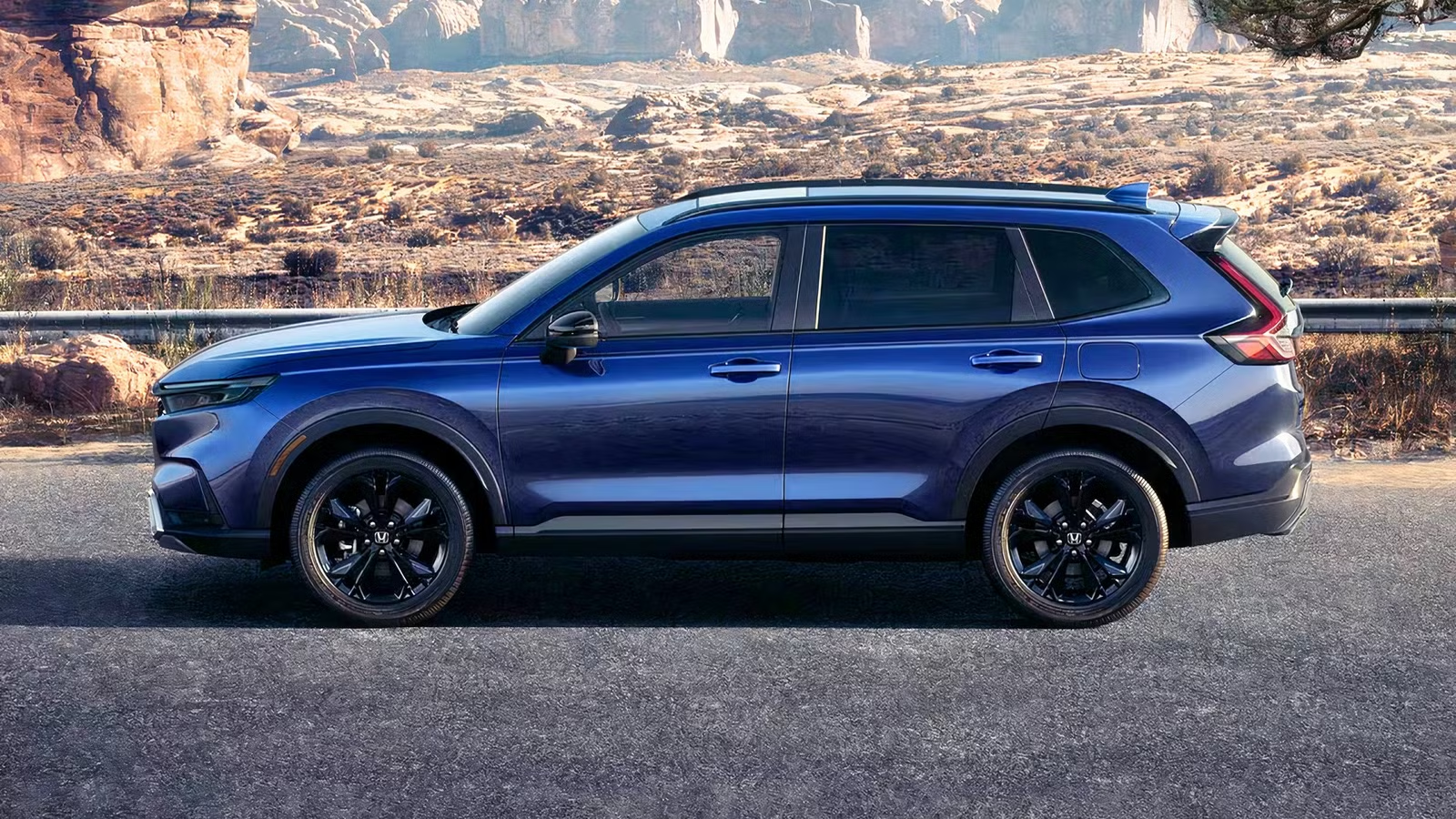
Front 3/4 shot of 2026 Honda CR-V Sport Touring Hybrid parkedHonda
That brings us to the 2026 Honda CR-V Hybrid, which undercuts every one of those luxury rivals by a wide margin while still delivering the comfort and technology buyers associate with them. Honda’s own pricing puts the entry-level CR-V Sport Hybrid at a starting MSRP of $35,630, while the range-topping Sport Touring Hybrid tops out at $42,550. Kelley Blue Book’s all-in figures, which include destination charges, put the CR-V Hybrid’s starting sticker at $37,080, with the Sport Touring trim starting closer to $44,000.
Run the math against the competition and the gap is stark. Even in top trim, the CR-V Hybrid Sport Touring undercuts the base Acura RDX by roughly $2,500 to $4,000, the base Lexus NX by around $4,000, and the base Audi Q5 by more than $11,000. And that’s before accounting for the fact that Honda includes its two-motor hybrid powertrain standard on every hybrid trim, no upcharge required, unlike some luxury brands that gate hybrid tech behind higher-priced trims.
What Buyers Get For That Money Looks Genuinely Upscale
Rear 3/4 action shot of 2026 Honda CR-V Sport Touring Hybrid driving on roadHonda
Higher trims add leather-trimmed seating, a hands-free power tailgate, ambient cabin touches, and a Bose premium audio system—the kind of features that used to be reserved for cars wearing a German or Japanese luxury crest. Kelley Blue Book’s own assessment calls the CR-V Hybrid the upper class of the CR-V range, noting it’s more efficient and more powerful than the standard CR-V, with fuel economy up to 40 mpg combined. That’s a lot of “premium” packed into a price tag that still comfortably undercuts the segment’s badge-driven alternatives.
A Hybrid Powertrain That Keeps Ownership Costs Impressively Low
Close-up shot of 2026 Honda CR-V engine bayHonda
Sticker price is only half the value equation; what a vehicle costs to actually own over time is where the Honda CR-V Hybrid’s case gets even stronger, and where the luxury rivals start to look expensive by comparison. Kelley Blue Book’s five-year cost-to-own data, which factors in depreciation, fuel, insurance, maintenance, repairs, and financing, puts the CR-V Hybrid Sport at $57,514 over five years, with out-of-pocket expenses of $40,866 and depreciation of $16,648.
Compare that to the luxury competition. The Acura RDX’s five-year cost to own ranges from $60,886 up to $75,212 for the SH-AWD trim, depending on configuration, driven partly by steeper depreciation and higher insurance costs. The Lexus NX doesn’t fare much better: KBB estimates a five-year cost to own of $63,942, including $15,730 in insurance costs alone over that period and $23,414 in depreciation. Even the hybrid NX 350h, which should be the efficiency-minded pick in the Lexus lineup, still lands at $66,131 over five years.
In other words, the CR-V Hybrid can cost a luxury shopper $6,000 to $18,000 less to own over five years than the very SUVs it’s being cross-shopped against, without sacrificing the two-motor hybrid efficiency that some luxury rivals don’t even offer as standard equipment.
Front 3/4 action shot of 2026 Honda CR-V Sport Touring Hybrid driving on roadHonda
That gap isn’t a fluke of one year’s fuel prices. It reflects a structural advantage. Honda’s hybrid system is standard across every hybrid trim, Honda’s reliability reputation keeps insurance and repair costs down, and depreciation on Honda products has historically been gentler than on many luxury nameplates once the initial badge premium wears off. For a buyer thinking in terms of total cost rather than sticker price, the math consistently favors the CR-V Hybrid.
Space, Practicality, And Everyday Comfort Make It Easy To Live With
Shot of 2026 Honda CR-V Sport Touring Hybrid interior showing cabinHonda
Cost savings mean little if the vehicle itself is a compromise to live with day to day, and this is where the Honda CR-V Hybrid continues to close the gap on its pricier rivals rather than open one. The CR-V’s interior architecture has long been praised for prioritizing usable space over styling flourishes, and that philosophy carries through to the hybrid model. Rear-seat legroom, cargo capacity behind the second row, and a low, easy-to-load cargo floor all remain CR-V hallmarks, and they translate directly into a vehicle that works as well for a family hauling gear as it does for a commuter who wants a quiet, comfortable cabin.
Refinement Is Where The Hybrid Variant Particularly Earns Its “Premium” Framing
2024 Honda CR-V Hybrid Sport Touring AWD front seatsLyndon Conrad Bell | TopSpeed
2024 Honda CR-V Hybrid Sport Touring AWD rear seatsLyndon Conrad Bell | TopSpeed
The electric motor’s smooth, low-end torque delivery removes the coarseness that comes with a conventional four-cylinder under hard acceleration, and the CVT-based hybrid transmission does an admirable job of masking engine noise during highway cruising—two attributes that used to be the calling card of six-cylinder luxury engines, not compact SUVs. Add in available features like a hands-free tailgate, heated and ventilated front seats, a suite of Honda Sensing driver-assist technology as standard equipment across the range, and a genuinely quiet cabin at highway speeds, and the ownership experience starts to feel less like a compromise and more like a shrewd trade-off. Buyers aren’t settling for “good enough”; they’re getting most of what the luxury segment offers, delivered through a more practical, more efficient, and considerably less expensive package.
Who Should Actually Buy The CR-V Hybrid
Close-up shot of 2026 Honda CR-V Sport Touring Hybrid instrument clusterHonda
The CR-V Hybrid isn’t for buyers chasing status for its own sake; a badge-obsessed shopper will always find more cachet in a Q5 or an NX, regardless of what the spreadsheet says. But for anyone approaching the purchase with a calculator instead of an ego, the CR-V Hybrid is difficult to argue against. It offers a two-motor hybrid powertrain none of its badge-conscious rivals bundle in as standard equipment across the board, a five-year ownership cost meaningfully lower than the RDX, NX, or Q5, and a cabin experience that borrows the comfort and quiet those brands built their reputations on.
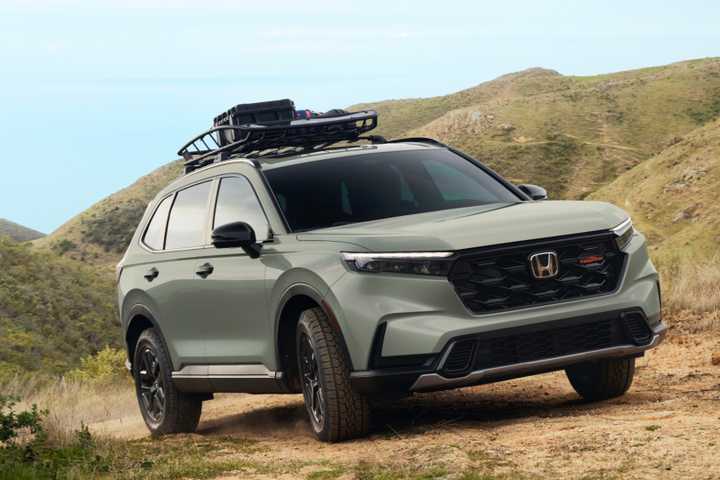
Rear 3/4 shot of 2026 Honda CR-V Sport Touring Hybrid parked off-roadHonda
Families cross-shopping three-row space might still look elsewhere, and drivers who want genuine sport-tuned handling may find the RDX’s chassis more engaging. But for the buyer who wants a quiet, comfortable, well-equipped SUV without financing a badge, the CR-V Hybrid isn’t just the practical choice; it’s arguably the smarter one. The luxury segment sold buyers on the idea that comfort and refinement carry a premium price. The CR-V Hybrid quietly proves that math wrong.











No Comments