
The Touring Bike That Makes Big Luxury Tourers Feel Excessive
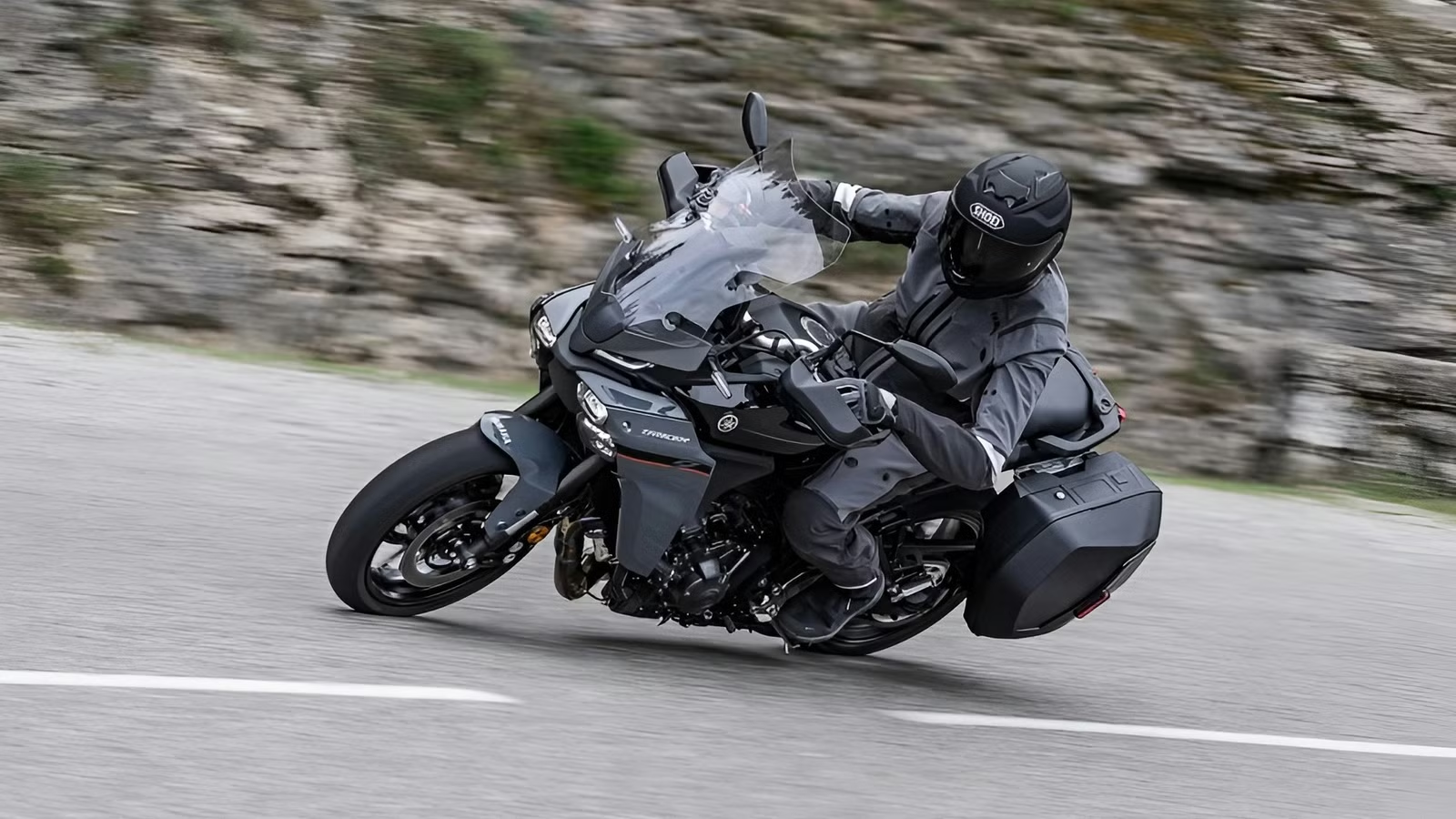
Not every great touring motorcycle needs a six-cylinder engine, a thousand pounds of weight, or a luxury-car price tag to make long-distance riding enjoyable. For decades, riders chasing comfort and capability were told that bigger was automatically better, leading many toward increasingly large and expensive touring machines packed with every feature imaginable.

The problem is that many riders spend far more time living with their motorcycles than crossing entire states in a single day. A bike that excels on the open highway but becomes cumbersome in traffic, intimidating in parking lots, and expensive to own can start feeling like overkill. That’s why a growing number of riders are rediscovering something important: the best touring motorcycles aren’t always the biggest ones.
Bigger Isn’t Always Better When It Comes To Touring
Touring motorcycles earned their reputation by making long distances easy. Large fairings, plush seats, generous luggage capacity, and powerful engines transformed cross-country travel into something comfortable and accessible. Yet the formula has also created motorcycles that can weigh well over 800 pounds before luggage, passengers, and gear are added to the equation.
The Hidden Downsides Of A Traditional Tourer


That kind of mass creates compromises that don’t show up on spec sheets. Moving a heavy motorcycle around a garage, backing it into a parking spot, or maneuvering through crowded fuel stations can become an exercise in caution. Add increasingly sophisticated electronics, premium components, and luxury-focused equipment, and ownership costs can climb just as quickly as the curb weight.
Many riders eventually realize they don’t need a motorcycle designed around the longest trip they’ll take all year. What they actually want is something that remains comfortable during multi-day tours while still being enjoyable on a Sunday ride, practical during a commute, and manageable whenever the road turns tight and technical. That realization has helped redefine what makes a great touring motorcycle in the modern era.
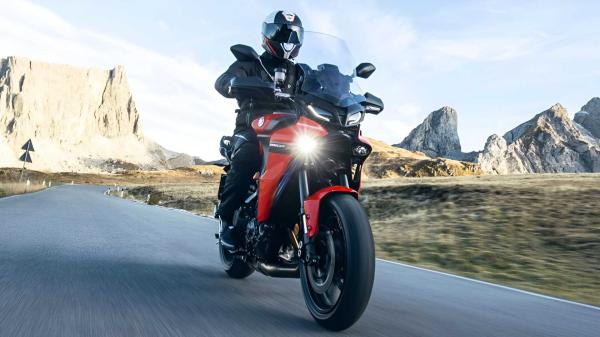
Why The Yamaha Tracer 9 Is The Touring Motorcycle That Checks Every Box
The Tracer 9 offers power, comfort, tech and reliability all in a single package
The Best Touring Bikes Deliver Freedom, Not Excess

The most appealing touring motorcycles today tend to focus less on maximum luxury and more on balance. Riders want weather protection, luggage capacity, advanced electronics, and long-range comfort, but they also want a machine that responds quickly, carries its weight well, and remains approachable in everyday situations. That sweet spot is where sport-tourers thrive.
By combining upright ergonomics, capable chassis dynamics, and real-world practicality, they offer many of the benefits associated with traditional touring motorcycles without bringing along the bulk. Instead of asking riders to adapt to the motorcycle, the best examples adapt to a much wider variety of riding situations. Few bikes demonstrate that philosophy better than Yamaha’s latest touring flagship.
The Yamaha Tracer 9 Makes Big Luxury Tourers Look Excessive

Yamaha’s Tracer 9 has evolved into one of the most complete sport-touring packages on the market. Starting at $12,599, this delivers a level of capability that would have been reserved for significantly larger and more expensive touring motorcycles not long ago. Much of that is down to its tried-and-tested formula rather than trying to reinvent the wheel with class-leading bits and bobs. Let’s dive into them.
A Tried And Tested Platform Refined To Go The Distance
At the heart of the Tracer 9 is Yamaha’s 890cc liquid-cooled CP3 inline-three engine, an evolution of the powerplant that helped make the MT-09 one of the most celebrated naked bikes of the modern era. The engine produces 117 horsepower and 68.6 pound-feet of torque, delivering strong acceleration throughout the rev range while maintaining the distinctive character that has become a hallmark of Yamaha’s triple-cylinder platform.

The touring transformation goes far beyond simply adding a windshield. The Tracer 9 rides on a lightweight aluminum Deltabox frame and features fully adjustable suspension, along with adaptive matrix LED headlights and integrated side cases. A seven-inch TFT display, six-axis IMU, lean-sensitive rider aids, cruise control, multiple ride modes, traction control, slide control, wheelie control, and cornering ABS create a technology package that rivals motorcycles costing substantially more.
|
Engine |
890cc liquid-cooled inline-three |
|
Output |
117 horsepower / 68.6 pound-feet |
|
Transmission |
Six-speed |
|
0 to 60mph Time |
Approximately 3.3 seconds |
What The Tracer 9 Gets Right That Many Luxury Tourers Don’t

One of the Tracer’s biggest advantages is that it never asks riders to manage unnecessary weight. The standard model tips the scales at just 485 pounds wet, while the better-equipped GT comes in at approximately 507 pounds. Compared to many luxury tourers that approach or exceed 800 pounds, that difference fundamentally changes how the motorcycle behaves in the real world. This lighter platform pays dividends everywhere.
It responds more eagerly to steering inputs, requires less effort at low speeds, and remains entertaining on roads that would quickly expose the limitations of larger machines. Yet it still offers a relaxed riding position, substantial wind protection, a 5-gallon fuel tank, and passenger accommodations capable of supporting genuine long-distance travel.

Its versatility may be its greatest strength. The Tracer 9 can comfortably handle interstate miles one day and tackle a favorite backroad the next without feeling out of place in either environment. That flexibility is increasingly valuable in a market where many riders own only one motorcycle and expect it to do everything well.
|
Frame |
Aluminum Deltabox |
|
Suspension |
Fully adjustable |
|
Brakes |
Dual front discs with cornering ABS |
|
Wheels and Tires |
17-inch wheels, sport-touring tires |
|
Wet Weight |
485 pounds (Tracer 9), 507 pounds (Tracer 9 GT) |
The Surprise Is How Little You Actually Give Up
The most impressive thing about the Tracer 9 isn’t what it lacks compared to a traditional luxury tourer. It’s how little riders actually miss. It still provides the comfort, weather protection, luggage capability, electronics, and highway composure that make touring enjoyable, yet avoids many of the drawbacks associated with heavier alternatives.
That makes its pricing especially compelling. This undercuts many premium touring motorcycles by several thousand dollars while delivering performance that often surpasses them. For riders who want a motorcycle capable of crossing states, carving mountain roads, commuting during the week, and handling everyday errands without complaint, the Tracer 9 presents a persuasive argument.
Source: Yamaha

Related posts



No Comments