
Why the Bugatti CEO Building EVs Says Gas Engines Are Here to Stay
Article Summary
- Rimac told CNBC hypercars will stay combustion-powered “for a very long time,” even as mainstream cars go electric.
- His Croatian factory builds the world’s most powerful EV and one of the biggest V16 engines on the same line.
- His own career, and his BMW E30 M3 collection, both trace back to a blown gas engine he converted to electric.
“The upper segment, like sports cars and upwards, are going to stay combustion for a very long time, exactly like watches.” That’s Mate Rimac, CEO of both Bugatti and his own hypercar company, telling CNBC something you wouldn’t expect from the man who spent the last decade trying to prove electric motors could beat gas engines at their own game.
It gets even more interesting. Rimac’s factory in Croatia currently builds the Nevera, arguably the most powerful production electric car on the planet, on the same line as an enormous 8.3-liter V16 that, by some measures, is the biggest combustion engine currently in production anywhere.
Two Markets, Two Philosophies

Speaking with CNBC, Rimac drew a hard line between how the mainstream and the elite end of the car business will evolve. “For normal cars, normal people, the vast majority [of future cars] will be electric,” Rimac said. No ambiguity there. But he doesn’t see that trend climbing all the way up the price ladder. The upper segment, he told the outlet, is staying combustion for a long time yet.
The watch comparison is really the whole argument, condensed. Only a sliver of the world’s timepieces come out of Switzerland, yet that’s where nearly all the industry’s profit sits. A smartwatch can out-function a mechanical Patek Philippe in every measurable way, but as Rimac put it, “no one will pay $200,000 for it.” He’s betting hypercar buyers will run the exact same math that’s already kept Geneva watchmakers rich: past a certain price point, function stops mattering and feeling takes over.
From EV Evangelist To V16 Builder

Running Bugatti puts Rimac in a genuinely odd position given how he built his name. “It’s kind of ironic that I’m now making the world’s biggest combustion engine,” he admitted. The Tourbillon, Bugatti’s new flagship, pairs that naturally aspirated V16 with electric motors for a combined output that lands somewhere around 1,800 horsepower. It’s a hybrid rather than a pure EV, and that was likely a deliberate choice.
He’s clearly aware of how the optics look. “You have the crazy situation now at our facility in Croatia,” he said. “On the same production line, you have the world’s most powerful electric car being built right next to the world’s biggest combustion engine. Life is strange sometimes.”
His reasoning ties back to how cheap speed has become. A mainstream EV selling for a fraction of a hypercar’s price can now embarrass performance cars that were flagship models not long ago, so outright acceleration no longer separates the special from the ordinary. What does separate them, in Rimac’s view, is craftsmanship: the sense that a machine was built rather than assembled, and that its speed comes bundled with mechanical drama rather than just a battery spec sheet.
The E30 That Started It All
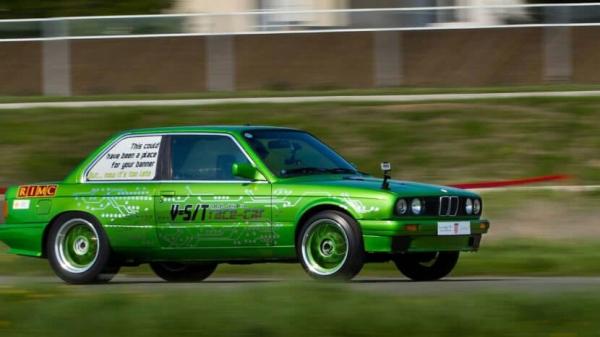
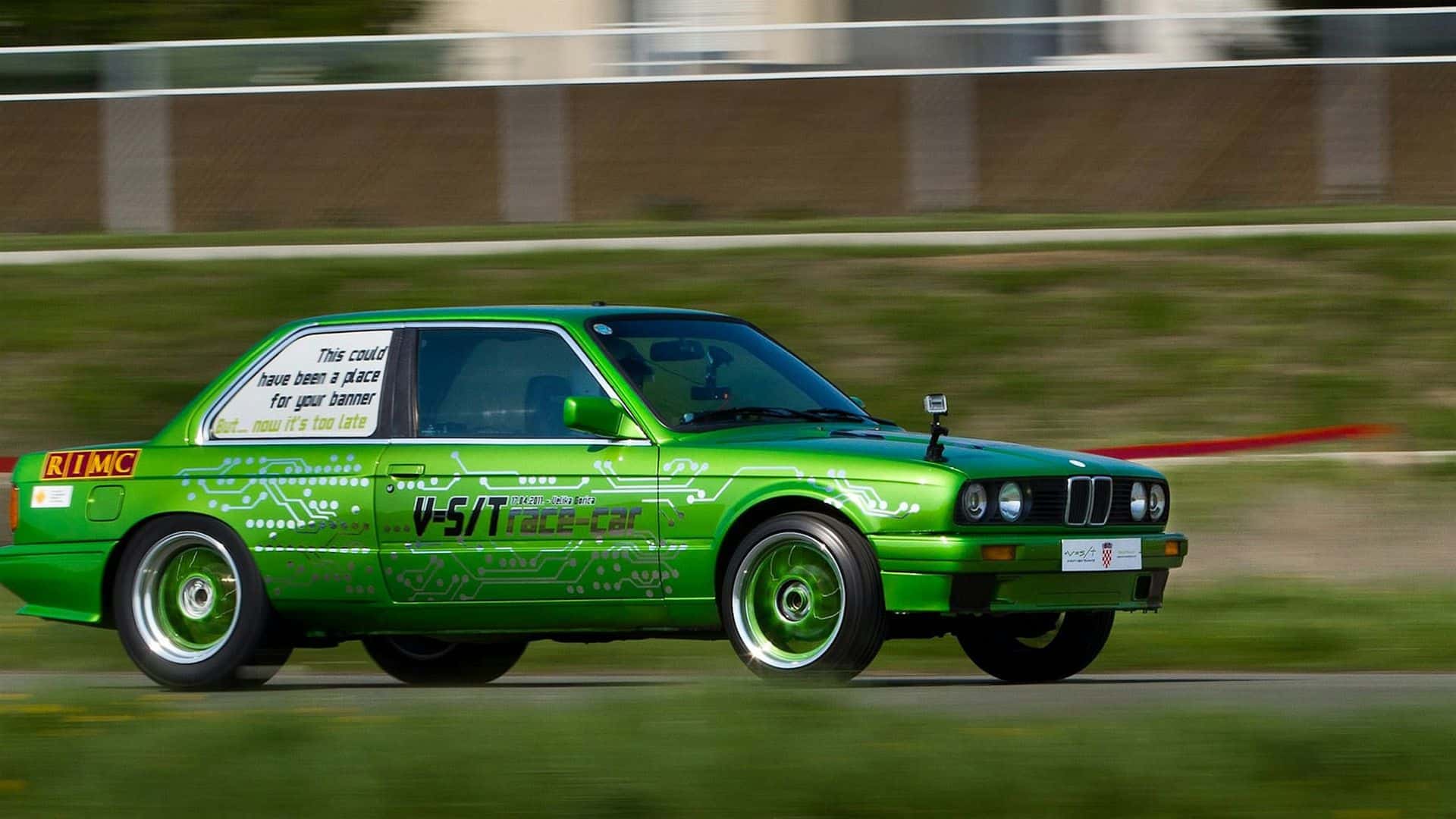
That’s a funny place for him to end up, given where he actually started. His entire career traces back to a BMW. As a teenager racing a BMW 325i, he blew the engine, and instead of rebuilding it, he ripped out the whole gas powertrain and dropped in an electric drivetrain. That project, on a lesser E30 after its engine failed, was his introduction to EV engineering. The car, nicknamed the “green monster,” went on to set world records for electric acceleration before he’d even turned 21, and it directly led to the founding of what became Rimac Automobili.
Given that origin story, it says something that his personal garage still leans heavily German and heavily gas-powered. He calls his BMW E30 M3 his “true love,” and it’s not a random example of the model. It’s a rare Sport Evolution, one of only 600 ever built, running the 2.5-liter S14 engine. Around it sits a rotating cast of other Munich icons: a pair of M3 CSLs, a Z4 M, and an E39 M5 have all featured in his collection, and he’s also been linked to an M3 E90 and an F90 M5 Competition. He’s even talked about eventually building a V10-swapped restomod of that same E30, though he’s said the project will probably have to wait for retirement.
A Pragmatic Bet, Not Nostalgia
It would be easy to read Rimac’s comments as sentimentality from a guy who can’t quite let go of his own hot-rodded 3 Series. But that undersells what he’s actually building. His companies are still pushing electric technology hard everywhere except the hypercar tier: robotaxi development, high-voltage systems supplied to other automakers, battery tech for daily-driver EVs. The combustion argument is narrow and specific. At the very top of the market, where a car functions as a status object as much as transportation, buyers want the noise, the complexity, and the sense of occasion that only a big, unapologetic engine can deliver.
Whether that holds up is a different question. Plenty of people have bet against electrification before and lost. But Rimac isn’t guessing from the outside. He’s the one signing off on both ends of that Croatian production line, and for now, he’s putting his money on pistons at the top and batteries everywhere else.
It’s also a validation to BMW’s product lineup which offers a lot of flexibility in terms of drivetrains. Their CLAR platform allows them to build gasoline, diesel, hybrids and electric cars on a single architecture, while the NCAR (Neue Klasse) goes EV first for die-hard electric car fans. So in a way, BMW seems to be well positioned to navigate any turbulence in the market or adapt to consumer preferences without a fuss.

Related posts
Latest Post


No Comments