
Genesis Wants The GV90 To Be Its Rolls-Royce Moment
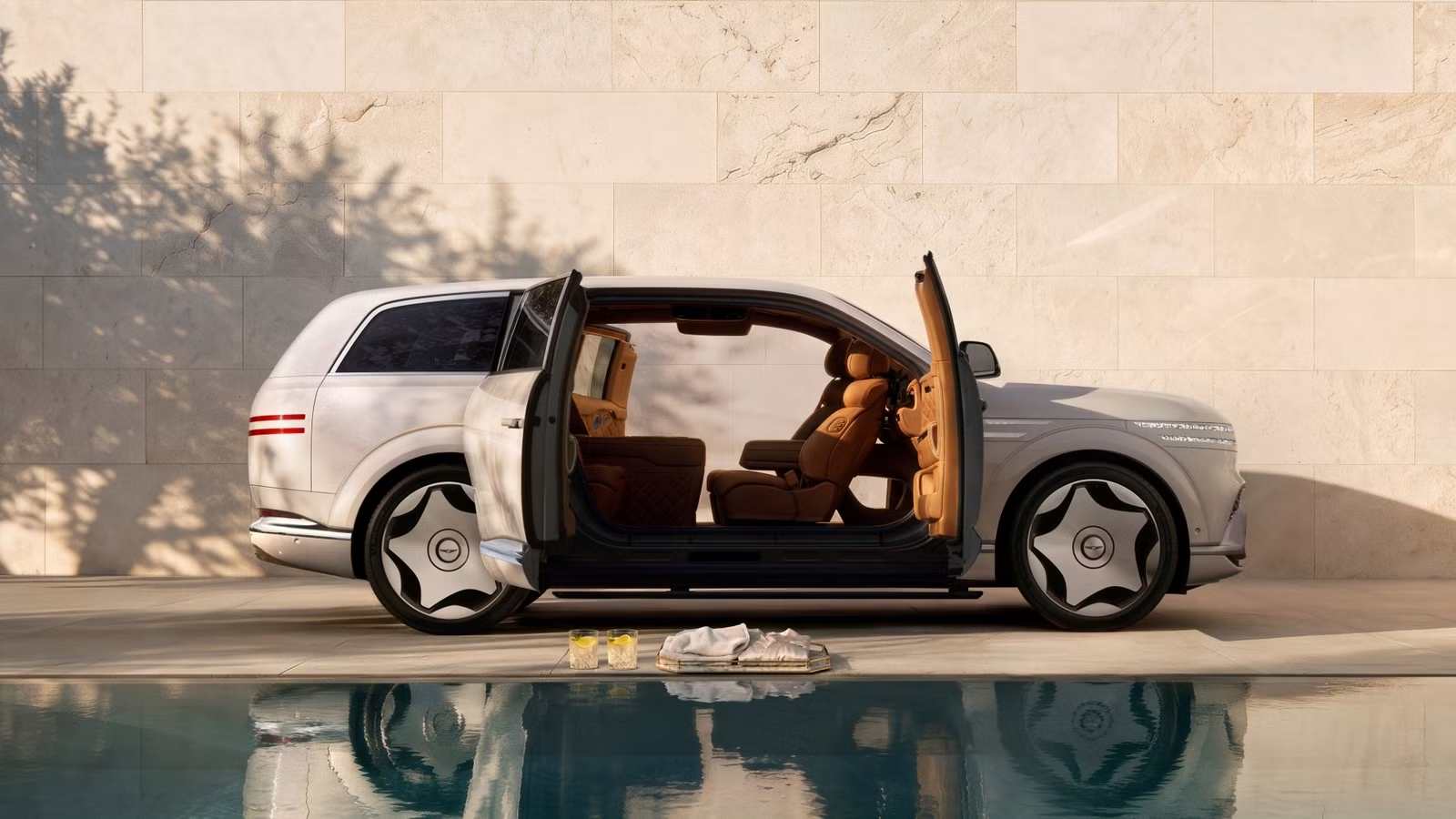
Genesis has established itself as a credible premium brand over its first decade of existence, and it’s ready to take a great leap forward with the GV90 full-size luxury flagship SUV, but it’s more ambitious than just a big, opulent vehicle. Rather than simply challenging BMW, Cadillac and Mercedes-Benz on design, technology and value, Genesis moves into that rare territory where luxury is more about exclusivity, occasion, and experience.

Based on the 2024 Genesis GV90 Neolun concept, the production GV90 is expected in showrooms in the first half of 2027, and its target is a philosophy rather than a competitor. With a host of innovative and exclusive features, the GV90 aims to move into Rolls-Royce territory, which doesn’t mean it’s competing against the notable Rolls-Royce Cullinan, but rather the personal essence of ultra luxury.
Genesis GV90 Neolun: A New Interpretation Of Flagship Luxury
Heritage, Innovative Features Elevate Vehicle Beyond Luxury Competitors
Hyundai surprised the world a decade ago when it announced that it was spinning off the premium Genesis cars into a sub-brand, and now it wants to elevate Genesis above a market where increasingly expensive vehicles look remarkably similar beneath their badges. Genesis had fallen into that mindset, and now wants to develop visual and experiential signatures of its own.

It stepped up with a host of sporty and opulent concepts including the Genesis Neolun introduced at the 2024 New York International Auto Show. The name is rooted in the Mediterranean—Greek for “new,” Latin for “moon”—with the latter part tying into one of Korea’s most iconic and pristine symbols—the Josean Dynasty porcelain jars nicknamed “moon jars” in the 1950s.
Coach Doors Make Entry Into The Genesis GV90 An Event

If you want to draw comparisons to Rolls-Royce, look no further than the Genesis GV90’s rear doors. The Neolun flagship (Genesis announced it would keep the name for the top-tier vehicle) uses rear-hinged coach doors, which have been a Rolls-Royce signature since the company began production in the early 1900s.

Genesis saw it as a unique feature to elevate the GV90 Neolun to a higher luxury level (lesser GV90 trims will use conventional rear doors), using an “interlocking” door design to eliminate the B-pillar and create an unusually wide opening into the cabin. Likely viewed as a styling exercise, it actually changes the convenience of entering the vehicle.
The Executive Suite Turns The Cabin Into A Lounge

Once inside, further design inspiration turns the four-seat Genesis GV90 Neolun into more of an exclusive rolling lounge, rather than just first-class transportation. The feature was first explored in 1960s’ premium cars from Buick and Chrysler to improve social interaction when the vehicle is stopped.
Genesis takes it a step further, enhancing the “executive suite” atmosphere with retractable privacy blinds and a refrigerator, to promote the idea that the GV90 Neolun isn’t merely an ultra-luxury vehicle to move executives from point A to point B. It is designed to make the vehicle productive, social, or relaxing.
Korean Hospitality As A Genuine Genesis Luxury Signature Feature

The social aspect of the Genesis GV90 Neolun is where the vehicle differentiates itself from Rolls-Royce, which promotes exclusivity through “First Class” features like massaging and ventilated seats, tray tables and privacy glass. It’s a European ultra-luxury convention many luxury flagships follow, but Genesis expands on it by incorporating a Korean hospitality slant.
Genesis adds a radiantly heated real-wood floor, inspired by the traditional Korean ondol concept that warms rooms from heated flues in the stone floor. Strategically, this Korean cultural authenticity differentiates the Neolun from somebody else’s vision of exclusive luxury—Genesis can duplicate coach doors, privacy partitions and massaging seats, but its genuineness comes from being more than just another example of British craftsmanship.
The Rolls-Royce Philosophy Behind The Ultimate Flagship

Rolls-Royce lives in a different universe of luxury. Conventional premium brands ask how much technology, performance and comfort they can provide. Rolls-Royce asks how much exclusivity, craftsmanship and personalization it can deliver. That distinction is why a simple comparison of price, size and equipment can be misleading. Numbers and features may be impressive, but they aren’t really on point when it comes to ultra-luxury, and that sometimes makes head-to-head comparisons meaningless.
The Gallery And Viewing Suite Show What Bespoke Truly Means

The Rolls-Royce philosophy is built on craftsmanship, personalization, serenity and exclusivity, with individual features serving as the connection to the specific owner. The company describes each bespoke vehicle as a commissioned work of art, allowing customers to create everything from unique paint colors to personalized veneers and intricate interior details, and offers a choice of unique features.

The Phantom limousine, for example, features “The Gallery”—a glass panel across the instrument panel that can display works of art of the owner’s liking. The Cullinan SUV can include a “Viewing Suite,” which includes two leather-trimmed seats and a cocktail table that deploy from the rear cargo area when the vehicle is parked to create an observation lounge for special occasions.
Cullinan Brings The Rolls-Royce Formula To The SUV

The Rolls-Royce Cullinan is the Genesis GV90’s closest comparative vehicle (it’s not really a “rival,” as you’ll discover later) and offered a solution to Rolls-Royce that Genesis is also facing: how to create a genuine flagship vehicle to further the company image from a large, generic, utilitarian block of metal, plastic, and glass. To Rolls-Royce, the vehicle is secondary to its luxury identity.
That means starting with Rolls-Royce quality materials and presentation—a cabin stocked with natural materials such as wood, leather and lambswool to create an environment that feels more like a private lounge than a shuttle bus—then adding features to make it effortless—a long wheelbase and active air suspension to prioritize ride quality, and a V-12 engine to spur the vehicle on.
Phantom And The Rolls-Royce Bigger Picture

If Cullinan represents the direct Genesis GV90 comparison, then the Rolls-Royce Phantom is the spiritual guide, representing the clearest expression of Rolls-Royce luxury. Described by the company as the “icon of icons,” Phantom uses technology, materials, and craftsmanship as tools for owners to create something personal. Beyond The Gallery, Phantom also features a “Starlight Headliner,” with uniquely-positioned (not mass-produced!) fiber-optic lights to create a night sky. It’s individuality on a level far above the owner simply mixing and matching from a predetermined equipment list.
The Genesis GV90 Neolun Through A Rolls-Royce Eye

Rolls-Royce treats the rear compartment of its vehicles as a vision of the modern private carriage, with features that promote exclusivity for the people riding in the back, often isolated from the chauffeur. With the GV90 Neolun, Genesis is attempting to make a socially-inclusive luxury lounge.
Rear-Seat Access And Luxury Social Interaction

The Genesis GV90 Neolun’s coach doors are its clearest Rolls-Royce parallel, but Genesis isn’t simply matching the Rolls-Royce Cullinan. Rolls-Royce uses rear-hinged doors to convey the traditional chauffeured-car experience. Genesis combines the feature with a pillarless design to create a welcoming entry, where getting into the vehicle feels different than climbing into an SUV.
The GV90 Neolun’s four-seat Executive Suite goes beyond the Rolls-Royce individual rear seating with first-class features. Its swiveling front seats change the dynamics of the SUV interior, adding a social function that currently isn’t portrayed in any other vehicle. In a sense, that elevates the Neolun beyond the Rolls-Royce treatment of a private carriage.
Privacy, Hospitality And The Distinction Between First And Social Classes

Like Rolls-Royce vehicles, and flagships from other brands, the Genesis GV90’s privacy features (retractable blinds and a cabin designed around rear-seat occupants, with separation from the driver and luggage area) strengthen the chauffeur-car experience, but the Neolun takes the separation further by setting it aside as desired for social interaction.
Rolls-Royce equips its vehicles with first-class isolation in the form of rear picnic tables, rear theater equipment and even a bespoke digital art gallery. Genesis does it with swiveling front seats and heated real wood flooring. It may seem like a superficial case of one-upmanship, but it’s a distinction between British aristocratic heritage and Korean social culture.
The Rolls-Royce Century-Long Advantage Over The Decade-Old Genesis

Genesis can engineer a rear refrigerator, a swiveling seat and a heated wooden floor, but it can’t manufacture a century-long reputation for exclusivity and prestige. A long list of unique features can elevate the Genesis GV90 to the ultra-luxury level, but Rolls-Royce counters with decades of accumulated craftsmanship and customer personalization.
At the end of the day, the Genesis GV90 Neolun offers unique characteristics, but it offers the same unique characteristics to all its customers in selectable exterior/interior choices, whereas a Rolls-Royce bespoke program produces highly individualized combinations of paint, leather, veneer, stitching and decorative details.
Genesis Is Trying To Define Its Own Ultra-Luxury Language With The GV90
Genesis has demonstrated over the past decade that it can challenge established luxury automakers on design, equipment and value, so it can undoubtedly also create the commanding presence of a flagship SUV in size, technology, materials, and passenger-focused experience. The challenge is to elevate all those physical attributes into existential exclusivity.
Rolls-Royce vehicles make craftsmanship, serenity, passenger comfort and personalization feel like essentials in the luxury experience, and Genesis wants buyers to recognize that the GV90 Neolun belongs in conversations about exceptional luxury, which is considerably more valuable than just a choice between it and a Rolls-Royce Cullinan, or even a Phantom.
Genesis Won’t Win By Copying Rolls-Royce — It Wins By Defining Korean Ultra-Luxury On Its Own Terms

Coach doors, a four-seat Executive Suite with swiveling front seats, a refrigerator, privacy systems and heated real-wood flooring convey the foundation of exclusive luxury. The Genesis GV90 Neolun has the opportunity to spin those features in the Korean cultural philosophy, which differs from the British aristocratic experience of a Rolls-Royce.
The most compelling outcome is not a Korean Rolls-Royce, but rather a flagship SUV shaped by Korean hospitality and design, borrowing the principles of ultra-luxury without borrowing someone else’s identity. If the GV90 Neolun accomplishes that, Genesis won’t simply have moved into premium luxury territory, it will have defined how premium luxury differs from culture to culture.
Sources: Genesis, Rolls-Royce

Related posts

Latest Post


No Comments