
Why BMW Won’t Fake a V8 Sound, But Will Fake Gear Shifts
Article Summary
- Van Meel calls copying V8/V10 sound into EVs “copycat behavior” and won’t do it
- BMW’s own sound engineers say the S85 V10 sounds like a kitchen appliance at a steady 6,000 rpm
- The ZA0, the first electric M3, will simulate gear shifts without torque interruption
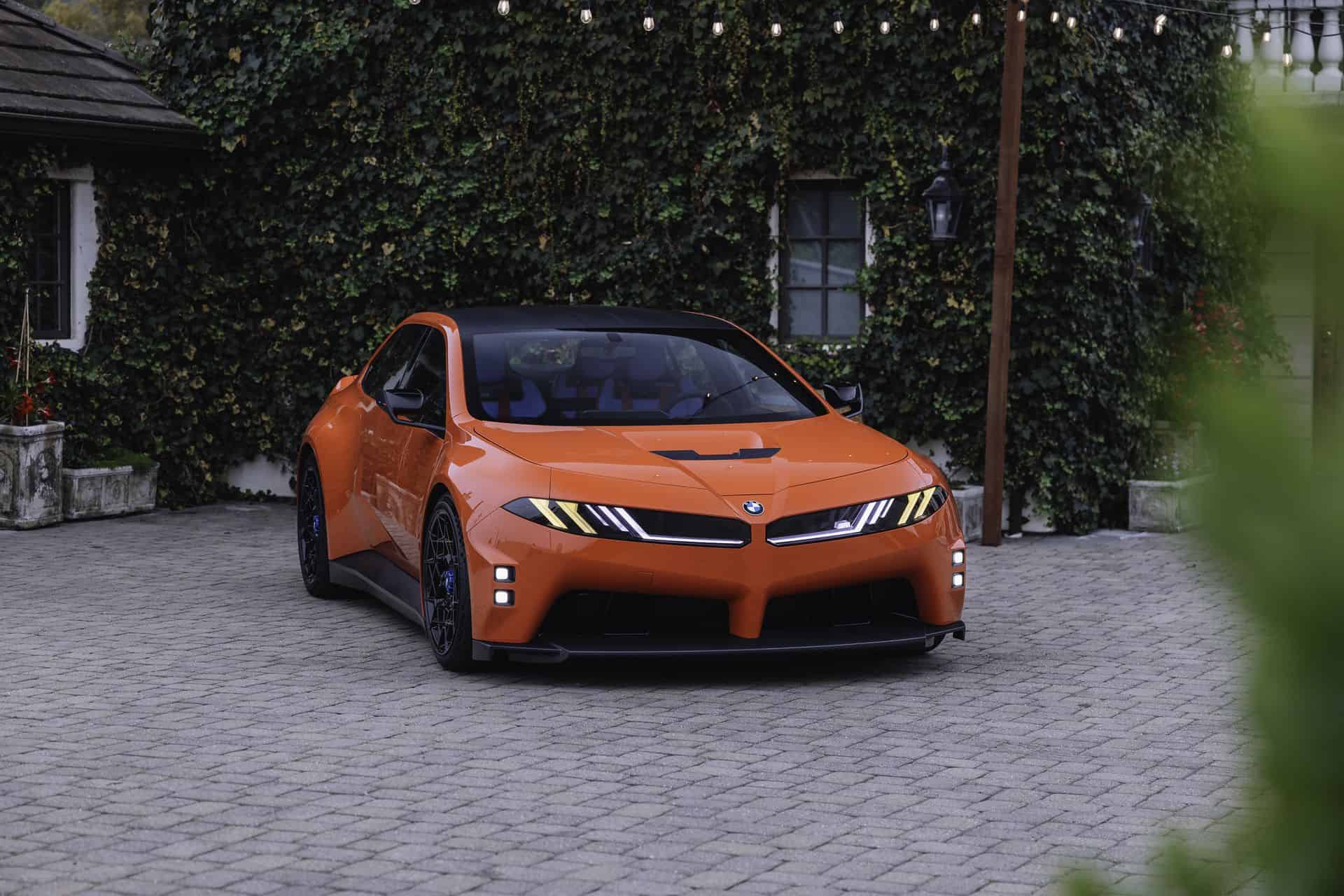
BMW M boss Frank van Meel says he will not pipe a synthesized V8 or V10 note into an electric M car, calling that approach “copycat behavior,” but he does want electric M models to simulate stepped gear changes. He laid out the distinction in a Motor1 interview tied to the reveal of the M Concept Neue Klasse.
Real Sound, Not A Recording
Van Meel’s objection is specifically to disguise, not to synthesized sound as a category. Layering a recorded or modeled V8 or V10 note over an EV’s actual soundtrack tries to make the car sound like something it isn’t rather than establish what it is. He backed the position with a detail from BMW’s own sound team: held at a constant 6,000 rpm, the S85 V10 out of the E60 M5 reportedly sounds like a kitchen appliance rather than the engine enthusiasts remember.
Gear Changes Stay

The gearbox is where van Meel draws a different line. He wants electric M cars to simulate discrete, stepped gear changes rather than deliver one continuous surge of torque, the default feel of most EVs on the market. He does not want the torque interruption that comes with a real shift on a combustion car, since that’s a mechanical limitation of a physical gearbox, not something drivers actually want. Keep the sensation of a gear change, in other words, and drop the part where the car briefly stops pulling. BMW is not abandoning combustion in the meantime. The inline-six and V8 are being updated to meet Euro 7 emissions standards.
BMW M3 Electric In 2027
The car that will actually put van Meel’s rules into practice is the ZA0, BMW’s internal code for the next M3 and the first fully electric model to wear the badge. Production is expected to start in Munich in March 2027, built around four independent electric motors, one per wheel, arranged into two M eDrive units, one per axle, with no mechanical differentials and torque vectoring handled entirely in software. Output is expected to land between 800 and 900 horsepower, which would make it the most powerful M3 BMW has ever sold, electric or not.

Neither the ZA0 nor the combustion G84 that follows it will offer a manual transmission. Without a physical gearbox, the ZA0 has nothing to interrupt on its own, so any step or pause in a simulated shift has to be programmed in deliberately. That makes van Meel’s comments less of a general philosophy and more of a direct description of what the ZA0’s engineers are already working on.

Related posts



Latest Post


No Comments