
The Luxury Chevy Coupe That Secretly Packed Corvette L72 Power
If you walked into a Chevrolet dealership in the late 1960s, you would have two categories to choose from: asphalt-tearing performance machines and, on the other hand, Chevrolet’s executive cars. One side was the wild-child muscle: the Chevelle SS 396s, the high-revving Z/28 Camaro, and the aggressive Stingray Corvette.
In contrast, the quiet, carpeted vinyl-wrapped hardtops were built for effortless cruising over tire-burning drag-strip launches. For decades, the two choices were very clear to the enthusiast; it was either unhinged power or luxury; you couldn’t get both, or that’s what Chevrolet claimed. There was a car in the lineup that had something more to offer than meets the eye.
The Dilemma Of The Velvet Hammer
By 1969, muscle cars started to face serious identity crises. The golden era of American iron was at its absolute peak, but the formula was getting a bit stale. Loud paint schemes, wider racing stripes, and bigger hood scoops commanded visual bragging rights on the streets and announced your arrival.

A Chevelle SS or a Plymouth Road Runner was a car you knew you couldn’t mess with at the red light. With these conventions, the element of surprise had largely vanished by then. At the same time, the full-size personal luxury market was booming. Chevrolet’s flagship fought with rivals such as Ford LTD and Pontiac Grand Prix.
These land yachts were designed for smooth highway cruising, with an insulated cabin experience and contemporary styling. These cars were almost invisible on the streets when compared to the loud and rowdy muscle cars. With that said, balancing a plush suburban cruiser with an angry big-block required finesse, with components that could comfortably manage 460 lb-ft of torque.
The Order Sheet Loophole GM Didn’t Advertise

To understand how a balance of luxury and muscle came into existence in GM’s catalog, we have to take a deep dive into how General Motors operated in the 1960s. During that era, if an option had an RPO code and could physically fit between the frame rails, Chevrolet would special-build it if you checked the appropriate boxes.
With that said, buried deep inside the dealer order guide was a combination that was completely unavailable in public-sale brochures. A four-speed manual transmission, bolstered Strato bucket seats with a floor-mounted center console, and a race-bred big-block engine. Enter John DeLorean; in early 1969, he issued a mandate that created an instant classic. He took a hard look at the manufacturing complexity across full-size B-body production.
DeLoren issued a mid-year mandate eliminating the four-speed manual transmission and floor-mounted bucket seats on full-size models. Ordering a car with that configuration required an insider fleet manager who knew how to navigate the dealer codes, making the car an anomaly that should not have existed on paper.
The 1969 Chevrolet Caprice L72: A 546-Unit Factory Anomaly

The car that emerged from this brief corporate window was the 1969 Chevrolet Caprice Coupe with the RPO L72. Unlike the calmer 335-horsepower or 390-horsepower hydraulic 427 engines available as standard, the L72 was a high-strung, solid-lifter performance monster producing 425 horsepower at 5,600 RPM and 460 lb-ft of torque at 4,000 RPM.
This same powerplant powered the top performers of GM’s lineup, the Corvette L72 and dealer-built Yenko Super Camaros. These engines were built from the ground up to take severe pounding, so they featured heavy-duty four-bolt main bearing caps, a forged steel crankshaft, forged connecting rods, forged aluminum 11.0:1 high-compression pistons, rectangular-port iron heads, and an aluminum intake manifold with an 800-CFM Holley four-barrel carburetor.

The L72 completely transformed the massive-wheelbase B-body into a straight-line weapon. It ran on premium fuel due to its high compression ratio. At the same time, the solid mechanical lifters required periodic adjustments, a departure from the hassle-free standard engine found in the regular version. The massive rectangular-port cylinder heads allowed the 427 big-block to rev all the way up to a 6,000 RPM redline, where the standard engine would have severe valve float.
What made this configuration very limited was the production math across Chevrolet’s lineup. A common misconception among enthusiasts is that the 546-unit production count for the 1969 L72 engine applied to all full-size Chevrolet cars combined, split between Biscaynes, Bel Airs, Impalas, Kingswood Wagons, and Caprices. Out of approximately 15,000 full-size Caprices built, only a few had the 427 V8 in 1969. So finding a factory-built L72 with a four-speed manual is very rare in today’s market.
Country Club Exterior, Drag Strip Cockpit

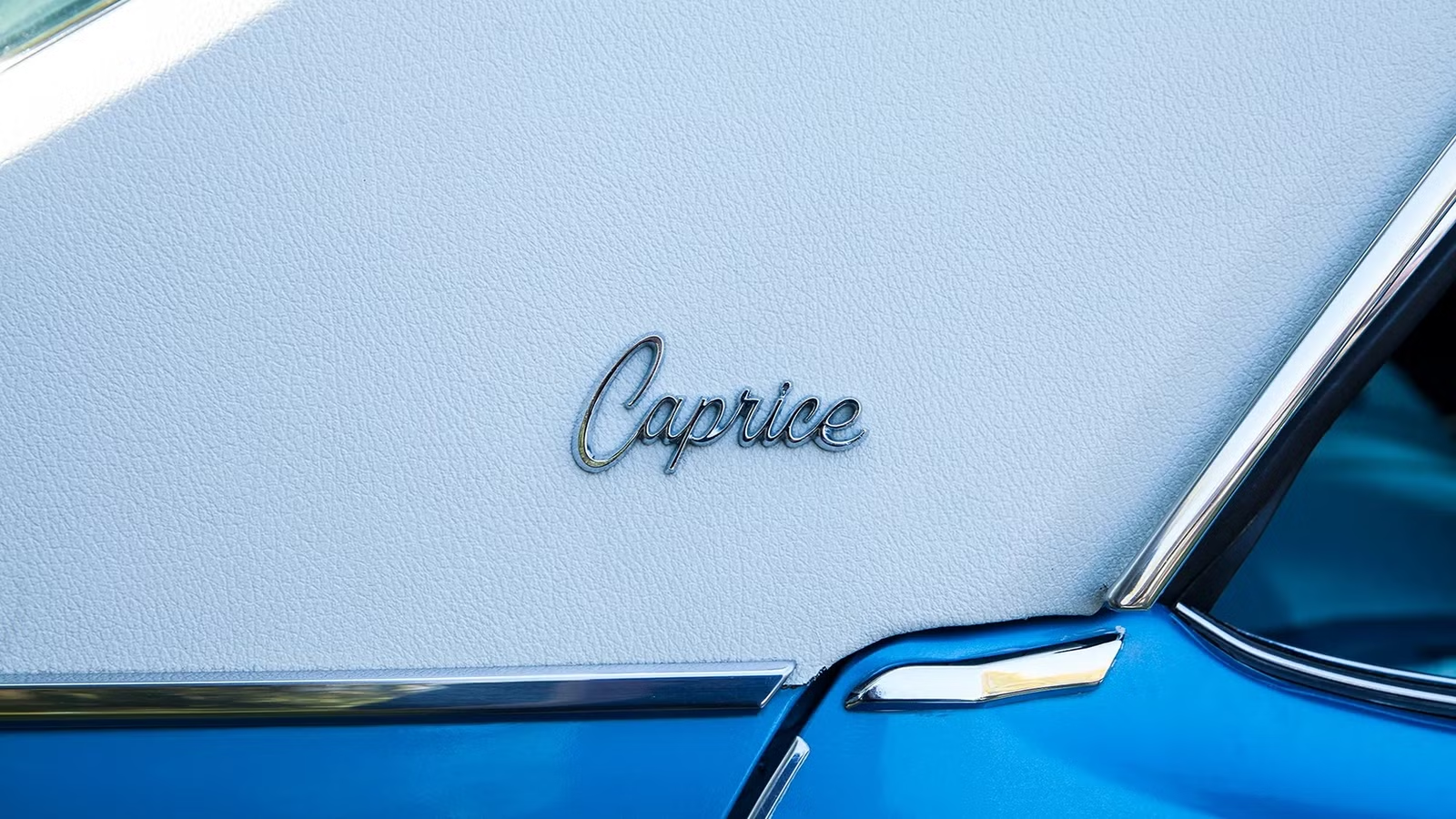
The visual appearance of the 1969 Caprice Coupe was defined by understated elegance. It had a contemporary, squared-off roofline distinct from the fastback profile of the Impala. Up front, a prominent loop bumper framed an intricate grille, accompanied by vacuum-operated hideaway lights. These features were combined with a full vinyl roof, subtle full-length chrome body moldings, and discreet “427” fender badges. The car looked like the perfect country club driver rather than something idling loudly at the red lights.
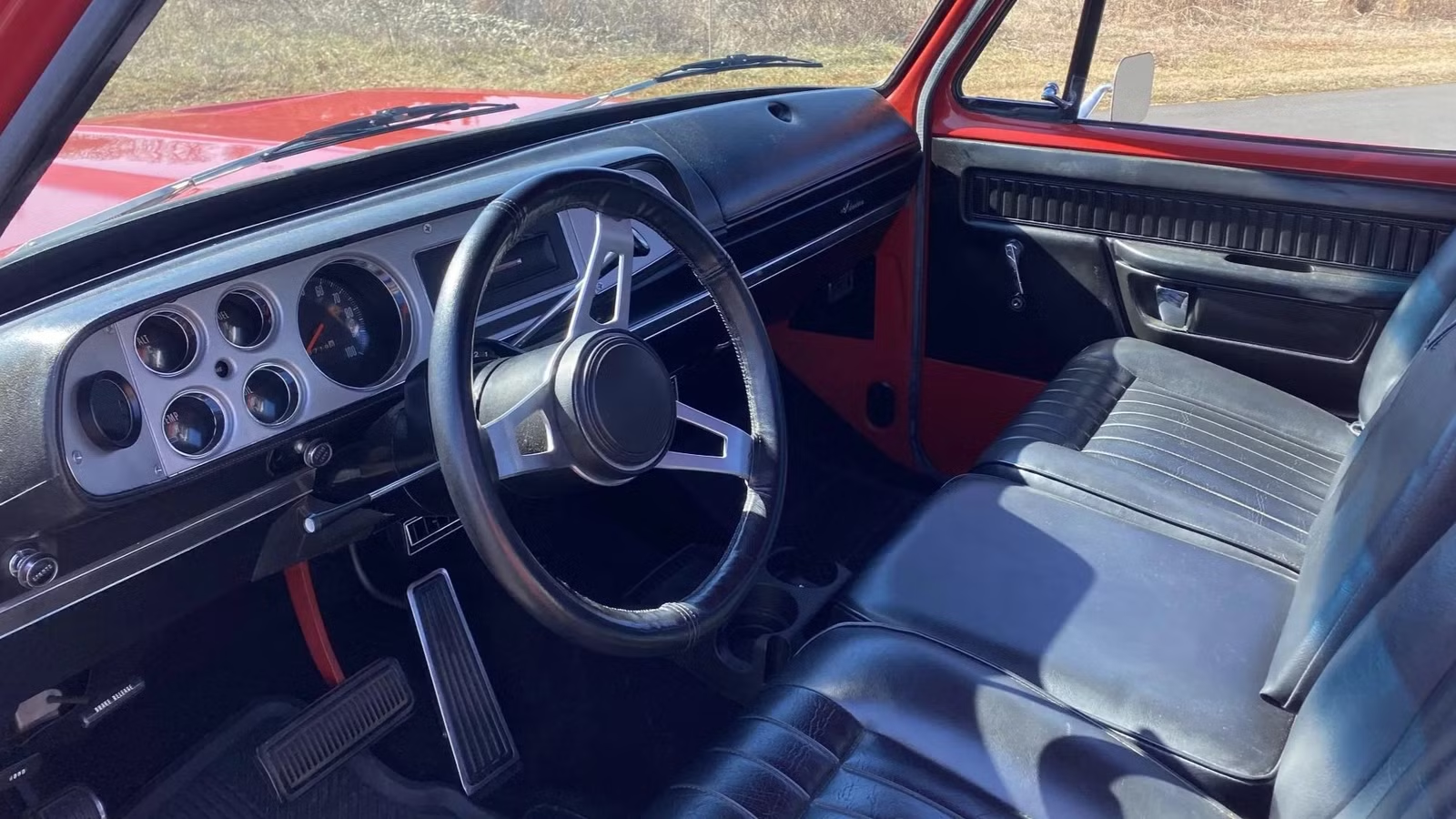
Inside the cabin, the interior blended high-end luxury with muscle DNA, featuring premium touches such as plush vinyl or brocade upholstery, faux walnut wood-grain dashboard accents, deep-pile carpeting with extra sound deadening, an optional Comfortilt steering wheel, Strato bucket seats, a floor-mounted manual shifter, power disc brakes, and a heavy-duty 12-bolt Positraction rear axle ensuring all 425 horses translated into traction rather than tire smoke.
Behind the wheel, the Caprice L72 had a dual personality that was very distinct from anything else in the muscle era. At a stop, the mechanical lifters produced a distinct, rhythmic clatter that could be felt through the heavily insulated hood. The extra dampening kept the cabin quiet while cruising on the highways. But as you opened the throttle and revved the engine up high, the character of the car transformed into that of a vicious beast, running 0 to 60 MPH in 6.0 seconds and covering the quarter mile in 13.5 seconds at over 105 MPH.
The Auction-Block Legacy of the Phantom Caprice

Over the past decades, the classic collector car market has naturally tilted toward bright, flashy muscle car icons. Cars like the Chevelle SS, Z/28 Camaros, and the Pontiac GTOs typically dominate the auctions, while the full-size 427 Caprices have slipped under the radar.
The lack of attention through the years is what makes the 1969 L72 a special and rare car in today’s market. It is a product of a brief moment in the golden era of muscle cars when Detroit engineers combined premium luxury and full-blown muscle on the assembly line, which was not to be replicated for years to come.
Today, the well-documented original L72 cars command massive price premiums over the standard small-block models. While the standard 1960 Caprice coupes often trade between $18,000 and $25,000, a well-documented L72 can fetch up to $50,000. The 1969 L72 Caprice remains GM’s forgotten masterpiece of the late 1960s: a high-end luxury cruiser with the mechanical heart of a Corvette, built for elegance and performance.
Source:Hemmings, GM, Chevrolet Caprice, Bring a Trailer.

Related posts



Latest Post


No Comments