Forget The BMW X5—This Family SUV Delivers Similar Comfort For Thousands Less
8 minutes reading
Sunday, 16 Aug 2026 15:00 0 63 autotech
Families cross-shopping the BMW X5 often assume the badge is the price of admission for a smooth ride, a hushed cabin, and a dashboard that feels expensive. But the X5’s third row is an afterthought, and its starting price climbs past $70,000 before options. Meanwhile, a Japanese alternative has quietly built a case as the smarter three-row SUV pick, pairing a genuine turbocharged inline-six with a cabin that punches well above its price. For thousands less, it delivers the comfort families actually want, minus the badge tax.
For years, the calculus was simple: if you pay German prices, you get German polish. Buyers accepted smaller cargo holds, tighter third rows, and steep options lists because the badge implied a driving experience and interior feel that mainstream brands couldn’t match. That assumption is getting harder to justify.
Part of the shift comes from what luxury SUVs actually deliver for families day to day. A three-row crossover spends most of its life on school runs, grocery hauls, and road trips, not autobahn sprints. In that context, ride comfort, seat quality, and cabin quietness matter far more than a badge on the grille or a claimed 0-60 time. Mainstream brands have caught on, investing heavily in materials, sound insulation, and refinement that used to be exclusive to premium nameplates.
Rear 3/4 action shot of 2025 BMW X5 xDrive50eBMW
There’s also a pricing gap that’s become harder to ignore. The 2026 BMW X5 starts at roughly $69,000 including destination, and that’s before adding options that quickly push the total past $80,000. For a vehicle whose third row is more of a courtesy than a usable space, that’s a steep ask for a growing family.
It’s why more shoppers are widening their search beyond the traditional German trio and taking a serious look at what brands like Mazda have built instead. The question is whether any mainstream brand has actually built something worthy of replacing a German flagship — and the answer turns out to be hiding in Mazda’s lineup, starting with an engine architecture you’d normally pay $30,000 more for.
The Mazda CX-90 Brings Luxury-Level Comfort Without Luxury-SUV Pricing
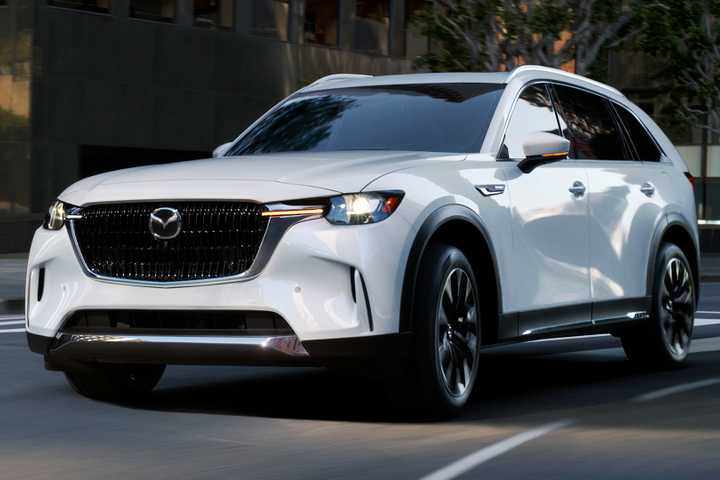
Front 3/4 shot of 2026 Mazda CX-90 parkedMazda
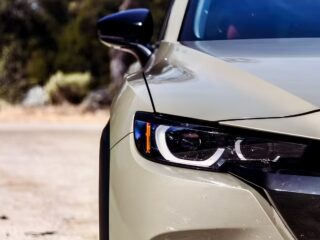
The CX-90 isn’t a budget alternative dressed up to look premium. It’s Mazda’s flagship, engineered from the ground up on a rear-wheel-drive-based platform with a longitudinal engine layout, the same fundamental architectural principle that underpins rear-drive luxury SUVs from Germany. That’s not a coincidence; Mazda specifically chased that layout to deliver better weight distribution and a more composed ride than front-drive-based competitors.
Pricing Tells The Real Story Of The Value Gap
Rear 3/4 action shot of 2026 Mazda CX-90 driving on roadMazda
The 2026 CX-90 3.3 Turbo Select starts at $39,300, with the well-equipped Premium Sport trim priced near $47,500—meaning even a mid-tier CX-90 costs roughly $20,000 less than a base X5 xDrive40i. Step up to the range-topping Turbo S Premium Plus, and you’re still under $58,000, undercutting the BMW by roughly $10,000 while adding a third row and standard all-wheel drive that BMW charges extra for on its entry trim.
That gap isn’t just about the sticker price, either. It’s thousands more in savings over a typical ownership period once insurance, financing costs, and depreciation are factored in, since mainstream three-row SUVs typically hold their value more predictably than loaded luxury models once options and equipment packages are added to the German SUV’s window sticker.
An Inline-Six Engine And Nappa Leather Cabin That Belong In A $70,000 SUV
2025 Mazda CX-90 engineChris Chin | TopSpeed
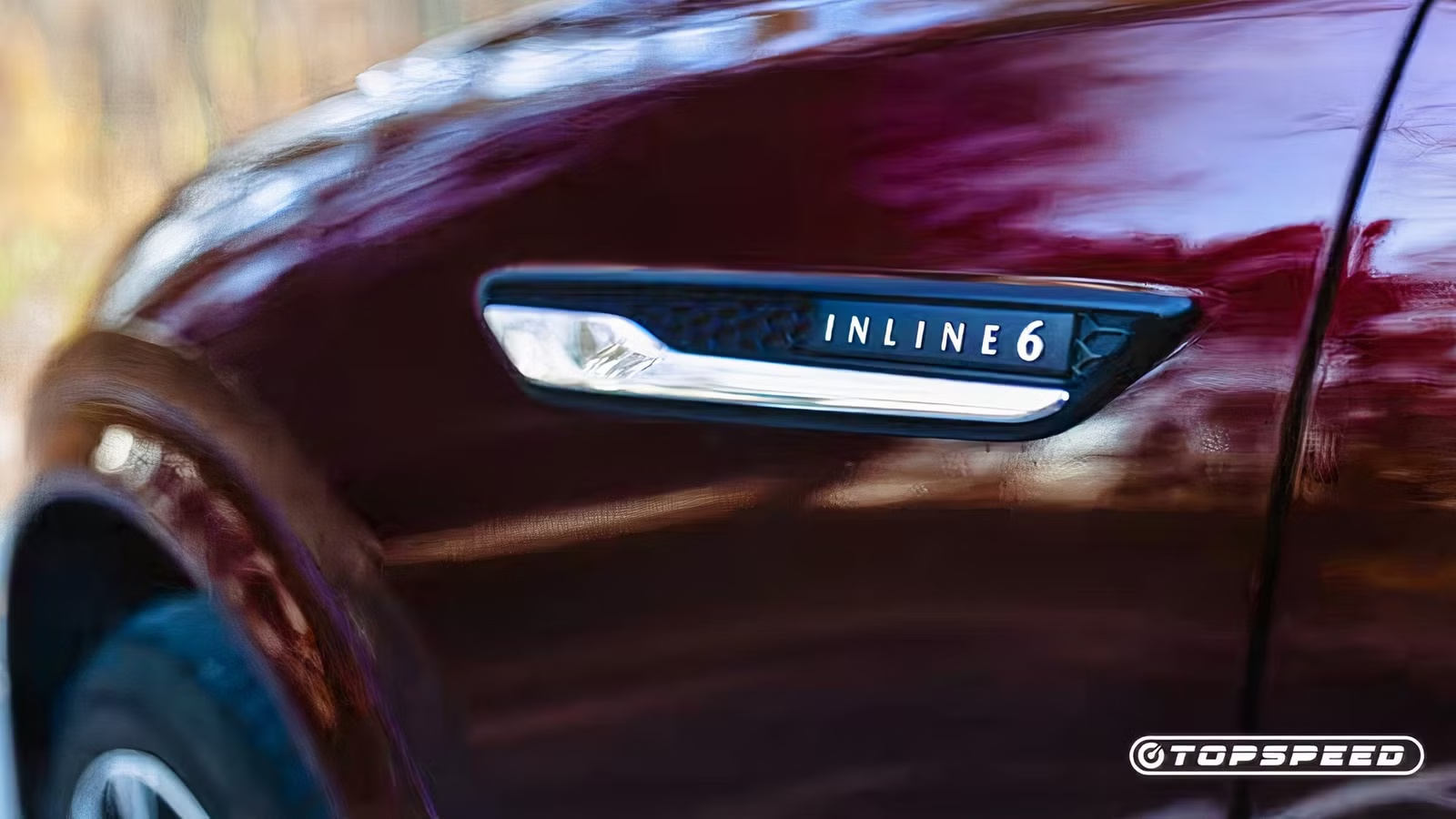
The Mazda CX-90’s headline mechanical story is its inline-six, an engine architecture almost extinct outside premium brands. Mazda’s 3.3-liter turbocharged inline-six makes 280 horsepower and 332 pound-feet of torque in standard tune, or 340 horsepower and 369 pound-feet in the higher-output S trim on premium fuel. That’s the same fundamental engine format BMW uses in the X5, and Mazda pairs it with an eight-speed automatic and standard all-wheel drive across every trim, rather than making buyers pay extra for the security of AWD the way BMW does with its rear-drive-only base model.
For comparison, BMW’s own inline-six in the X5 xDrive40i produces more raw output—375 horsepower and 398 pound-feet—but that extra muscle comes wrapped in a roughly $30,000 price premium over a comparable CX-90 trim, and inline-six smoothness is inline-six smoothness whether it wears a blue-and-white roundel or not. The CX-90’s six-cylinder is notably smoother and quieter than the turbo four-cylinders found in most mainstream three-row rivals, delivering the kind of linear, refined power delivery that makes a highway cruise feel effortless rather than strained.
Front 3/4 action shot of 2026 Mazda CX-90 driving on roadMazda
Inside, Mazda has clearly studied what premium buyers expect and delivered it without the premium invoice. Upper trims bring quilted Nappa leather, genuine open-pore wood trim, and a 12.3-inch driver display alongside a Bose 12-speaker sound system.
The materials, fit, and finish consistently earn comparisons to cabins costing tens of thousands more, and road noise is impressively subdued for the segment thanks to extensive sound deadening and standard acoustic glass on higher trims. It’s the kind of cabin that quietly over-delivers rather than one that leans on a badge to make an impression.
Three Rows, 74 Cubic Feet, And A 5,000-Pound Tow Rating The BMW X5 Can’t Match
Shot of 2025 Mazda CX-90 front cabin showing dashboardChris Chin | TopSpeed
A three-row SUV lives or dies on how well it serves a family, and here the CX-90 makes an even stronger case against its German rival. Seating configurations run from seven to eight passengers depending on trim, with cargo space measuring roughly 15 cubic feet behind the third row and around 74 cubic feet with the second and third rows folded, on most trims. The X5, by contrast, only offers two rows in its standard configuration and tops out at under 34 cubic feet behind the second row, meaningfully less flexible for a family that actually needs to seat six, seven, or eight people on a regular basis.
Towing capability rounds out the practicality argument. Most gas CX-90 trims can tow up to 5,000 pounds, enough for a small boat, a pop-up camper, or a loaded utility trailer—genuinely useful capability for active families that the X5 can’t match in cargo-carrying versatility even if its raw power numbers look better on paper.
2025 Mazda CX-90 front seatsChris Chin | TopSpeed
Safety and technology are where the CX-90 stops feeling like a value pick and starts feeling like a genuine luxury competitor. Standard safety tech includes adaptive cruise control, automatic emergency braking, blind-spot monitoring, and lane-keep assist across the lineup, not locked behind an expensive options package the way many luxury brands structure their safety suites.
Higher trims add a surround-view camera system and automatic reverse braking, features that wouldn’t feel out of place in a vehicle costing considerably more. For 2026, Mazda has also added standard Amazon Alexa voice command integration, a small but genuinely useful update for busy families juggling calls, navigation, and kids in the back seat simultaneously.
The $20,000 Question: What The BMW Badge Actually Buys You That The CX-90 Doesn’t
Put simply, the CX-90 asks families to give up almost nothing that actually matters day to day. The ride quality is composed, the cabin is quiet and richly finished, the inline-six delivers genuinely refined power, and the practicality, three rows, real cargo space, real towing capacity, beats what the X5 offers in its standard form. The savings aren’t marginal, either: a fully-loaded CX-90 Turbo S Premium Plus still costs thousands less than an X5 with a modest options list, and that gap only widens once financing and insurance costs are factored into the equation over a typical ownership period.
This isn’t a case of CX-90 buyers settling for less. It’s a case that the badge premium on a vehicle like the X5 buys less family-relevant value than it used to, particularly once you account for the third row the BMW doesn’t offer as standard equipment and the cargo flexibility it can’t match. For growing families cross-shopping this segment, the calculation increasingly comes down to a simple question: is a badge worth $20,000 or more when the vehicle wearing a lesser one delivers the comfort, refinement, and technology that actually make the daily drive better? For a growing number of buyers, the honest answer is no, and the CX-90 is exactly the kind of SUV making that argument impossible to ignore.







No Comments