
This New American Moto Feels More Like A Naked Bike
American V-twin motorcycles are usually associated with low seats, relaxed ergonomics, and engines that deliver their best work without requiring much encouragement. They’re built to settle into a rhythm, hold a line, and turn ordinary roads into an excuse to slow down. That traditional formula still has plenty of appeal, but it can make cruisers seem disconnected from the sharp responses, rev-hungry engines, and active riding experience offered by modern naked bikes. Every so often, though, an American motorcycle arrives wearing all the expected cruiser hardware while behaving as though nobody explained the rules.
American Cruisers Are Usually Laid Back And Relaxed

A conventional cruiser is designed around stability and confidence rather than outright agility. Its wheelbase is generally long, its center of gravity sits close to the ground, and its steering geometry favors calm, deliberate inputs. The engine typically produces a thick spread of torque low in the rev range, allowing the rider to short-shift through the transmission and surf that accessible shove. The result is an easygoing motorcycle that asks very little from its rider, even if it doesn’t always encourage them to explore the upper reaches of the tachometer.
Liquid Cooling And Overhead Cams Let V-Twins Breathe Like Sport Bikes

The line between these categories began to blur once performance cruisers adopted liquid cooling, overhead camshafts, electronic fuel injection, and engines capable of making serious power beyond the bottom of the rev range. A big V-twin no longer had to breathe heavily and give up just as the scenery became interesting. Manufacturers could preserve the sound, pulse, and low-end response riders expected while adding the willingness to rev that normally belonged to sportier machinery.
A Low Seat Doesn’t Automatically Mean A Lazy Motorcycle


Unmistakable cruiser styling can also create expectations that the underlying hardware doesn’t necessarily follow. Forward controls, a solo saddle, fat 16-inch tires, and chopped bodywork immediately suggest a certain riding experience. They imply that the motorcycle will be comfortable rolling through town, posing outside a coffee shop, and rumbling along a straight highway. None of those details, however, determines how quickly the engine responds when the throttle is opened or how convincingly the chassis holds its chosen line.
A low center of gravity can make a heavy motorcycle surprisingly manageable, especially at parking-lot speeds or during rapid changes of direction. Predictable steering also allows a rider to place the bike accurately, even when its dimensions aren’t particularly sporty. Add an engine that builds power progressively and the result can feel far more energetic than the silhouette suggests. It won’t flick from side to side like a lightweight roadster, but it can still reward decisive control inputs and an active approach behind the handlebar.
The 2026 Indian Scout Bobber Rides More Like A Naked Bike

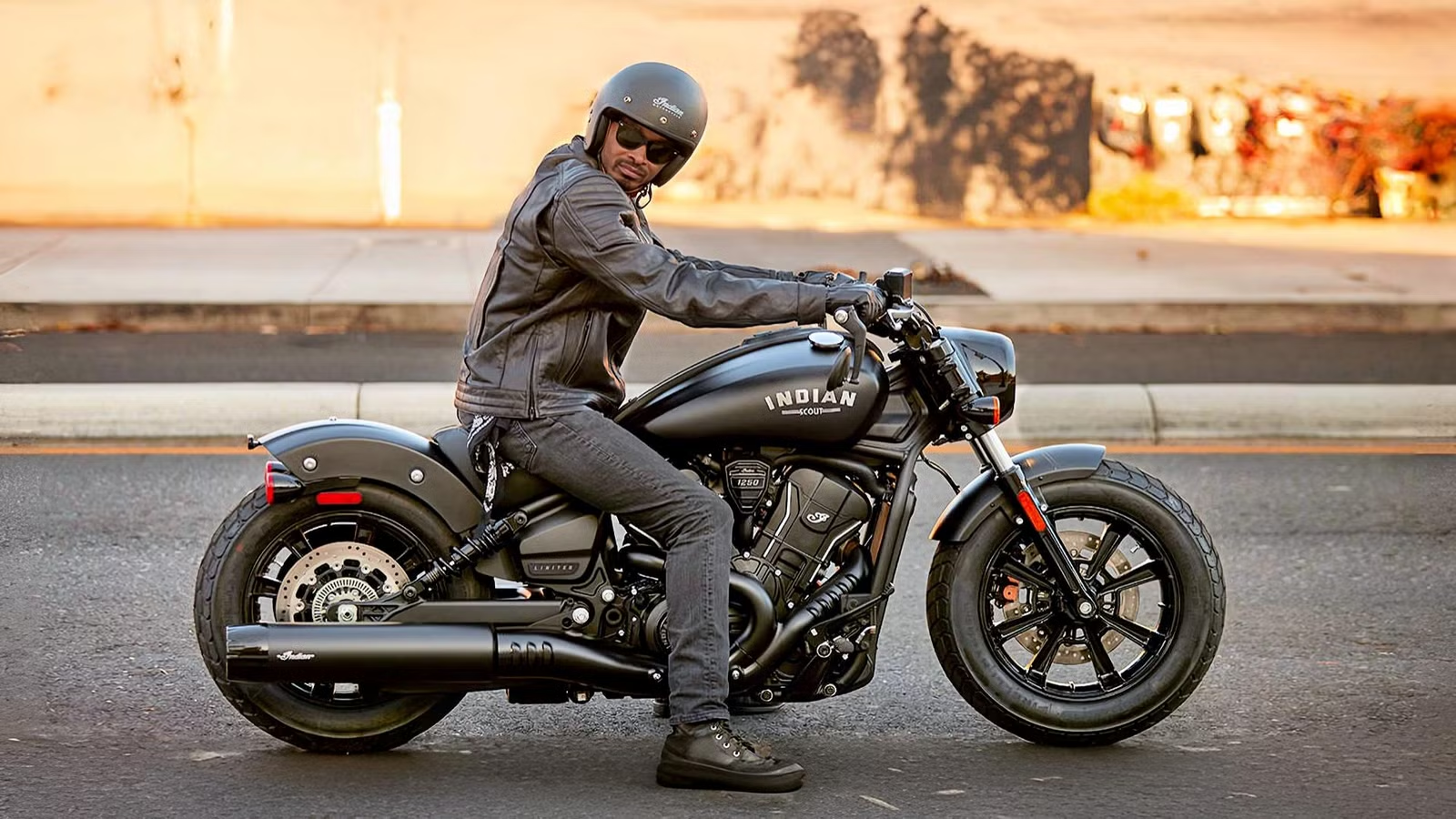
The motorcycle in question is the Indian Scout Bobber, and its specification sheet explains why it doesn’t fit neatly into the traditional cruiser box. Its liquid-cooled 1,250cc SpeedPlus V-twin produces 105 horsepower and 82 pound-feet of torque, with power sent through a six-speed transmission and belt final drive. Those figures give it considerably more enthusiasm than its slammed stance, abbreviated fenders, solo seat, and blacked-out mechanical components initially suggest.
Indian prices the standard 2026 Scout Bobber from $12,999. That places it beneath the more overtly performance-focused 101 Scout while retaining the larger 1,250cc engine. Standard equipment includes ABS, full LED lighting, and an analog gauge that displays speed, gear position, fuel level, range, and other essential trip information.
Its SpeedPlus V-Twin Loves To Rev
The engine uses a 60-degree V-twin layout with double overhead camshafts and four valves per cylinder.Its bore measures 4.094 inches, while the stroke is 2.898 inches, creating an oversquare design that helps explain its eagerness to build revs. A closed-loop electronic fuel-injection system breathes through a 60 mm throttle body, while a 12.5:1 compression ratio contributes to its strong output. The wet, multi-plate assist clutch helps manage that power without requiring a brutally heavy lever.
The Scout Bobber’s defining trait isn’t simply that it makes 105 horsepower. Plenty of large cruisers produce impressive numbers, but some deliver them in a short, concentrated burst. The SpeedPlus engine combines its 82 pound-feet of torque with a willingness to continue pulling as the tachometer rises. That means the rider can short-shift and use the broad torque curve around town, then hold each ratio longer when the road opens and the mood becomes less responsible.
The Chassis Keeps One Boot In The Cruiser World

For all its naked-bike energy, the Scout Bobber remains unmistakably a cruiser once the road starts bending. It weighs 542 pounds in running order and uses a 61.5-inch wheelbase, 29.4 degrees of rake, and 4.9 inches of trail. Those dimensions favor stability rather than razor-sharp steering. Overall length is 86.9 inches, while width is 36.6 inches and height is 42.2 inches. Its laden seat height is just 25.6 inches, making it exceptionally approachable for shorter riders or anyone tired of balancing a tall motorcycle at stoplights.
Suspension consists of a 41 mm telescopic fork offering 4.7 inches of travel and dual rear shocks with preload adjustment. The limitation, at least for riders hoping to chase sport bikes through imperfect corners, is that the rear wheel receives only two inches of travel. Ground clearance is similarly limited at 4.3 inches, and the available lean angle is 31 degrees. Those numbers are enough for brisk real-world riding, but they also mean the foot controls and underside will eventually remind an enthusiastic rider what sort of motorcycle they purchased.

The Indian Scout Bobber rolls on cast 16-inch wheels fitted with a 130/90 front tire and a broad 150/80 rear. A single 298 mm front disc is gripped by a two-piston caliper, while the rear uses another 298 mm disc with a single-piston caliper. The setup provides ABS as standard, although riders accustomed to dual-disc naked bikes may notice that Indian hasn’t attempted to disguise the Scout Bobber as a track-focused machine. Its chassis is built to provide stable, predictable performance rather than maximum braking aggression.
Modern Electronics Push It Even Further

Indian offers the Scout Bobber in Standard, Limited, and Limited +Tech configurations. Moving to the Limited trim adds traction control, cruise control, a USB charger, and three selectable ride modes called Sport, Standard, and Tour. These modes adjust throttle response rather than changing the motorcycle’s fundamental output, giving the rider a way to sharpen or soften the connection between the grip and the rear tire.
Limited +Tech models add a four-inch touchscreen powered by Ride Command, bringing navigation, smartphone connectivity, configurable displays, and connected features to the cockpit. This version also replaces the traditional key with keyless ignition. None of that technology gives the Scout Bobber more suspension travel or cornering clearance, but it strengthens the sense that this is a thoroughly modern performance motorcycle dressed in deliberately old-school bodywork.
A Cruiser That Doesn’t Want To Be Ridden Like A Cruiser

The Scout Bobber doesn’t need to match a true naked bike through every corner to borrow its attitude. Its appeal comes from the tension between what the rider sees and what the engine delivers. The low saddle, forward controls, chopped fenders, exposed rear suspension, and chunky tires promise a relaxed American bobber. Open the throttle, however, and the high-compression SpeedPlus V-twin encourages the rider to use more revs, more gearbox, and considerably less restraint.
Its biggest limitations are also what preserve its identity. Give it more rear suspension travel, greater lean angle, stronger brakes, and mid-mounted controls, and it would become objectively more capable. It would also move closer to the 101 Scout or a conventional roadster, losing some of the visual commitment that makes the Bobber compelling. The 2026 Scout Bobber works because it offers flashes of naked-bike aggression without pretending it isn’t still low, dramatic, slightly impractical, and unmistakably American.
Source: Indian Motorcycle

Related posts


Latest Post


No Comments