
Chevrolet’s Forgotten All-Aluminum Big Block That Puts The LS6 To Shame
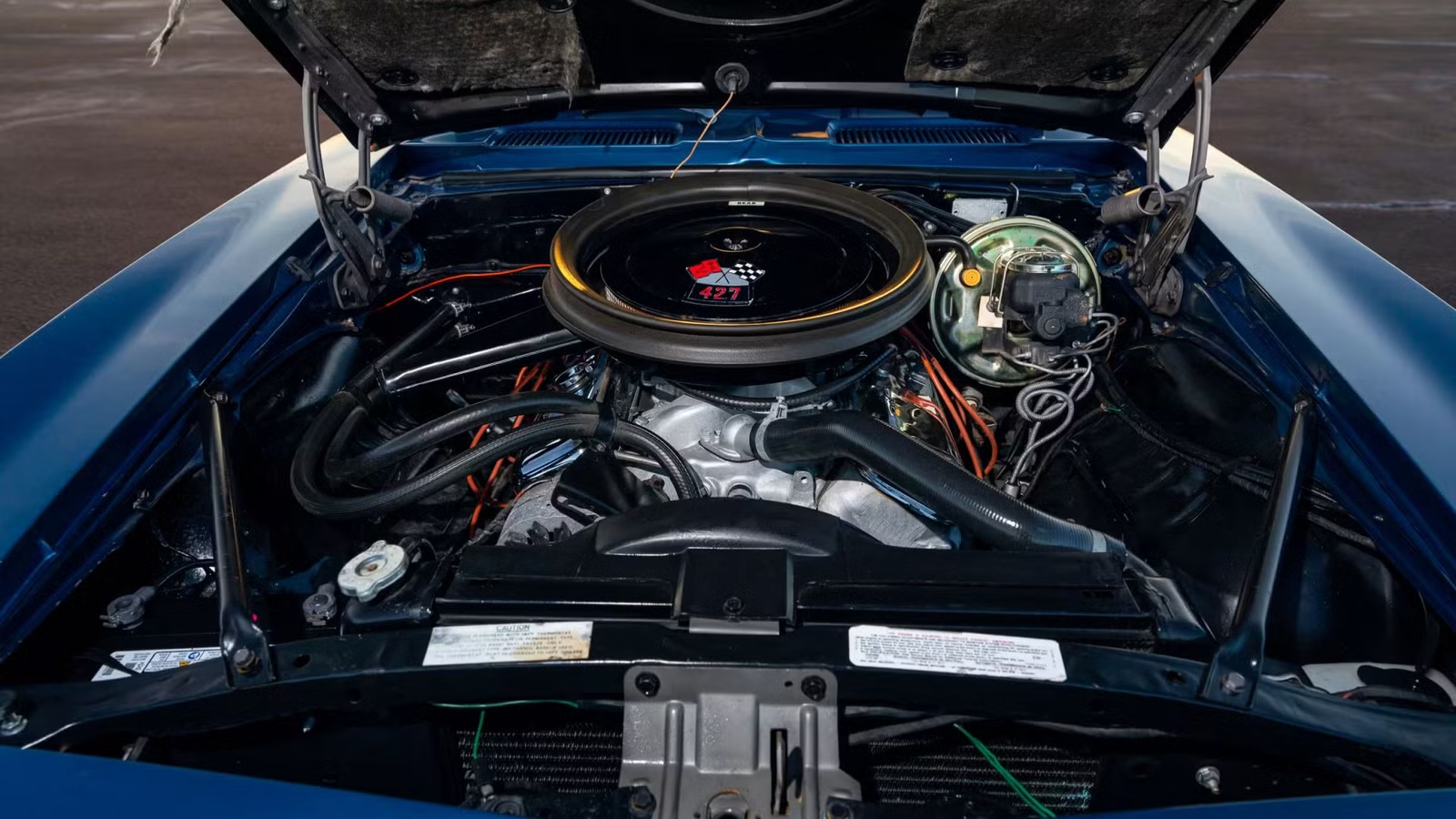
Hear the words “Chevy” and “Big Block” put together in the same sentence, and you might be inclined to think they all came from the same monolithic lineage that spanned the length of the first muscle car era. Oh, if only it were that simple. Maybe then, it would be easy to explain to someone who isn’t in the know. As far as the iconic 427-cubic-inch big block is concerned, things get considerably more complicated, because in the late 1960s and early ‘70s, the 427 wasn’t limited to just a single block. In fact, there were more than a few distinct variations of this one displacement, and all of them shared the same foundations, more or less. Well, apart from one.
The Iron Big Block Chevys: Great Power, Eternal Strength, One Huge Disadvantage

By the time the Mark IV came around in 1965, the architecture was primed to birth monsters like the L72 and the iconic L88. Unlike typical 427s, these motors sported stout solid-lifter camshafts, massive Holley carburetors, and sky-high compression ratios that made them barely street-legal track weapons. In bigger cars with plenty of weight to begin with, the engines’ considerable mass was counterbalanced against the rest of the car. This certainly helped with that ever important issue of weight distribution, but things got dicier the minute you threw a big block into something smaller.
In lighter cars like Camaros, dropping a nearly 700-pound iron giant over the front axle completely ruined the car’s delicate weight balance. To go fast in a straight line, drivers had to accept that their pony cars would plow through the corners like a tractor. If Chevrolet wanted to dominate on road courses, or sell a pony car that wouldn’t wrap around a tree in the bends at the very least, they needed big-block displacement without the big-block weight. Luckily, the mechanism for this to take place was already baked into GM’s ordering slip.
Saved by COPO, and Exciting New Engine Tech


By the late 1960s, General Motors had begun to strictly enforce a sweeping internal mandate: no passenger car smaller than a full-size model could be equipped with an engine larger than 400 cubic inches. Never mind that enthusiasts across America were already making that happen on the aftermarket; one could only assume GM didn’t care enough about capturing that revenue by selling something similar from the factory.
Ostensibly, this was in an effort to keep the Corvette as the absolute flagship of the Chevy brand. It’s a practice that’s spelled certain doom for several GM concepts over the years, even ones that had potential to stand out all on their own. It goes without saying, this was an affront that the performance purists in GM’s fanbase weren’t going to take lightly, and the one to try to change it was an Illinois-based Chevy dealer named Fred Gibb, a master at navigating what GM called the Central Office Production Order, or COPO.

In most instances, COPO was a means for fleet operators to order GM vehicles with specialized but mundane parts configurations. Yet, if you knew what you were doing, GM dealers could use these exact same COPO order slips to bypass cubic displacement restrictions. Specifically, the COPO 9560 order allowed Fred Gibb to spec a run of Camaros with a big block variant that solved the engine’s most glaring weight issue.
The ZL1 427: Created to Race, A Beast on the Streets

To give you an idea of what the Can-Am series meant to American racing, imagine if the NASCAR Cup series only handled road races, and had considerably less rules. Imagine if the F1 and IndyCar stars of the era had a place they could go to run without restraint. Imagine if the administrators and accountants who tried to regulate racing until it was a hollow shell had all collectively fallen silent. Well, that’s what the Can-Am series was in its initial run from the mid-60s through roughly the early-to-mid 70s. It’s from this crucible, where almost anything goes, that Chevy’s ZL1 aluminum 427 big block was born.
With 430 gross horsepower out of the box, more or less the same amount as the iron block L88, the ZL1’s performance profile was radically different. When solid-lifter camshafts and 12.0:1 compression were added, a COPO-spec ZL1 Camaro could easily produce 500 gross horsepower. That level of performance, however, came at significant cost. The engine package alone was $4,100, on top of the roughly $2,800 base price of a V8 Camaro. Effectively more than doubling the price of a pony car is not a sound strategy for profitability, and it meant that only 69 ZL1 Camaros were built that 1969 model year. By 1971, GM mandated that all cars in the range lower engine compression to adhere to new corporate policy, ensuring nothing similar could come to pass ever again.
The Aluminum Chevy Big Block: A Great Idea That Still Endures

1969 Chevrolet Camaro ZL1 427 V8
An original, numbers-matching COPO Camaro ZL1 is a million-dollar collector’s item today. Still, the aluminum big block 427 V8 it champions is an enduring presence on the aftermarket. Plenty of high-end boutique crate engine builders offer turnkey modern replicas of Fred Gibb’s favorite racing engine, and even more offer aftermarket aluminum blocks you can dress up as you please.
Even Chevrolet Performance itself offered a run of 427 ZL1 engines, using the recovered factory tooling from the original run for a time. Nowadays, you can only order an iron block 427 with hydraulic rollers and 10.1:1 compression direct from Chevy.Still, as we’ve established, there’s plenty of other places to get your ZL1 fix. You could even build an exact replica of the ZL1 from an old Camaro shell, and many already have. It proves that Fred Gibb was truly onto something when he filled out those COPO forms. Today, enthusiasts continue to thank him for it.
Source: Chevrolet

Related posts




Latest Post


No Comments