
The Indian Cruiser That Takes On A Harley Softail At The Same Price
Harley-Davidson has a pretty convincing claim on the entry point into traditional American big-twin cruiser motorcycles. The 2026 Street Bob starts at exactly $14,999 and brings a 117-cubic-inch Milwaukee-Eight engine, stripped-back bobber styling, selectable ride modes, LED lighting, and one of the biggest customization ecosystems in motorcycling. For riders who want the badge, the sound, and the unmistakable silhouette, it’s the obvious place to start looking. But it isn’t the only American cruiser sitting at that exact price.
American Cruisers Are No Longer Judged By Chrome Alone

There was a time when buying an American cruiser was largely an emotional decision involving displacement, paint, noise, and enough chrome to interfere with nearby aircraft. Equipment often came second because buyers were expected to finish the motorcycle themselves through an accessories catalog. That approach still has its appeal, but spending around $15,000 now comes with higher expectations. ABS, ride modes, useful instrumentation, LED lighting, charging ports, and basic everyday conveniences are no longer unreasonable requests.
The Harley Softail Lineup Sets A Strong Benchmark

The Harley-Davidson Street Bob is no longer the bare-bones blank canvas it once was. Its Milwaukee-Eight 117 Classic V-twin displaces 1,923cc and produces a claimed 98 horsepower at 4,600 rpm and 120 pound-feet of torque at 2,500 rpm. That power reaches the rear wheel through a six-speed transmission and belt final drive, giving the Street Bob significantly more peak output than the rival waiting further down this page.
The Street Bob is also only the starting point for Harley’s current Softail-based cruiser family. The 2026 lineup includes the new $15,999 Super Glide, the $17,999 Deadwood, the $18,999 Low Rider S, the $19,999 Heritage Classic, the $22,599 Fat Boy, the $22,999 Breakout, and the $23,999 Low Rider ST. Together, they stretch the same basic cruiser formula from stripped-back urban bikes to muscle cruisers, retro tourers, and club-style machines with enough fairing and luggage capacity to disappear across several state lines.

Indian’s Motorcycles Bring A Lot Of Value To The Table

Indian has spent most of its modern existence operating in Harley-Davidson’s enormous shadow. Harley sells the broader cultural package, from the familiar engine note to decades of aftermarket support. Indian has typically responded by offering motorcycles with generous torque, distinctive styling, and equipment intended to make the bikes more complete from the factory. Those who’ve spent time around them already know the company isn’t merely building alternative Harleys with different fender badges.
That doesn’t mean every Indian automatically wins a spec sheet comparo. The company’s lineup stretches from deliberately simple models to cruisers packed with touchscreen displays, navigation, premium suspension, and touring equipment. Its value lies in giving buyers several interpretations of the same basic American V-twin formula, including one that lands directly on the Street Bob’s price without looking or behaving like a copy of it.
The Indian Chief Takes On A Harley Softail At The Same Price

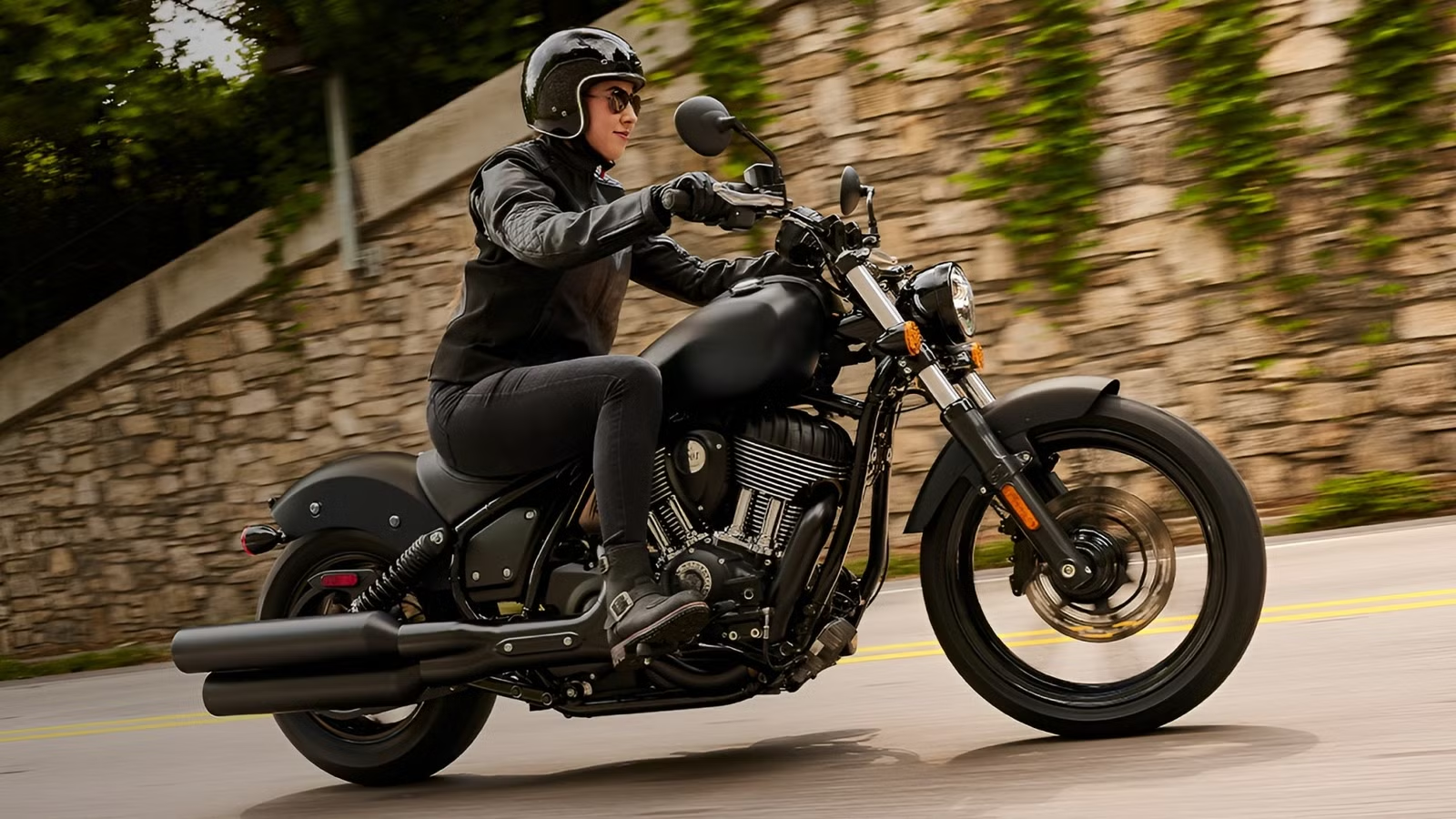
That motorcycle is the Indian Chief, which starts at $14,999 before destination charges and dealer fees. Its centerpiece is the air-cooled Thunderstroke 111 V-twin, displacing 111 cubic inches or 1,811cc and producing 77 to 84 horsepower (depending on trim and variant) and 108 pound-feet of torque. The engine is paired with a six-speed transmission, a wet multi-plate clutch, electronic fuel injection, and belt final drive. Meanwhile, the bigger and more premium Thunderstroke 116 displaces 1,890cc and pumps out between 80 and 95 horsepower and 120 pound-feet of torque.

The Chief keeps the rest of the package deliberately tidy. Its welded steel-tube frame leaves the Thunderstroke engine exposed rather than burying it beneath covers, while bobbed fenders, dual rear shocks, drag-style handlebars, and a solo saddle preserve the stripped-down look. Mid-mounted foot controls keep the riding position more neutral than the stretched-out ergonomics found on many heavyweight cruisers.
Suspension consists of a 46mm telescopic fork with 5.2 inches of travel and preload-adjustable dual rear shocks offering three inches. The Chief rolls on cast wheels measuring 19 inches at the front and 16 inches at the rear, wearing a 130/60 front tire and a wide 180/65 rear. Braking is handled by a single 300mm semi-floating front rotor with a four-piston caliper and a 300mm rear rotor with a two-piston caliper.
Convenience Tech Is The Chief’s Real Counterattack

The standard Chief doesn’t have Indian’s Ride Command touchscreen, which is an important distinction. Instead, it uses a four-inch analog speedometer with a multifunction digital display. Even so, it comes with three selectable ride modes, cruise control, keyless ignition, rear-cylinder deactivation, ABS, LED lighting, a USB charging port, and electronic fuel injection. Those features make it a practical modern cruiser even though its dashboard presentation remains intentionally traditional.
That leaves the two motorcycles with very different strengths. The Street Bob has the larger engine, more power, more torque, less running weight, and a considerably more sophisticated safety package. The Chief counters with keyless ignition, rear-cylinder deactivation, a larger fuel tank, more neutral mid-mounted controls, and an uncluttered design that puts its air-cooled engine right at the center of the experience.
The Indian doesn’t comprehensively out-equip the Harley at this price, but it does give buyers a legitimately different set of priorities. Anyone wanting Ride Command, connected navigation, Bluetooth pairing, music controls, call and text notifications, and the four-inch color touchscreen needs to move up to the Chief Dark Horse. That version starts at $18,499 and also swaps the 111 for the larger Thunderstroke 116.
The Chief Lineup Covers More Than One Kind Of Cruiser

The standard Chief is the simplest and least expensive expression of the platform, but Indian stretches the same basic architecture in several directions. The $17,499 Chief Bobber retains the Thunderstroke 111 while adding wire wheels, fork and shock covers, mini-ape handlebars, and a more traditional bobber stance. It’s aimed at riders who want more visual theater without moving immediately into the larger engine and touchscreen-equipped models.
The $18,499 Chief Dark Horse adds the Thunderstroke 116, producing a claimed 120 pound-feet, along with blacked-out finishes and the Ride Command touchscreen. The Chief Bobber Dark Horse applies that same 116-cubic-inch engine and connected display to the Bobber’s wire wheels, covered suspension, and taller handlebars, with pricing starting at $19,999.

The Sport Chief starts at $19,999 and turns the platform toward harder riding with a quarter fairing, a 43mm KYB inverted fork, Fox piggyback rear shocks, and dual four-piston Brembo front calipers gripping 320mm rotors. Its taller suspension raises the seat to 27 inches, increases available lean angle to 32 degrees, and brings running weight to 685 pounds. It’s still unmistakably a Chief, but one that has apparently been encouraged to spend fewer miles on the highway and more in the corners.
Indian’s touring-oriented branch begins with the Super Chief family at $21,999. These models add a quick-release windshield, saddlebags, floorboards, a passenger seat, and wire wheels, while retaining the Thunderstroke 116. The Chief Vintage starts at $19,999 and goes in the opposite visual direction with deeply valanced fenders, a floating-style saddle, wire wheels, a large headlight nacelle, and the illuminated Indian headdress ornament.
Moving Up The Chief Range Changes More Than Just The Badge

The most interesting thing about the Chief family isn’t simply how many versions Indian sells. It’s how dramatically the motorcycle’s purpose changes as equipment is added. The standard Chief is the stripped-back entry point, while the Dark Horse introduces the larger Thunderstroke 116 and Ride Command touchscreen. That jump doesn’t merely buy extra trim or darker paint. It turns a deliberately simple cruiser into a more connected and substantially stronger motorcycle.
The Sport Chief pushes the platform even further away from the traditional cruiser stereotype. Its inverted KYB fork, Fox piggyback shocks, dual Brembo front brakes, quarter fairing, and increased cornering clearance are intended for riders who plan to use the chassis rather than simply admire the engine. The Super Chief takes the opposite route by adding a windshield, saddlebags, floorboards, and passenger accommodations for riders who value distance and comfort over sharper responses.

That flexibility may be the Chief platform’s strongest argument. Indian hasn’t tried to make one motorcycle satisfy every cruiser buyer through an endless accessories catalog. Instead, it offers meaningfully different factory-built versions for bobber styling, performance riding, heritage appeal, and light touring. The $14,999 Chief is therefore less a finished statement than the foundation of a lineup that can become considerably more capable without losing its low seat, exposed engine, and unmistakably American proportions.
Source: Indian Motorcycle

Related posts

Latest Post


No Comments