
The Forgotten Shelby V8 Pickup That Bet On A Market That Didn’t Exist Yet
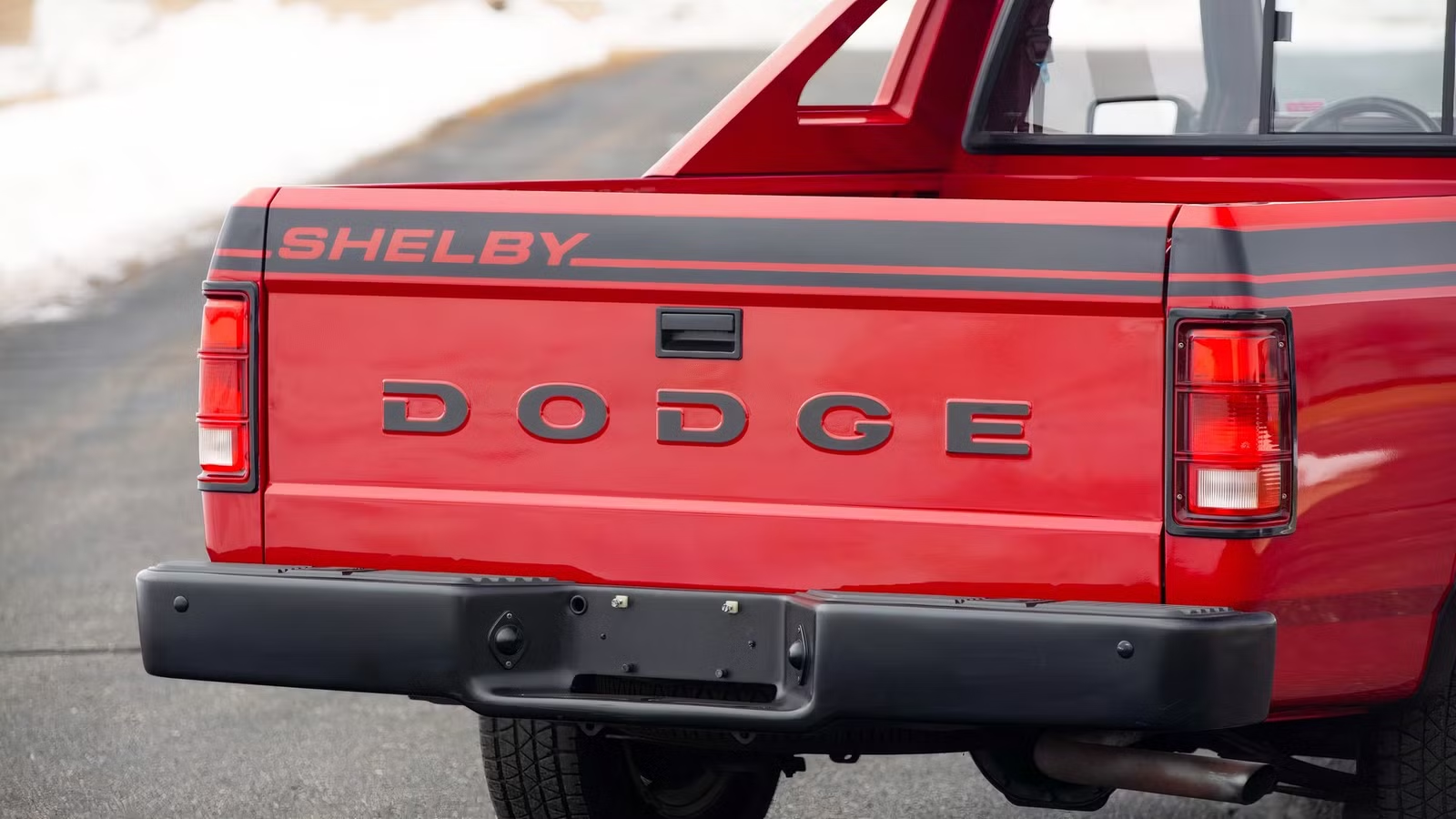
Today, performance pickups barely raise an eyebrow. Back in the late 1980s, however, the idea of putting a powerful engine in a small truck seemed like an expensive solution to a problem nobody had. Pickups were still mainly tools for hauling equipment, towing trailers, and getting work done. Carroll Shelby saw things differently—he believed a truck could offer more than practicality, especially if it had the right engine and attitude.
Why Carroll Shelby Started Looking Beyond Sports Cars

Carroll Shelby built his reputation with legendary machines like the AC Cobra and Shelby Mustang. However, his partnership with Chrysler during the 1980s took him in a different direction. Working with longtime friend and Chrysler boss Lee Iacocca, Shelby helped transform affordable front-wheel-drive Dodges into entertaining performance cars. Models like the Shelby Charger, Omni GLH, and GLHS relied on turbocharged four-cylinder engines, suspension upgrades, and relatively low prices. They offered genuine fun without the hefty price tags traditionally associated with Shelby’s name.
Meanwhile, pickup trucks were beginning to attract a different kind of buyer. Custom wheels, bold graphics, lowered suspensions, and other modifications were turning ordinary workhorses into personal vehicles. Some owners cared more about appearance and driving enjoyment than maximum payload. Shelby recognized an opportunity to bring his performance formula to a market that was still finding its identity.
The Small Dodge Pickup With One Major Limitation


Dodge‘s Dakota Sport seemed like an unlikely starting point. Introduced for 1987, the Dakota occupied the space between compact and full-size pickups. Its two-wheel-drive, regular-cab, short-bed configuration offered useful proportions for a street-oriented truck. However, its available 3.9-liter V6 produced just 125 horsepower, and Dodge didn’t offer a factory V8. Buyers wanting eight-cylinder power had to consider a larger truck or attempt an engine swap.
Unfortunately, installing a bigger engine wasn’t particularly straightforward. Although the Dakota offered more space than many compact rivals, its engine bay lacked the clearance needed for a conventional V8 installation. The radiator and cooling system presented the biggest obstacles. Shelby’s engineers needed to squeeze in a larger powerplant without sacrificing everyday usability or making the conversion too complicated. Fortunately, Chrysler already had a suitable engine in its parts catalog.
The 1989 Shelby Dakota Finally Put A V8 In A Midsize Pickup

The result was the 1989 Dodge Shelby Dakota, a limited-production performance version of the Dakota Sport and Shelby’s first rear-wheel-drive project under his Chrysler partnership. Offered for just one model year, it became the first production midsize pickup with a V8. Shelby replaced the 3.9-liter V6 with Chrysler’s Ram-sourced 5.2-liter (318-cubic-inch) V8. The engine produced 175 horsepower and 270 lb-ft of torque, with peak torque arriving at just 2,000 rpm. It wasn’t a powerhouse by muscle-car standards, but its low-end pulling power suited the pickup’s character.
Getting the V8 to fit required some clever engineering. Shelby replaced the conventional engine-driven cooling fan with twin electric fans mounted ahead of the radiator, freeing valuable engine-bay space. A four-speed automatic transmission delivered power through a 3.90:1 limited-slip rear differential. The result was a truck capable of reaching 60 mph in approximately 8.5–8.7 seconds and running the quarter-mile in around 16.5 seconds. Hardly breathtaking for something wearing a Shelby badge, but respectable for a late-1980s pickup. EPA fuel economy stood at 14 mpg city and 17 mpg highway.

The exterior made its performance ambitions obvious. Shelby added bold graphics, five-spoke aluminum wheels, a front air dam, and a bed-mounted light bar. Special upholstery, a Shelby-branded steering wheel, and numbered dashboard plaques distinguished the cabin. Buyers could choose Exotic Red or Bright White, with no other factory colors available. Production totaled approximately 1,500 units, although the Shelby Registry lists 1,475, including 995 red trucks and 480 white examples. Despite its sporty appearance, the Dakota retained much of the standard truck’s suspension hardware, making it more of a V8-powered street cruiser than a serious corner-carving machine.
A $16K Shelby Truck That Still Has An Unusual Collector Market

The Shelby Dakota originally carried a $15,813 MSRP, compared with approximately $11,293 for a standard Dakota Sport. That roughly $4,500 premium was substantial for buyers shopping for a relatively small pickup in 1989. They weren’t paying for greater hauling ability or better practicality. Instead, the extra money bought V8 performance, exclusive styling, and Shelby’s signature. The truck targeted enthusiasts who wanted something unusual rather than customers simply searching for inexpensive transportation.

Collector values remain surprisingly accessible, although one special example made headlines. Shelby Dakota Serial Number 1 eventually belonged to Carroll Shelby, who used it for personal transportation and as a shop vehicle. It sold for $39,600 at a Barrett-Jackson auction in January 2018. That price reflected its remarkable history rather than the typical market. In September 2025, a Bright White example showing 274,000 miles—with its actual total mileage uncertain—sold on Bring a Trailer for $13,018. Another example, finished in Exotic Red and showing 190,000 miles, brought $9,018 in April 2026.
The Shelby Dakota Arrived Before Performance Pickups Found Their Audience

The Shelby Dakota debuted in 1989, two years before the GMC Syclone and four years before the original Ford F-150 SVT Lightning. Those later trucks pushed performance much further. The 1991 Syclone combined a turbocharged 280-horsepower V6 with all-wheel drive, delivering acceleration that embarrassed many sports cars. Ford’s 1993 Lightning used a 240-horsepower 5.8-liter V8 and received dedicated chassis upgrades. Compared with those machines, Shelby’s 175-horsepower Dakota was fairly mild.
The Dakota’s most interesting achievement was conceptual rather than mechanical. It demonstrated that buyers could choose a pickup for its engine, appearance, driving character, and performance identity instead of its working abilities. Its limited production and substantial price premium suggest that the audience wasn’t particularly large in 1989. But the idea eventually became familiar as manufacturers embraced street-oriented performance trucks.
Source: Shelby, Chrysler, Dodge, Bring a Trailer, Shelby Registry

Related posts
Latest Post


No Comments