How Much It Costs To Replace A Lexus NX Hybrid Battery In 2026
8 minutes reading
Monday, 13 Jul 2026 12:00 0 86 autotech
Hybrid car demand is soaring to new heights in 2026, leading more consumers to ask what to expect from hybrids during long-term ownership. Hybrids are often more reliable than conventional internal combustion engines because the electric system shares load and reduces strain on the engine.
If you own a hybrid long-term, you will eventually need to replace the battery pack. This is typically the most expensive repair you’ll face during long-term ownership. An advantage of modern hybrids is that replacement batteries are substantially more affordable than when hybrids first appeared on the U.S. market.
2026 Is The Year Of The Hybrid For American Consumers
Close-up shot of 2026 Lexus ES 350h engine bayLexus
As of 2026, the demand for hybrid cars in the U.S. has reached a historic peak. This surge is primarily driven by a pivot among American consumers who seek significant fuel efficiency and lower emissions without the range anxiety or infrastructure hurdles currently associated with fully electric vehicles.
Over the last decade, hybrids have evolved from niche, economy-focused commuter cars into sophisticated, high-performance vehicles. Modern hybrids use advanced power electronics and lightweight materials to offer better acceleration and towing than gasoline-only predecessors. This effectively positions hybrids as the new mainstream choice for American consumers.
How Lexus Became The Hybrid Luxury Car Leader In The U.S.
Front 3/4 shot of 2026 Lexus RX parked on roadLexus
When it comes to gasoline-hybrid technology development, Toyota remains the undisputed leader. Lexus directly benefits from this technology, with additional refinements and performance enhancements. The Japanese group has always maintained a high level of commitment to hybrids across both brands.
Toyota’s philosophy has always been to incorporate multiple fueling methods, including hydrogen, diesel, and electricity. Hybrid models have increasingly become the driving force of its modern catalog. Consumers recognize the brand’s dedication to the more efficient drivetrain technology and have responded favorably. Over the last few quarters, the brand has reported considerable interest in its hybrid models as more car owners seek to lower their monthly fuel bill.
You’ll Spend Around $5,000 For A New Lexus NX Hybrid Battery
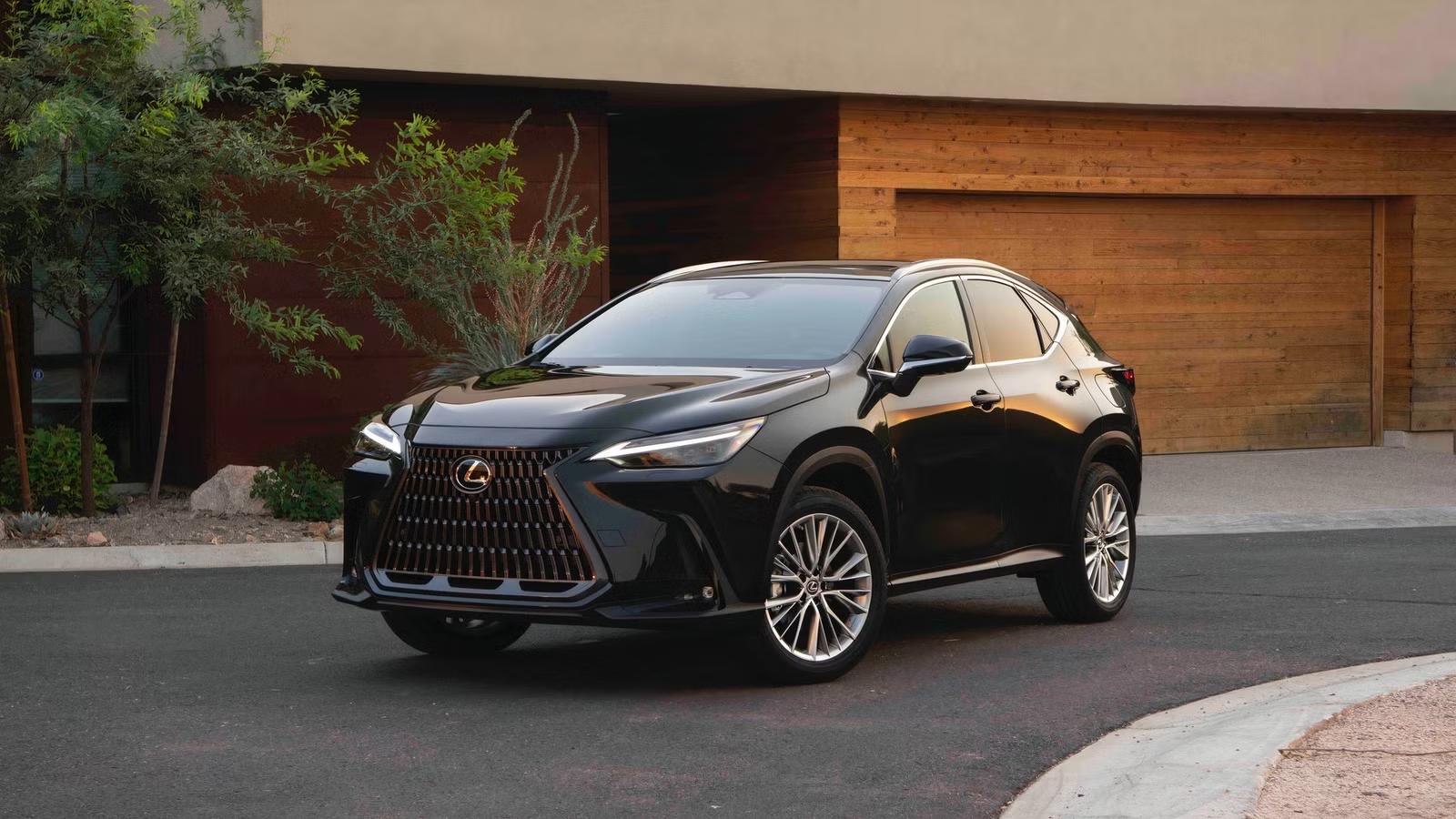
Front three-quarters shot of a 2026 Lexus NX Hybrid 350h parkedLexus
For owners of the 2026 Lexus NX Hybrid, dealership battery replacement costs remain a premium expense. This typically range between $5,000 and $6,000. While the latest model benefits from highly efficient lithium-ion technology, the labor and brand markup at authorized service centers drive these figures significantly higher than those of non-luxury counterparts. For those looking to avoid the luxury markup after their vehicle ages, the emerging third-party market is expected to offer compatible replacement packs starting under $2,000. This provides a much more manageable long-term ownership outlook.
Long-Term Costs Further Enhance Its Overall Ownership Appeal
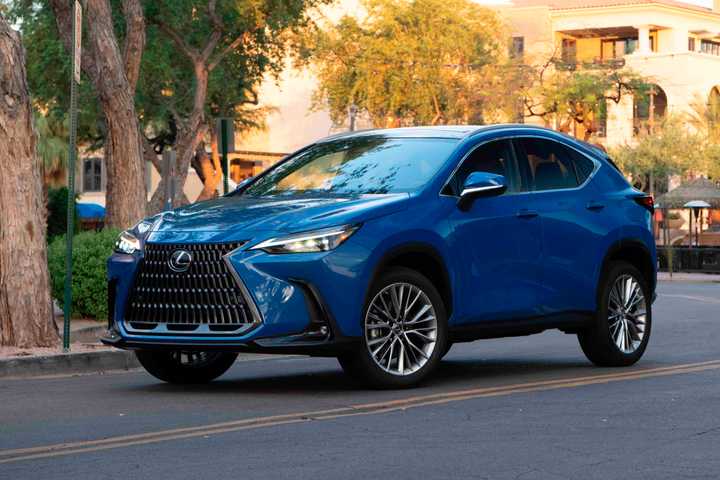
2026 Lexus NX front shotLexus
The 2026 Lexus NX Hybrid is the most well-rounded HEV SUV that you can consider within the $50,000 price point. Even against its more expensive rivals, it’s still a better option just based on accreditation alone. It gets an 83/100 overall score from J.D. Power, including an 85/100 quality and reliability score and an 81/100 driving-experience score.
On the depreciation front, iSeeCars indicates that the hybrid NX will lose $15,702 or 35.1 percent of its initial purchase value over the course of five years. This is substantially less than what other options in the segment are subject to. The Edmunds True Cost to Own calculator reveals that you can expect to spend $51,438 on your NX Hybrid over the course of five years. Some of these costs include $7,413 on maintenance, $956 on repairs, $18,759 on depreciation, and $7,768 on fuel.
The NX Hybrid range currently holds a 4.7/5 average score on the Edmunds Consumer Review section, consisting of 11 independent submissions. Key strengths include its driving experience, fuel efficiency, and manufacturing quality. The only standout flaw of the model is its glitchy infotainment system.
Toyota’s Impressively Trustworty Engine Design
Photo of the NX 350h badgeLexus
A big reason for the NX 350h’s class-leading reliability is in the ICE’s design, and it’s something that the Japanese company has perfected thanks to decades of extensive engineering. The Toyota Group applies the A25A-FXS 2.5-liter four-cylinder Dynamic Force powertrain to most of its mid-size HEV derivatives, showcasing its impressive and efficient versatility. Key features of this engine include a dual-direct-injection system as well as a port-injection EFI system to mitigate carbon build-up.
Improving thermal efficiency to about 41 percent is its longer stroke design, together with a wider angle between the intake and exhaust valves, a high-efficiency intake port with a laser-clad valve seat, and a high 14.0:1 compression ratio.
Toyota’s decision to forgo a conventional transmission and use a direct-drive eCVT unit further improves the car’s overall reliability, as it lowers the number of moving parts that require routine servicing.
In the event of any possible faults, Lexus covers all new NX 350h models with a 36-month or 36,000-mile bumper-to-bumper warranty. However, the 60-month and 60,000-mile powertrain and 120-month and 150,000-mile battery warranties are what really translate into the brand’s confidence in its hybrid system.
The Lexus NX Hybrid Is A Fuel-Saving Luxury SUV
Front 3/4 shot of 2026 Lexus NX parkedLexus
Lexus is one brand that executes a comprehensive hybridized catalog better than any other premium brand, thanks to Toyota’s guidance. The Lexus NX 350h is the best luxury hybrid SUV that you can consider in the brand’s current lineup if you are looking for a luxury SUV with good fuel consumption estimates that also balances luxury, practicality, and reliability. While the RX remains the premium Japanese brand’s volume seller, Lexus still manages to deliver an impressive number of NX units out every month, showcasing how many consumers value its balanced and well-rounded proposition.
The NX 350h is more specifically a well-rounded HEV SUV that benefits from impressive EPA fuel consumption estimates. The agency estimates that you’ll get to save up to $1,000 on fuel over the course of five years, based on the average American’s fuel bills.
The premium SUV brings in a 41/37/39 MPG consumption estimate on the city/highway/combined cycle and covers 556 miles on a single 14.5-gallon tank, with some help from a 0.9-kWh lithium-ion battery pack.
You can expect to spend $1,950 on fuel every year and spend $3.21 to drive 25 miles. A full tank of gas will cost you around $75. Opting for the more basic front-wheel drive model results in a 42/38/40 MPG consumption and 580 miles of range estimates. This model will save you $1,250 in fuel costs. You’ll spend $2,000 on fuel every year and $3.29 after driving 25 miles.
Taking Full Advantage Of Toyota’s Advanced HEV System
As noted above, the NX Hybrid features the brand’s naturally aspirated 2.5-liter four-cylinder engine connected to a pair of permanent-magnet synchronous motors that directly drive all four wheels via an eCVT system. This is the same drivetrain found in the 2026 Toyota RAV4 and Camry ranges, which explains its impressive reliability ratings.
Lexus claims that this produces a combined 240 horsepower, but does not declare a combined torque figure. The engine alone produces 163 pound-feet of torque, which helps it achieve a 2,000-pound towing capacity. The brand keeps things modest when it comes to performance, as the NX 350h only achieves a 7.2-second 0-60 MPH acceleration claim time and a limited 112 MPH top speed.
How Long The NX Hybrid’s Battery Will Last
An orange 2025 Lexus NX Hybrid SUV is driving. Lexus
A new hybrid vehicle’s battery pack will typically last between 100,000 and 200,000 miles or around eight to 15 years. This depends entirely on factors like your driving habits, climate, and maintenance. Most HEV manufacturers design hybrid batteries to withstand thousands of charge and discharge cycles without compromising efficiency. Some hybrid battery packs feature nickel-metal hydride, while others consist of the more resilient lithium-ion chemistry.
Lithium-ion batteries offer higher energy density but can be more sensitive to high temperatures, which can accelerate degradation. Drivers may notice signs of battery decline through reduced fuel economy, sluggish acceleration, or warning lights on the dashboard, but the vehicle’s internal diagnostics usually indicate when replacement is necessary.
Signs To Notice When The Battery Pack Begins To Reach The End Of Its Life
Extreme high angle shot of gray 2025 Lexus NX Hybrid small hybrid SUV parked in cityLexus
A hybrid vehicle’s battery capacity gradually declines due to a combination of chemical degradation and usage patterns. This degradation is completely dependent on the vehicle and how far it has been driven, but the symptoms will remain the same across the segment. With time and use, the lithium-ion or nickel-metal hydride cells within the battery pack experience wear as a result of repeated charging and discharging cycles. This causes the electrodes to deteriorate and the electrolyte to break down. Factors like high temperatures, rapid acceleration, and frequent deep discharges accelerate this process.
An HEV’s battery management system plays a role in regulating voltage and temperature, but as the cells age, this system becomes less effective at balancing the charge between individual cells, leading to uneven wear. After 200,000 miles, a hybrid battery typically loses between 20 and 30 percent of its original capacity, depending on driving habits and environmental conditions.
Base Trim Engine
2.5L I4 Hybrid
Base Trim Transmission
2-speed CVT
Base Trim Drivetrain
Front-Wheel Drive
Base Trim Horsepower
189 HP @6000 RPM
Base Trim Torque
179 lb.-ft. @ 4300 RPM
Base Trim Battery Type
Lithium ion (Li-ion)
Make
Lexus
Model
NX
Segment
Compact Luxury SUV
Sources: Lexus, J.D. Power, iSeeCars, Edmunds, and the EPA.











No Comments