
BMW Is Pushing In-Car Spider-Man Ads On Owners Who Already Paid For The Car — And They’re Furious
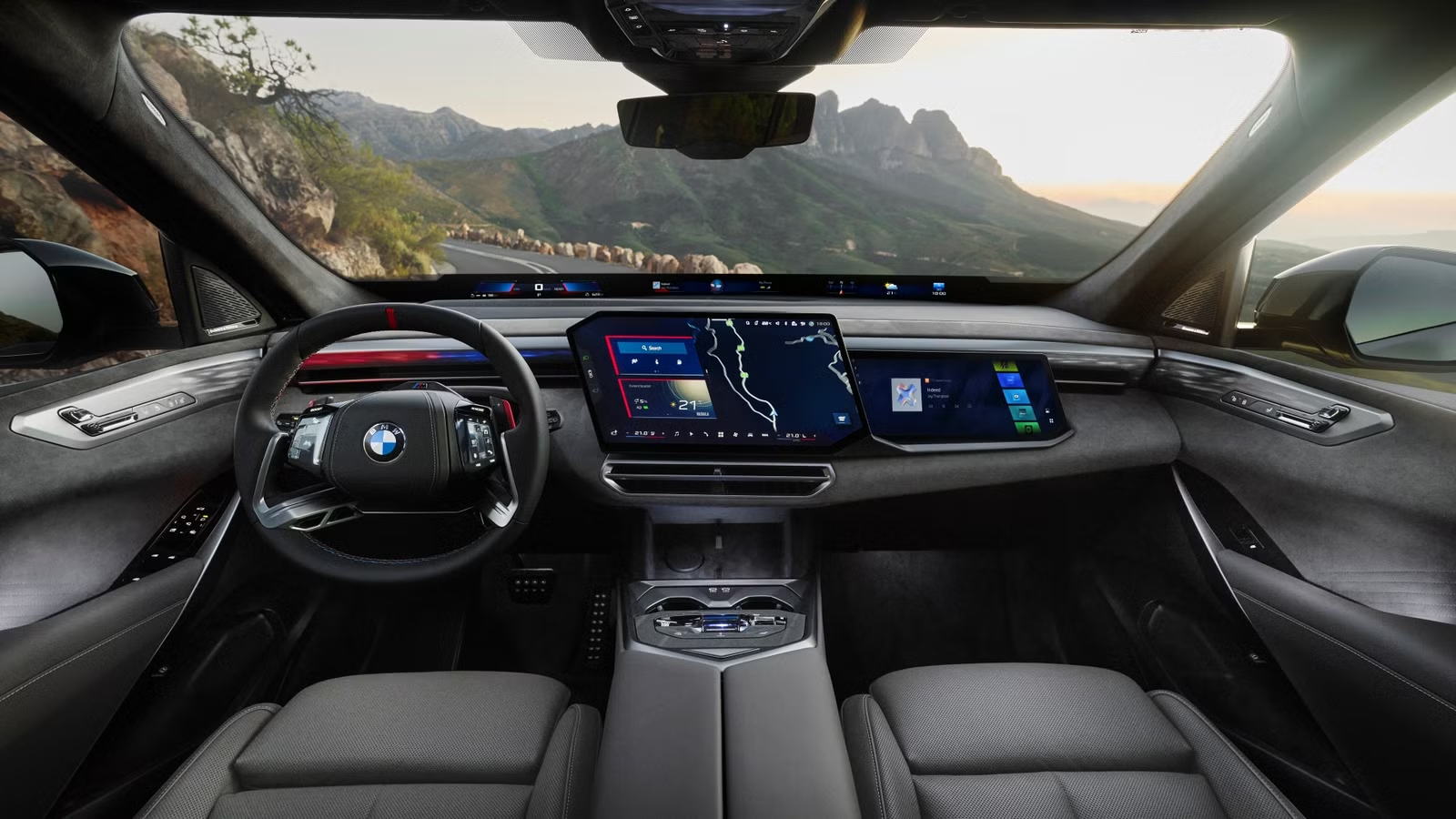
BMW owners who paid anywhere from $50,000 to $160,000 for their vehicles started their cars last week and found something unexpected on the iDrive screen: a promotional banner for Spider-Man: Brand New Day. Tap it, and the center display hands itself over to a full-screen 19-second animation with a custom soundtrack and a coordinated ambient lighting show. BMW called it a “special surprise.” Owners had other words for it.

The campaign, a partnership between BMW, Sony Pictures, and Marvel, began July 27 and runs through August 10, 2026, reaching vehicles built after July 2020 and running BMW Operating System 7, 8, 8.5, 9, or X across more than 70 markets. The backlash has been swift. Reddit’s r/BMW forum filled with comments ranging from “insanely dystopian” and “sounds like a Black Mirror episode” to blunter expressions of anger. One owner put it plainly: “$130K to get a Spider-Man commercial.” The frustration is sharpened by a specific promise BMW made less than three years ago — one the company is now struggling to square with what just landed on its customers’ dashboards.
BMW’s 2023 Promise and the Contradiction Now Playing on Your Screen
In December 2023, Stephan Durach, BMW Group’s senior vice president for connected company development, addressed the idea of selling dashboard screen space at an industry roundtable. His position was unambiguous: “To say I’m selling the screen to play a commercial — I don’t see it. It’s a private space.” Those comments came in the wake of BMW’s heated-seat subscription controversy, in which the automaker charged owners a monthly fee to activate heated seats already physically installed in their cars. BMW eventually abandoned that program following a predictable customer revolt.

Now, less than three years later, a Hollywood studio’s branding occupies the first thing owners see when they start their cars. BMW’s defense is carefully worded: the company insists the Spider-Man animation is “part of a broader brand partnership with the film” rather than traditional advertising, noting that the BMW iX3 and 5 Series are both woven into the film’s plot and that a special-edition iX3 appeared on the red carpet at the Los Angeles premiere. A spokesperson told multiple outlets that the content is “only visible to drivers who proactively initiate it on their vehicle’s touch screen” — though owners point out the banner itself appears automatically on startup, requiring a deliberate skip before they can access the screen they use every day.
A Dual Monetization Play: Inside the Film and Inside Your Car

The Spider-Man tie-in is more layered than a simple ad buy. BMW’s partnership with Sony and Marvel runs in multiple directions simultaneously. The iX3 and 5 Series appear in the film’s plot — including a scene where Spider-Man (Tom Holland) finds himself in a civilian’s BMW and activates Sport Mode. BMW also created a one-off iX3 Flow concept with E Ink Prism exterior panels that animate in Spider-Man’s color scheme, displayed at BMW Welt in Germany. The brand’s M Hybrid V8 GTP race car ran a Spider-Man livery at Road America the same weekend the film opened.
For BMW, the in-cabin animation is the consumer-facing end of a 360-degree marketing arrangement. For owners, it’s the part they didn’t agree to. The distinction critics keep returning to is that traditional product placement is a one-way street — the car appears in the movie. This campaign runs the other direction, pushing the movie back into the car after the sale is complete.
BMW Isn’t Alone — But It Set the Clearest Precedent

The broader industry context makes BMW’s situation a flashpoint rather than an isolated incident. Tesla ran in-car promotions for the Tron film in 2025. Stellantis drew criticism in 2024 and 2025 when advertisements appeared on Jeep, Ram, and Fiat infotainment screens — the company initially blamed some on software errors while describing others as owner notifications, with customers enrolled by default and required to opt out. Ford filed a US patent application in 2024 titled “In-vehicle advertisement presentation systems and methods,” describing a system that uses vehicle speed, drive mode, location, and route prediction to determine ad delivery — and that would infer user preferences partly from audio signals captured inside the cabin. Filing a patent isn’t a product launch, but it is a written record of where an engineering team’s thinking is headed.
What makes BMW’s case distinct is the explicit executive promise that preceded it, and the luxury price point involved. Owners of a $100,000-plus vehicle have a reasonable expectation that the purchase price covers the full ownership experience. The software-defined vehicle era is quietly renegotiating that assumption, and BMW’s Spider-Man campaign — however BMW chooses to categorize it — is the most visible proof of concept yet that the cabin can be monetized long after the keys change hands. The promotion disappears August 10. The question of what comes next does not.

Related posts




Latest Post


No Comments