
10 BMW Motorcycles Worth Every Penny
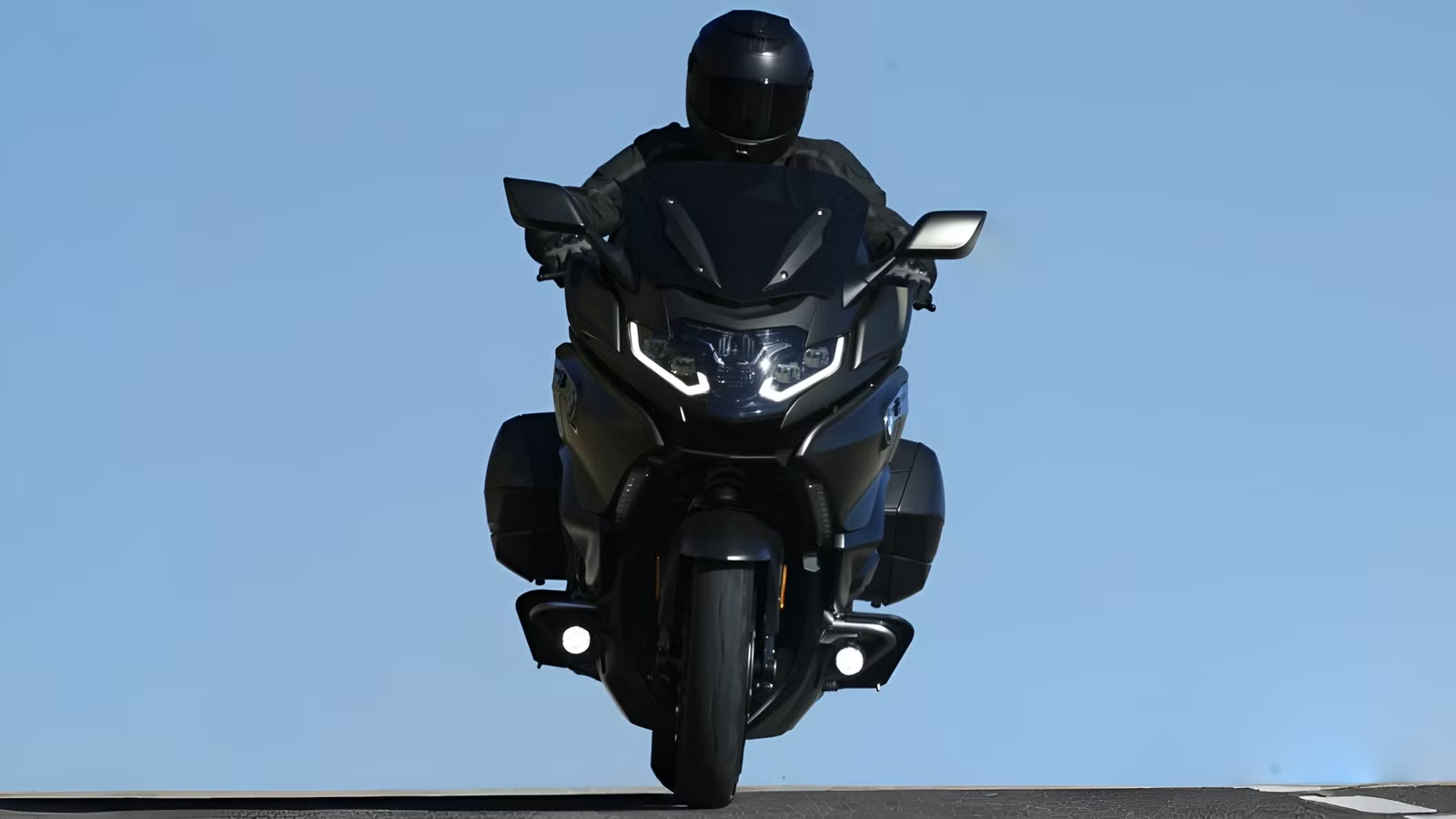
In the American motorcycle market, BMW Motorrad offers one of the most diverse lineups of bikes. These range from luxury tourers to do-it-all adventure bikes to retro-vibing roadsters and track-going monsters. At the same time, BMW surprisingly keeps the value quotient in check (particularly from a European bikemaker context), and most of its bikes are worth each penny you pay. We’re talking about 10 such bikes, ranging from touring bikes with Japanese reliability to adventure bikes that excel at everything. There’s something for everyone here.

This list is organized in descending order of pricing.
2026 K 1600 GTL
Price: $29,995
BMW offers the best of two-wheeled luxury, comfort, and performance with the K 1600 GTL. This full dresser brings the best of “big” American luxury charm with sophisticated technology to offer a surprisingly versatile land yacht. A unique six-cylinder engine powers the K 1600 GTL. This 1,649 cc mill produces 160 horsepower at 6,750 RPM and 132.7 pound-feet at 5,250 RPM. Power is sent to the rear wheel via a six-speed manual coupled to a final shaft drive system.

For the chassis, a cast-aluminum bridge-type frame is present. It is suspended on BMW’s famed Duolever front suspension with a central spring strut and 4.5 inches of travel. The rear gets the Paralever setup, coupled to a cast-iron single-sided swingarm and 5.3 inches of travel. Technology features are galore, too. Notable ones include a huge 10.25-inch TFT, a four-button cluster for custom functions, dynamic traction control, three ride modes, dynamic electronic suspension, hill start control, heated grips and seats, and an audio system, among others.

2026 K 1600 B
Price: $24,975

This is arguably the most value-packed luxury touring motorcycle, and it undercuts the Honda Gold Wing, despite being more powerful. The 1,649 cc mill mentioned above is present here as well, in the same exact tune. Power is sent to the rear wheel via a six-speed manual and a final shaft drive neatly hidden in its single-sided swingarm. The chassis is also similar to the GTL, featuring the bridge-type cast aluminum frame.

As for suspension, the front gets a double-wishbone (Duolever) with 4.5 inches of travel. The rear gets a monoshock (Paralever) setup with 5.3 inches of travel. The suspension offers electronic adjustability and even an automatic load-leveling feature. There is no dearth of top-spec technology. The K 1600 B gets a huge 10.25-inch TFT with a wide range of connectivity and integrated map navigation features. Other notable features include three ride modes, dynamic traction control, hill start control, and engine brake control, among others.
2026 R 1300 RT
Price: $22,645

This futuristic-looking touring bike makes luxury feel practical. The same boxer twin powers the R 1300 RT as on the go-anywhere R 1300 GS. The 1,300 cc mill produces 145 horsepower at 7,750 RPM and 110 pound-feet of torque at 6,500 RPM, sent to the wheel via a six-speed manual gearbox coupled to a final Cardan shaft drive system for added durability.

Underpinning the R 1300 RT is a two-part frame with the engine utilized as a stressed member. It is suspended on BMW’s famed Telelever front and Paralever rear suspension setups with 5.8 inches of front and 6.2 inches of rear travel. Adding to its versatility is a factory-adjustable seat, solid wind protection, and commendable technology. Notable features include keyless ride, dynamic electronic stability control, heated grips, and a gorgeous-looking 10.25-inch TFT with Bluetooth navigation as standard.
2026 R 1300 GS
Price: $20,395

This BMW adventure bike is famed for being a flagship that can do it all exceptionally well. Powering the flagship GS is the 1,300 cc liquid-cooled mill, which produces 145 horsepower at 7,750 RPM and 110 pound-feet at 6,500 RPM. Power is sent to the rear wheel via a standard six-speed manual with a final Cardan shaft drive system. It can also be equipped with an optional automatic transmission.

Underpinning the R 1300 GS is a sophisticated setup. It comprises a pressed-steel main frame utilizing the engine as a stressed member. It is suspended on a double-wishbone suspension setup up front with 7.5 inches of travel. The rear gets a link-type monoshock with 7.8 inches of travel. BMW has loaded the R 1300 GS to the brim with technology features. Notable ones include four ride modes, dynamic traction control, dynamic brake control, dynamic cruise control, and hill start control. The dashboard comprises a sizable 6.5-inch TFT.
2026 S 1000 RR
Price: $19,895

The BMW S 1000 RR is a surprisingly affordable sports bike that is cheaper than a Honda Fireblade. Powering the S 1000 RR is a proven inline-four engine that produces 205 horsepower at 13,000 RPM and 83 pound-feet of torque at 11,000 RPM. It is coupled to a WSBK-derived quick throttle as standard as part of its latest update.

Underpinning the flagship BMW sportbike is a lightweight twin-spar aluminum frame, coupled to a race-derived aluminum swingarm and subframe. The frame is suspended on 45 mm inverted front forks with 4.7 inches of travel, alongside a monoshock with 4.6 inches of travel. Both ends offer full adjustability. Cutting-edge technology such as six ride modes, pit lane limiter, launch control, dynamic traction control, wheelie control, and slide control is present, too.
2026 S 1000 XR
Price: $18,825

This BMW crossover feels worth every dollar because it blends urban mobility, highway runs, and even spirited mountain sessions so seamlessly. The S 1000 XR packs a proper superbike engine derived from the S 1000 RR. The 999 cc liquid-cooled inline-four mill produces 170 horsepower at 11,000 RPM and 84 pound-feet of torque at 9,250 RPM. Power is sent to the rear wheel via a six-speed manual gearbox.

Underpinnings comprise a bridge-type cast aluminum frame, using the engine as a load-bearer, suspended on long-travel springs. The front gets 45 mm inverted forks with 5.9 inches of travel, and the rear comprises a monoshock with 5.9 inches of travel. Its electronic, self-adjusting rebound settings at both ends instill sharp cornering confidence. Technology features are plentiful and stitch its do-it-all character together.
2026 R 12 G/S
Price: $16,995

This is BMW’s arch-nemesis to the Triumph Scrambler 1200. The R 12 G/S is powered by a mighty 1,170 cc boxer twin engine with 109 horsepower at 7,000 RPM and 85 pound-feet of torque at 6,500 RPM. Power is sent to the rear wheel via a six-speed manual gearbox coupled to a final Cardan shaft drive system for added durability.

The engine sits in a tubular space frame and is suspended on long-travel suspension. The front gets 45 mm inverted forks with 8.2 inches of travel, and the rear gets a monoshock with 7.8 inches of travel. Both ends are fully adjustable. This is further complemented by durable aluminum cross-spoke wheels wrapped with all-terrain tires. The R 12 G/S gets a slew of assistive technology features. Notable ones include riding modes, dynamic traction control, cornering ABS, dynamic engine brake control, and partial integral brake system.
2025 R 18
Price: $15,395

This classic cruiser bike matches the essence of American big twins but with a unique twist: a large air-oil-cooled boxer-twin engine instead of a V-twin. In fact, it is the largest production motorcycle flat twin until the much-anticipated production-spec R 20 breaks cover. The 1,802 cc mill produces 91 horsepower at 4,750 RPM and 120 pound-feet of torque at 3,000 RPM.

Adding to its heavy-duty outlook is a double-loop steel main frame with bolted beams. A twin-sided steel swing arm is part of the chassis and adds to its stretched-out stance. The R 18 gets telescopic forks up front with 4.7 inches of travel. The rear comprises a hidden monoshock that seems to be strongly inspired by the Harley Softail series. Owing to its old-school charm, BMW has added very little technology to the R 18, with notable features being LED lighting and a USB Type-C port only.
2026 S 1000 R
Price: $15,385

This is a gravely overlooked BMW naked bike that offers grin-worthy performance at a bargain price. It is powered by the same 999 cc inline-four liquid-cooled engine as the S 1000 RR, but subtracts the ShiftCam for a more peaky output of 170 horsepower at 11,000 RPM and 84 pound-feet of torque at 9,250 RPM. Power is sent to the rear wheel via a six-speed manual gearbox coupled to a standard slipper clutch.

The chassis components are also S 1000 RR derived, featuring inverted 45 mm forks up front with full adjustability and 4.7 inches of travel and a fully adjustable monoshock with 4.6 inches of travel. With a curb weight of as low as 432.1 pounds, the power-to-weight ratio is commendable on this Beamer. The S 1000 R is further tamed with a slew of top-spec electronics, such as M Quick action throttle, engine drag torque control, and three riding modes. BMW also packs a TFT display with smartphone connectivity as standard fitment.
2026 F 900 GS
Price: $14,395

This BMW adventure bike balances ruggedness, comfort, and versatility. The F 900 GS takes flight in the heated middleweight segment and shines bright. A versatile 270-degree parallel-twin engine powers it. This liquid-cooled 895 cc mill produces 105 horsepower at 8,500 RPM and 68.6 pound-feet of torque at 6,750 RPM. As for the chassis, you get a bridge-type main frame coupled to a steel bolt-on subframe and a cast aluminum twin-sided swingarm.

This is coupled to 43 mm inverted front forks with full adjustability and 9.05 inches of travel. The rear gets a monoshock with preload and rebound adjustability and 8.46 inches of travel. To match its go-anywhere attitude, it gets a 21/17-inch spoked wheel combination wrapped around all-purpose tires. The technology suite is stacked with notable features like dynamic traction control, a standard Akrapovic sport muffler, rain and road riding modes, heated grips, and a 6.5-inch TFT with Bluetooth connectivity.
Source: BMW Motorrad

Related posts

Latest Post


No Comments