
The Premium Touring Bike That Now Costs Less Than You’d Expect
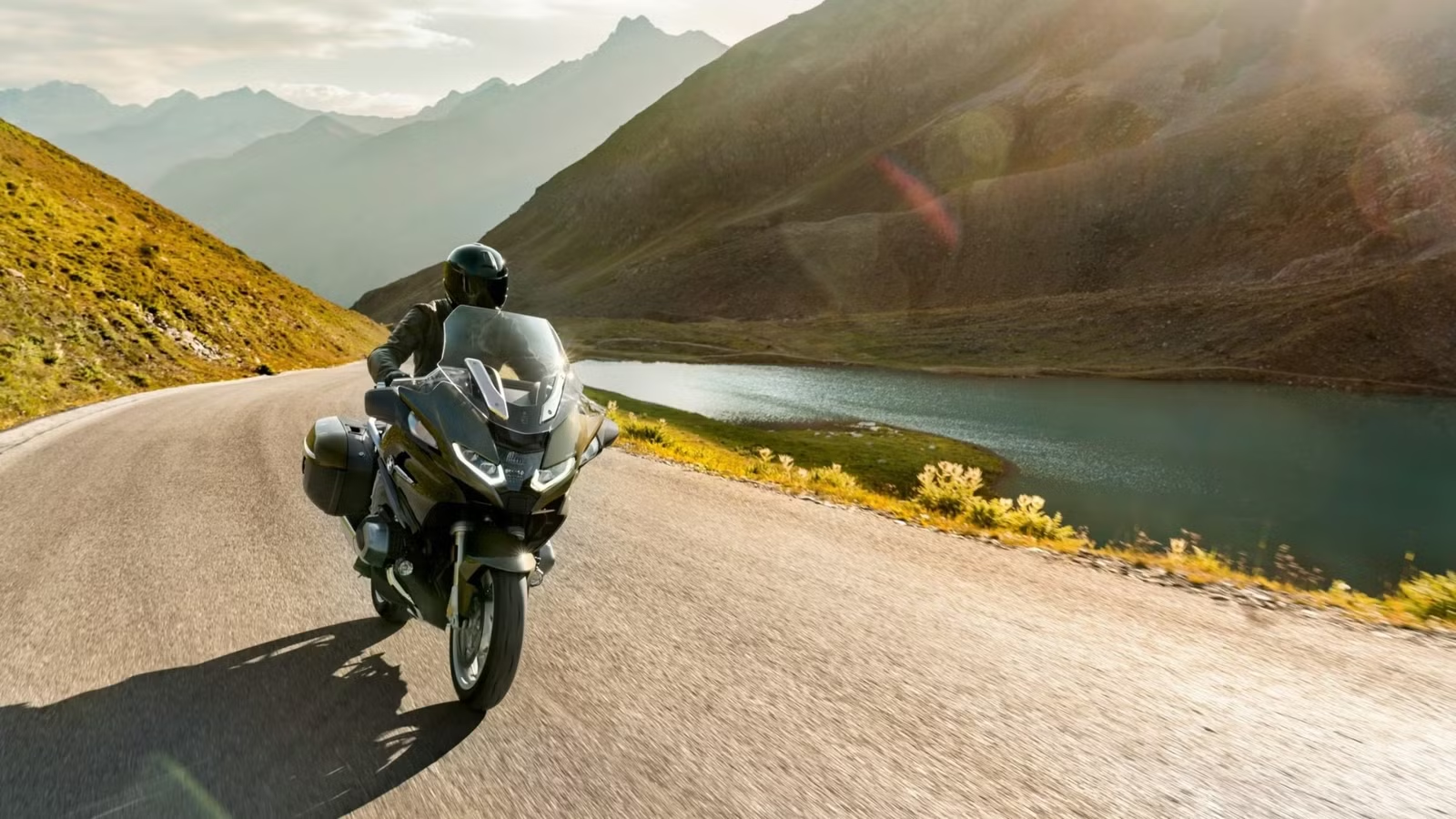
Premium touring motorcycles promise the two-wheeled equivalent of business class, with expansive wind protection, generous luggage capacity, sophisticated suspension, heated comforts, and enough technology to make a midsize car look poorly equipped. The problem is that buying one new can require luxury-car money, especially once the options catalog begins doing what options catalogs do best. The one way to save some money is the used market, and there’s a great bargain you can enjoy in 2026. Oh, and it’s from Bavaria!
Luxury Touring Motorcycles Are Expensive For A Reason

A proper luxury tourer isn’t merely a large motorcycle with some bags bolted to the rear. It needs to isolate its rider from wind, rain, vibration, bad pavement, and the steady accumulation of fatigue that turns an ambitious road trip into an endurance test. That means a large fairing, an adjustable windshield, relaxed ergonomics, substantial passenger accommodations, integrated luggage, cruise control, heated contact points, and suspension that can adapt to changing loads.
Modern versions add large displays, connected navigation, audio systems, electronically adjustable damping, radar-assisted rider aids, central locking, keyless ignition, and enough configurable settings to keep someone occupied until lunch. None of that comes cheaply. More equipment means more weight, greater mechanical complexity, and more expensive parts hiding beneath layers of bodywork. Start adding factory packages, and the cost can climb well beyond the motorcycle’s already imposing base price.
Depreciation Turns Yesterday’s Flagships Into Today’s Bargains

Fortunately, luxury motorcycles don’t always retain luxury prices. Large touring machines tend to appeal to a narrower group of buyers than adventure bikes, cruisers, or fashionable middleweights, while their size can intimidate anyone who rarely leaves the city. Older electronics also lose showroom appeal quickly, even when their actual functions remain perfectly useful.

That creates an opportunity for riders who care more about crossing states than impressing a dealership parking lot. The motorcycle may be several generations old, but its protective fairing, luggage, shaft drive, passenger seat, and highway manners haven’t expired. The real trick is understanding what changed between generations.
The Best Touring Bargain Needs To Do More Than Carry Luggage

A genuine used-bike bargain still has to perform like the premium machine it once was. It needs effortless highway power, useful weather protection, stable handling when loaded with a passenger and luggage, and manageable behavior when the speedometer drops toward walking pace. It should also be enjoyable once the interstate ends, because spending all day on a motorcycle that handles like a hotel minibar isn’t anyone’s idea of a grand tour.
That balance eliminates plenty of cheap heavyweight tourers. Some are comfortable but cumbersome, while others are sporty enough on a mountain road but compromise passenger space or wind protection. The sweet spot is a motorcycle with a low-mounted engine, a stable shaft-drive chassis, unusually composed front suspension, and decades of development behind its touring formula. Better still, its age has created several entry points, from genuine sub-$7,000 bargains to newer examples with radar cruise control.
The BMW RT Is The Premium Touring Bike That Now Costs Much Less Than You’d Expect

That motorcycle is the BMW RT family, particularly the used R 1200 RT and R 1250 RT. Rather than relying on a massive six-cylinder engine or a traditional V-twin, the RT uses BMW’s horizontally opposed boxer twin. Its cylinders sit low and wide, helping keep the center of gravity manageable, while shaft drive removes the need to clean, adjust, or lubricate a chain during a long trip.
Older R 1200 RTs can now cost less than $7,000, with current US listings placing the model’s average used price at roughly $7,500 and individual examples dipping below $3,000. Cleaner, newer, and lower-mileage bikes command considerably more. Used R 1250 RT pricing is broader, but many 2019-to-2022 examples sit around $13,000 to $16,000, with mileage, equipment, and model year creating some enormous swings.

Both versions provide the core RT experience: a large protective fairing, electrically adjustable windshield, integrated side cases, upright ergonomics, cruise control, shaft drive, and BMW’s Telelever front suspension. The design separates much of the braking load from the suspension movement, reducing dive and helping the motorcycle remain composed. Once rolling, the RT can feel far smaller than its bodywork suggests, which is where the sport-touring half of its personality begins showing up.
The R 1200 RT Is The Cheaper Way Into BMW’s Touring Experience

The R 1200 RT name covers more than one generation, so shopping purely by badge is a risky shortcut. Early bikes used BMW’s air- and oil-cooled boxer, while the major 2014 redesign introduced partial liquid cooling, a different chassis, updated bodywork, and a much stronger electronics package. The older motorcycles are generally the ones found comfortably beneath $7,000, while late liquid-cooled examples can still sell for well above $10,000.
The 2014-to-2018 R 1200 RT used a 1,170 cc boxer producing 125 horsepower and 92 pound-feet, paired with a six-speed transmission and shaft final drive. Depending on year and specification, equipment could include Dynamic ESA electronic suspension, selectable riding modes, Hill Start Control, Gear Shift Assist Pro, heated grips, heated seats, keyless ignition, central locking, audio, and navigation preparation.
That liquid-cooled engine matters because it made the RT quicker, smoother, and more responsive without sacrificing its relaxed touring character. However, the earlier air- and oil-cooled bikes remain compelling when priced correctly. A tidy older RT with complete maintenance records can provide an absurd amount of motorcycle for the money, while a suspiciously cheap liquid-cooled example with neglected servicing may simply be an invoice wearing two wheels.
The R 1250 RT Adds ShiftCam Power And Newer Technology

BMW replaced the R 1200 RT with the R 1250 RT for 2019. Its larger 1,254 cc boxer introduced ShiftCam variable valve timing and lift, increasing output to 136 horsepower and 105 pound-feet. The improvement wasn’t only visible on a specification sheet. The 1250 delivered stronger low- and midrange response, smoother part-throttle behavior, and easier acceleration with a passenger and full luggage.
The extra torque means fewer downshifts when overtaking or climbing, while the broader power delivery makes the motorcycle less demanding in ordinary riding. Early 2019 and 2020 bikes retained the older cockpit layout, but BMW heavily updated the RT for 2021 with a 10.25-inch TFT display, LED lighting, revised bodywork, integrated navigation functions, and optional Active Cruise Control.

That makes the 2021-and-newer R 1250 RT the more convincing choice for riders who value a modern interface and radar-assisted cruising. It’ll generally cost around twice as much as an older R 1200 RT, but it also bridges much of the technological gap between a bargain used tourer and a current luxury motorcycle. The 1200 wins the value contest, while the 1250 makes a stronger case as the motorcycle you’ll keep for years.
Word Of Warning: Few Things Are More Expensive Than A Cheap BMW
A low asking price shouldn’t distract from the cost of putting a neglected luxury motorcycle right. Look for complete maintenance records and evidence of regular engine-oil, brake-fluid, transmission, and final-drive servicing. Test the electronic suspension, windshield mechanism, heated equipment, switchgear, central locking, luggage latches, display, audio, and every fitted rider aid. Parking-lot drops can also damage mirrors, cases, cylinder-head covers, and expensive painted panels.
Equipment varied significantly by year and package, so two visually identical RTs may have very different specifications. Confirm whether the motorcycle actually includes Dynamic ESA, keyless ignition, heated seats, central locking, audio, navigation preparation, Gear Shift Assist Pro, and radar cruise control rather than trusting an optimistic classified listing. The VIN should also be checked through BMW or the appropriate government recall database for outstanding campaigns.

High mileage isn’t automatically bad news on a motorcycle designed to devour highways. A regularly serviced RT with 60,000 miles may be a safer purchase than a low-mileage bike that spent years parked with old fluids, aging tires, and a battery tender doing all the emotional labor. Condition, history, ownership, and maintenance matter more than finding the smallest number on the odometer.
Source: BMW Motorrad

Related posts


Latest Post


No Comments