
The Most Reliable Performance Engine Nobody Talks About
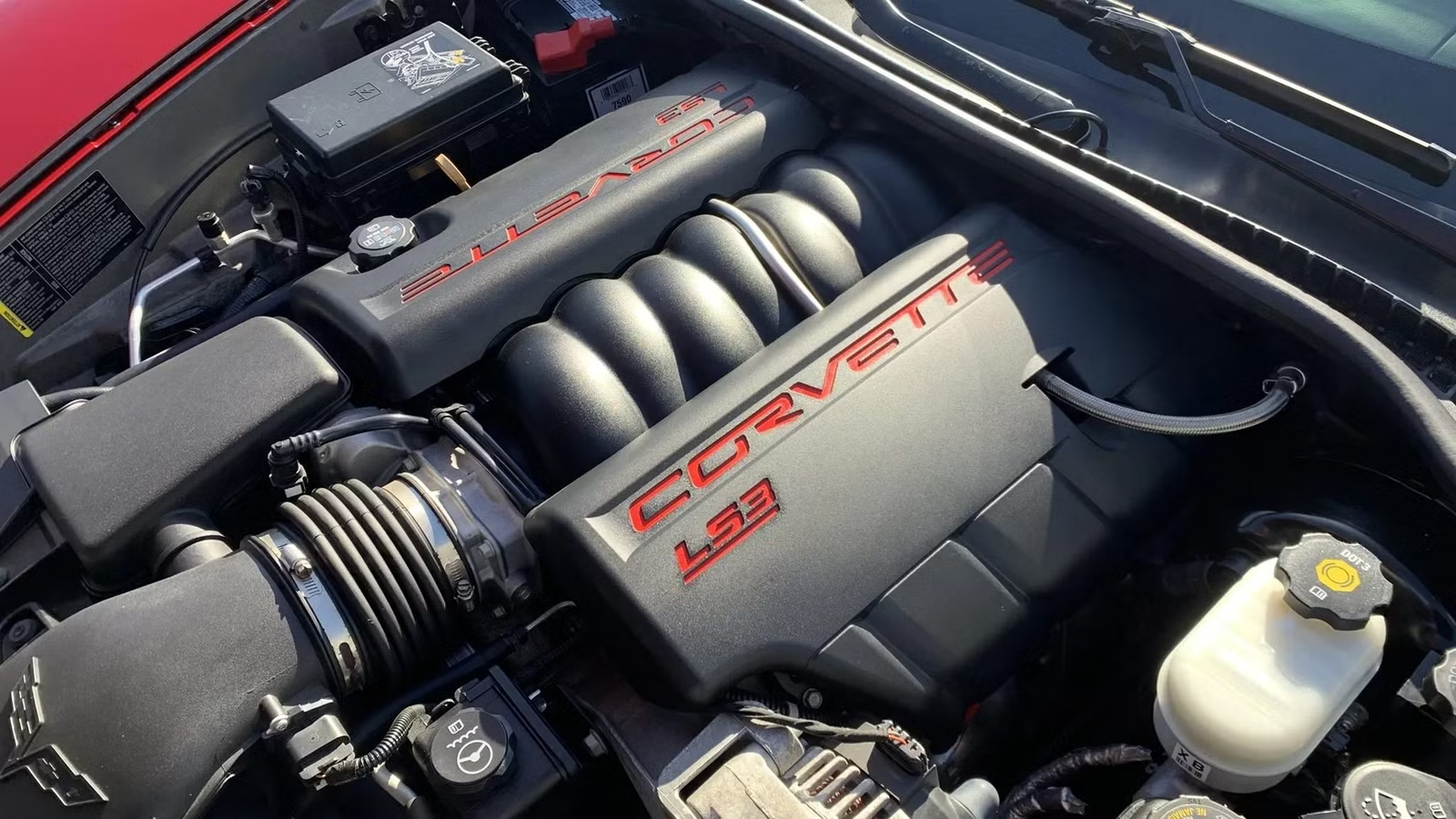
Get into the driving seat of almost any modern high-performance machine, push the start button, and watch the car come alive with a swipe on the dashboard. Smash the gas pedal, and a wave of power will instantly pin you back, but something feels off, almost unnatural; all that power is computer-managed, devoid of driver skill. As the speed settles into a while of exhilarating rush, you realize the true analog, mechanical soul is missing.

Instead, you are treated to an artificially synthesized exhaust note pumped directly into the cabin from the speakers. The thrill of acceleration fades as you realize you are not in an analog driving machine but a computer-controlled appliance that makes you feel like a race car driver even without trying too hard. This is the sad reality of automotive performance today. We live in a golden age of sheer spec-sheet numbers that would put hypercars from a couple of decades ago to shame. But beneath the plastic engine covers of today’s cars, you will most likely find a quiet, high-strung, fragile engine.
To meet today’s emission standards and fuel-efficiency targets, manufacturers have compromised long-term mechanical durability and robust performance. But there was one engine built to be modern enough yet free from all the troubles that worry today’s performance engines. An all-aluminum power plant that was the absolute peak in high output and mechanical reliability. It belonged to a family everyone knows, yet this specific engine was overlooked and overshadowed by its cheaper cousins and flashy twin-turbocharged descendants that followed.
The Fragile Reality of Modern High-Horsepower Powertrains

To understand why modern performance cars have reliability issues, you don’t have to look any further than a peek at the engine bay and the compromises it entails. Performance engines were once defined by robust, heavy-duty components designed to withstand continuous stress at high loads. Today, the reality is quite different; these engines are as fragile and under extreme stress as manufacturers try to squeeze every bit of horsepower from the smallest of displacement engines. That led to modern engines becoming impossibly complex.
Multi-stage Variable Valve Timing and variable lift systems are examples of these complex technologies. While excellent on paper, these systems rely on delicate, oil-pressure-activated CAM phasers that are notoriously prone to premature wear. Furthermore, the new obsession with cylinder-deactivation systems has placed additional stress on these already overworked engines, with complex internal workings, not to mention direct-injection systems that choke the valves’ intake. And the huge amount of heat generated under the hood by the twin turbochargers leads to premature part degradation.
The Mid-2000s Resistance That Ignored the Trend

In the mid-2000s, the performance powertrain landscape was at a historical crossroads. Global manufacturers were beginning to move towards small-displacement forced-induction engines to meet global emissions mandates. But amongst those, a manufacturer opted to double down on a completely different philosophy. Global automotive sentiments dismissed the classic American blueprint of a lightweight, small-block pushrod engine as an antique and a relic.
But a few engineers in Detroit asked an interesting question: what if they didn’t abandon the simple design but instead perfected its geometry, airflow, and metallurgy using modern manufacturing processes? They understood that an overhead-cam layout meant mechanical complexity. By sticking to an Overhead Valve design, they could keep the camshaft safely inside the engine block and drive it with a single, ultra-short timing chain that rarely fails.
Yet when this perfected engine finally debuted, it faced a mixed reaction; it did not get the instant, almost mythical fame of the original 5.7-liter engine that started the lineage, nor did it get the budget-friendly praise of the iron-block 5.3-liter truck engines. It was tucked away as a premium factory option, but it was hiding in plain sight. Slowly but surely, it made its place in enthusiasts’ hearts. But what was that engine?
GM’s LS3 V8: A Masterclass In Natural Aspiration

In 2008, General Motors launched the 6.2-liter LS3 V8. It represented the absolute evolutionary peak of the Gen-IV small-block family. It arrived at a perfect time in GM’s manufacturing history when there was enough tech to allow impeccable aluminum casting and, just before, GM added complex cylinder deactivation and variable cam setup to its performance car lineup. It was the last purely old-school naturally aspirated beast.
The LS3 didn’t rely on turboboost or clever software to make power. It made power through sheer, undiluted volumetric efficiency, in enthusiast terms: “no replacement for displacement.” And to understand why the LS3 was not only fast but also reliable, we need only look at its composition. With a massive 6.2 liters of displacement, it allowed for an effortless torque curve throughout the rev range without stressing any components. The block was made of cast aluminum, which was lighter than steel and excelled at dissipating heat.
On the top were the overhead pushrods, two valves per cylinder, that resulted in smooth, reliable power. This resulted in the LS3 producing a massive 436 horsepower and 428 lb-ft of torque in its early variants. Oversized bore enabled a massive, high-flowing intake, with a relaxed compression ratio of 10.7:1 that optimized power while maximizing thermal efficiency even on standard pump gas.
The Mechanical Honesty Modern Turbos Can’t Replicate

The real magic of the LS3 V8 was within its structure. It started with the cylinder heads, identified by casting numbers such as “821”. It borrowed structural technology from the high-performance, race-bred LS7 engine; these aluminum heads featured massive, rectangular intake ports that allowed an incredible amount of air to flow right out of the box. Coupled with lightweight, hollow-stem intake valves, the LS3 could breathe with the effortless efficiency of a dedicated race engine while maintaining smooth idling characteristics on the street.
At a quick look beneath the oil pan, the bottom-end metallurgy revealed why engine builders revered this block. The LS3 utilizes a deep-skirt aluminum block design that is reinforced by six-bolt, cross-bolted main bearing caps, with four vertical bolts securing each cap directly to the block. In comparison, two additional bolts clamp the car horizontally through the side walls of the crankcase. This interlocking grid literally eliminates the crankshaft flex and gives the block the ability to tolerate heavy loads.
Combined with a nodular iron crankshaft and high-tensile powdered metal con-rods, the stock components in the LS3 are way overbuilt for the power it offers from the factory and are capable of reliably handling up to 700 hp under forced induction without changing a single internal component. This demonstrates the engineering and forethought GM put into reliability and, most importantly, the consistent delivery of power while developing the LS3 V8.
From Corvettes to Sleeper Sedan: The Immortal LS3 Masterpieces

General Motors dropped the LS3 into a few cars that went on to become icons of performance, precisely because of the engine under their hoods. The C6-generation Chevrolet Corvette was the primary home of the LS3; it produced a massive 430 hp and sent the 3,200-pound chassis from 0 to 60 mph in four seconds flat. It also offered a linear and instantaneous throttle response.
GM also used the LS3 in the fifth-generation Camaro SS; it did 0 to 60 mph in 4.6 seconds with a manual transmission. It became an instant hit, as it would run at the drag strip and on the road all day long without breaking a sweat. But perhaps the ultimate example of all was the LS3 dropped into the Chevrolet SS sedan, making this unassuming four-door an absolute sleeper and creating a dynasty of cars enjoyed by enthusiasts of all tastes.
Because the LS3 lacked bulky overhead cams, the cylinder heads are remarkably narrow; that meant the 6.2-liter engine had a small footprint compared to its displacement number, making it very in demand in the aftermarket. Today, the LS3 can be swapped into almost anything, from classic ’60s muscle cars to tight modern sports cars like the Miata.
In an automotive landscape that is dominated by fragile, expensive-to-maintain engines. The LS3 is the perfect choice for enthusiasts, not only for the thrill and power it offers, but also for its cost-effective nature. The LS3 is a true modern classic that continues to prove its worth in performance and reliability on a daily basis.
Sources: Chevrolet, Bring a trailer.

Related posts






Latest Post


No Comments