
The Honda Motorcycle That Mechanics Would Buy With Their Own Money
Walk into any motorcycle service department on a Tuesday and you learn something the showroom never tells you. The bikes that live on the lift are rarely the cheap ones. They are the big adventure motorcycles, the ones sold on capability and spec sheets, now waiting on a sensor or a shim kit or a part that left a warehouse in another country two weeks ago.
What Mechanics See That Brochures Never Show

The modern adventure bike has become a rolling electronics package. Ride modes, inertial measurement units, throttle-by-wire, cornering ABS, semi-active suspension. Every one of those systems is a promise on the brochure and a diagnostic hour on the bill. When something throws a code, the fix starts with a laptop, not a wrench. Valve service is where the real money hides. Most performance twins and triples use shim-under-bucket valves, which means pulling the cams and ordering the right shims to close the gap.
That is labor, and labor is what you pay a shop for. The difference between a bike a mechanic services in an afternoon and one that eats a full day is not marketing. It is metal. Then there is the wait. A dealer can only fix what it can source, and the further a bike’s parts have to travel, the longer it sits. Owners of premium European machinery know the feeling of losing half a riding season to a backorder.
Why Honda’s Parts Bin Strategy Is What Mechanics Are Actually Buying

Ask a technician which brand they would spend their own money on, and the answer comes back fast. Honda has spent decades earning a reputation inside service departments, not just in advertising, and that reputation survives contact with the workshop floor. These are the machines that show up for a scheduled service and leave, rather than the ones that colonize a corner of the shop for a month.

The reason is engineering, not luck. Honda builds its middleweight engines in volume and shares them across an entire lineup, which means the parts stay cheap, the failure modes are known, and the dealer usually has what you need on the shelf. When a mechanic buys for themselves, they are buying that parts supply as much as the bike.
The Honda NX500 Is The Bike Mechanics Buy For Themselves

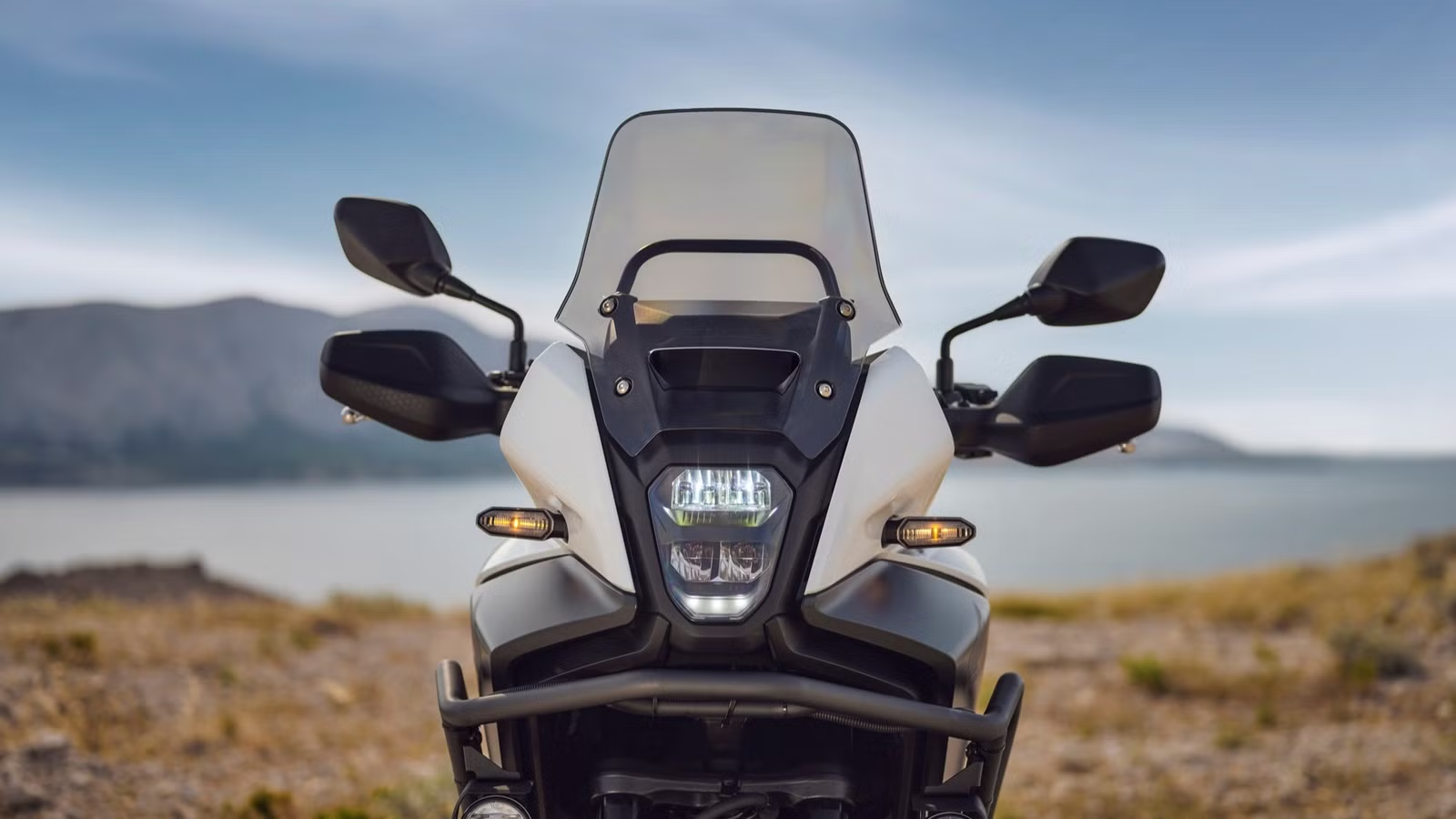
On paper it looks modest, a 471cc adventure-styled twin that most spec-chasers scroll straight past. In a service bay it looks like something else entirely: the cheapest honest way into a motorcycle that commutes through the week, tours on the weekend, and shrugs off a gravel road without ever booking itself in for a surprise.
For 2026, Honda cut the price by $500, and the NX500 now starts at $6,899 in a fresh Pearl White scheme. That number is the whole argument in one figure. It is less than seven grand for a bike that genuinely does everything, and does it without the running costs stapled to the big adventure machines.
16,000-Mile Valve Intervals And Parts That Are Always In Stock

The service schedule is where the NX500 pulls ahead and stays there. Honda calls for a general check every 4,000 miles, an oil change every 8,000, and a valve inspection every 16,000. Those are long intervals for any motorcycle, and they keep the bike out of the shop and on the road.
Parts pricing follows the same logic. Because the 471cc platform is spread across half of Honda’s middleweight lineup, wear items are made in huge numbers and stocked deep at dealers. Owner forums back it up. Riders report high mileage on original components and, more tellingly, thin threads when it comes to actual problems. A bike nobody complains about is a bike that holds its value, and the NX500 does.
Why 47 Horsepower Is The Wrong Number To Look At

None of this would matter if the bike were a chore to ride. It is the opposite. The headline number is 47 horsepower at 8,500 rpm, and the spec-sheet crowd stops reading there. They miss the point: the 471cc twin makes 32 pound-feet of torque at 6,500 rpm and does its best work between 3,000 and 7,000 rpm, which is exactly where real riding happens.
It pulls cleanly out of town, holds a relaxed highway cruise, and keeps enough in reserve to carry a passenger and luggage up a long grade without feeling out of its depth. Fuel range seals it. The 4.7-gallon tank paired with the twin’s easy economy means long stretches between stops, whichis exactly what a bike sold on going the distance ought todeliver.
Screw-Adjust Valves And A Platform Proven Since 2013

Here is the detail a mechanic cares about. The NX500’s valves are screw-and-locknut adjusters, not shims. That turns the single most expensive routine service on most bikes into a job an owner can do at home with hand tools. The irony writes itself, since Honda’s own manual politely suggests leaving valve service to a professional. This is the bike that a professional would do it on in their own garage, on a Sunday.
The engine behind those valves has been in production since 2013 and now powers the CBR500R, the CB500 Hornet, and the Rebel 500 alongside the NX500. Thirteen years of the same fundamentals mean every quirk is documented, and every weak point, if one existed, would have surfaced long ago. It hasn’t. High-mileage owners report that the motor simply keeps running, which is the highest praise an engine gets.
Accessories And Touring Hardware Make It A Long-Term Keeper

The NX500 is built to be kept, and Honda backs that with a catalog of 18 factory accessories, from a centerstand and hand guards to heated grips and hard luggage. You can turn a bare commuter into a loaded tourer without leaving the parts counter. The hardware underneath is honest too.
A 41mm Showa USD fork, twin front discs, and standard ABS give the chassis more composure than the price suggests, and switchable Honda Selectable Torque Control is there when the weather turns. For 2026, Honda also offers its E-Clutch as an option for riders who want it, while the base bike keeps the simple, familiar clutch that made the platform trustworthy in the first place. Everything you need, nothing you have to diagnose.
The Bike Still Running When Your 1,000cc Adventure Machine Is Waiting On Parts

The NX500 is not the bike that wins the bar-stool argument. It makes 47 horsepower, rolls on cast wheels and a 19-inch front, and wears adventure styling that promises more dirt capability than it can actually cash. Load it up, put a passenger on the back, and point it at a long mountain grade, and it is working for its living.
None of that is the point. The mechanic’s logic is simpler, and harder to argue with. The cheapest motorcycle to own is the one that never surprises you, and the NX500 is still running on the day the 1,000cc adventure bike is stuck in a bay, waiting on a part from another continent. Buy the bike the person who fixes bikes would buy. That is the whole story.
Sources: Honda

Related posts


Latest Post


No Comments